- Evaporator uses refrigerant phase change to cool cabin air.
- Leaks cause pressure drop and major loss of cooling efficiency.
- Repairs are difficult; most failures require full evaporator replacement.
- Reduced cooling performance is a primary sign of evaporator trouble.
The air conditioning system does not directly affect the car’s ability to move, but in scorching summer heat, a non-functioning climate control can turn any trip into an unpleasant and exhausting experience. In such moments, the high cabin temperature affects driver concentration and overall comfort, turning even a simple commute into a test of endurance.
The evaporator is the central component of the climate control system, responsible for the effective cooling of the air entering the cabin. When this part malfunctions, the entire system becomes practically unusable, regardless of the condition of the other components.
How the car climate control evaporator works
The car air conditioning system operates on a simple yet effective thermodynamic principle — it removes heat from the air circulating in the cabin and transfers it to the outside environment. In this complex process, the evaporator plays a crucial role, being where the refrigerant undergoes its phase change and the actual cooling occurs.
The evaporator utilizes the refrigerant liquid (Freon) at the moment it passes from liquid to gaseous state. When warm intake air passes over the evaporator’s cold coils, it gives up part of its heat to the refrigerant, which absorbs this thermal energy to vaporize. In this evaporation process, the air is cooled rapidly to the driver’s desired temperature.
The entire process must occur very quickly to ensure optimal comfort — therefore, even the smallest evaporator faults will significantly affect the system’s ability to cool the cabin air efficiently.
Structure and components of the evaporator
The evaporator consists of two main elements that work in tandem:
- Core - the central part where the main refrigerant distribution channels are located
- Coils - the bent tubing forming meanders that increase the air contact surface
These components are designed to operate in a system with constant pressure, essential for efficient heat removal. When a leak develops between these two elements or within their structure, system pressure drops and cooling capacity deteriorates drastically.
Most evaporator faults are caused by leaks that occur either at the joint between the core and coils, or within the body of these components themselves. An evaporator with a leak is extremely difficult to repair and, in most cases, requires a full replacement — temporary repairs are often ineffective in the long term.
The 4 main signs of a defective evaporator
Although the evaporator is designed to last for years and withstand varying operating conditions, it is not immune to wear and damage. The climate control system will nevertheless give clear signals when the evaporator begins to fail.
1. Weak or non-existent air conditioning performance
This is the most evident and common symptom of a problem with the evaporator. When one of the evaporator components develops a leak, the system can no longer maintain the optimal pressure needed for correct operation. The impact is immediate and visible:
- Air coming through the vents is only slightly cool or even warm
- The blower power is normal, but the temperature does not drop
- The system fails to cool the cabin even after prolonged operation
- The temperature difference between outside air and the air from the vents is minimal
In extreme cases, the system may completely stop producing cool air, effectively functioning only as a regular fan.
2. Unusual sweet smell in the cabin
When the evaporator has cracks or breaks in the coils or core, the refrigerant (Freon) starts to leak and vaporize in the ventilation system. This creates a characteristic, sweet and penetrating odor that becomes noticeable as soon as the AC is turned on.
This smell is a very clear indicator of an active leak and should not be ignored — besides signaling a technical issue, inhaling Freon vapors for extended periods is not good for health. Also, Freon leakage means the system loses its cooling capacity and the necessary pressure for operation.
3. The compressor does not engage
Whenever you turn on the climate control, you should hear a specific sound — a distinct click followed by a slight change in engine RPM. These signs indicate the compressor has engaged and started pumping refrigerant through the system.
The compressor’s essential role is to circulate the refrigerant through the entire system, passing through the evaporator, condenser, and other components. When the evaporator has major faults and the system cannot reach or maintain the necessary pressure, sensors will prevent the compressor from activating to protect it from damage.
If at startup you don’t hear any engaging sound and the engine RPM doesn’t change at all, there’s a high likelihood the problem is related to a leak at the evaporator that has caused a loss of system pressure.
4. Inconsistent and fluctuating temperature
In the early stages of a fault, when the leak is small or intermittent, the evaporator can still operate partially but with inconsistent performance. You may notice that:
- The cooling air temperature varies without any apparent reason
- Sometimes the air is very cold, other times only cool
- The system seems to run well for a few minutes, then performance suddenly drops
- You constantly need to adjust settings to maintain an acceptable temperature
These fluctuations indicate that the evaporator is still able to cool the air, but its capacity is compromised and unstable. It’s an early warning sign that a more serious fault is approaching and you should investigate the issue as soon as possible.
Main causes of evaporator faults
As mentioned, most problems at the evaporator level are caused by leaks. These leaks do not appear by chance but are the result of several factors and phenomena:
Worn seals
The seals that ensure the airtight connection between the core and the evaporator housing can deteriorate over time due to:
- Extreme temperatures and repeated heating-cooling cycles
- Aging of the material from exposure to chemicals
- Constant vehicle vibrations during travel
A degraded seal allows both refrigerant leakage and loss of the pressure needed for optimal operation.
Metal corrosion
Corrosion is one of the most common enemies of the evaporator, especially in areas with:
- Humid or frequently wet climates
- Roads salted in the cold season
- Outdoor parking without protection
The metal of the coils and core is prone to corrosion, particularly when exposed to humidity and condensation. Corrosion creates weak points in the metal structure that over time become tiny perforations through which refrigerant can leak.
If you park the car in an enclosed garage and wash the underside regularly to remove salt and dirt, you can significantly extend the evaporator’s life.
Defective joints
The joint between the core and the coils is another vulnerable point of the evaporator. These joints are made by:
- Welding or brazing
- Mechanical connections with seals
- Pressure joints
Over time, vibrations, expansion, and thermal cycling can weaken these joints, creating leakage paths for refrigerant. Joint defects most commonly appear closer to the core, where pressure is higher and mechanical stress is more intense.
Solutions and replacement
In most cases, when the evaporator develops a significant leak, the only viable long-term solution is a complete replacement of the component. Although there are temporary repair methods, such as:
- Using specially designed sealant solutions for climate control systems
- Spot welding leaks in very limited cases
- Replacing seals if that is the only issue
these solutions are often only palliative and the problem can reappear in a short time. A new evaporator will ensure:
- Optimal operation for many years
- Maximum energy efficiency
- Elimination of the risk of subsequent leaks
- Manufacturer warranty
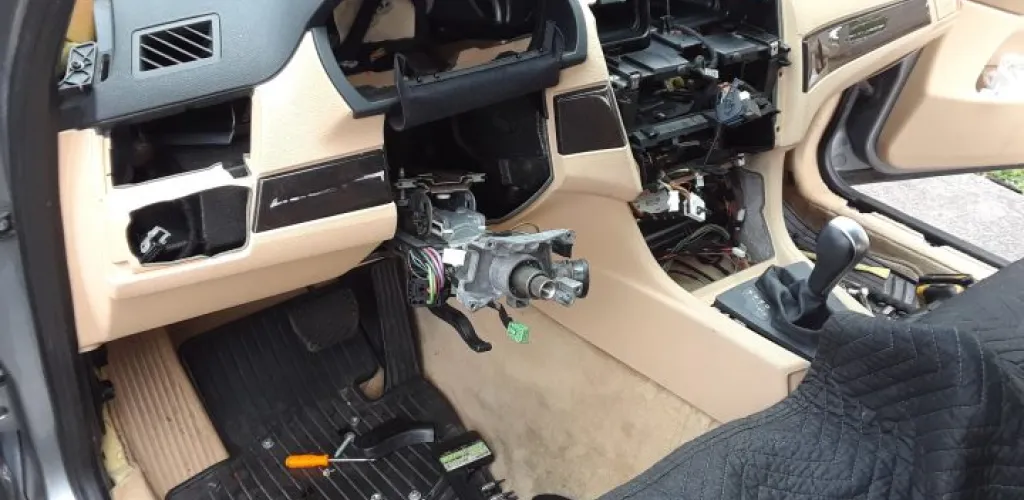
The replacement cost may seem high, but you must consider that access to the evaporator often requires dash removal, which accounts for the largest portion of labor costs. Therefore, if you need to reach the evaporator for repairs anyway, it is more economical to replace it completely than to risk another intervention in the near future.
Before replacement, a qualified technician will:
- Check the entire system for other possible issues
- Evacuate the remaining refrigerant from the system
- Replace the desiccant filters
- Check the condition of the compressor and other components
- Refill the system with the correct amount of refrigerant
- Test for leaks and performance after repair
Ignoring evaporator problems not only leaves you without functional air conditioning but can also lead to damage to other system components, such as the compressor, which is much more expensive to replace.