- Maintain steady, moderate acceleration and gentle steering on snow.
- Step 1: Assess wheel burial and exhaust clearance, surface condition.
- Step 2: Clear snow around wheels with shovel and scraper; remove ice.
- Step 3-4: Traction aids (sand, salt, mats, planks, chains) and gentle rocking.
Winter driving presents major challenges for any driver, regardless of experience. Heavy snow, ice on the road, and reduced visibility transform every trip into a real test. Unfortunately, getting stuck in snow is a common situation during the cold season, and how you handle it can make the difference between a quick resolution and hours of waiting for help.
Extreme weather conditions, such as blizzards or heavy snowfall, significantly limit visibility, while icy roads become extremely dangerous due to low traction. When the road surface is simultaneously covered with ice and snow, the risk of getting stuck increases exponentially, especially on secondary roads or in remote areas.
Preventing Getting Stuck - Snow Driving Techniques
Basic Principles for Driving on Snow:
- Maintain a constant and moderate acceleration
- Avoid abrupt steering movements
- Keep a low and steady speed
- Do not slam on the brakes - use engine braking
- Anticipate obstacles well in advance
What to Do When You Get Stuck in Snow
Step 1: Assessing the Situation
Before taking any action, get out of the vehicle and assess the extent of the problem. Check:
- How deeply the wheels are buried
- Whether the snow is blocking the bumper guards or the exhaust
- The condition of the surface around the car
- The presence of ice beneath the snow
Step 2: Snow Clearing
Recommended Winter Equipment
- Compact snow shovel (mandatory in the trunk)
- Ice scraper
- Protective gloves
- Battery-powered flashlight
Clear the snow carefully around all driven wheels, paying particular attention to the areas in front of and behind the tires. If the snow is very compacted, use the scraper to break the formed ice. Check that the snow does not block the exhaust or other components of the car.
Step 3: Improving Traction
Insufficient traction is the main reason wheels spin without propelling the vehicle. To fix this, you can use various materials:
Materials for Improving Traction
- Sand – the most effective traction solution
- Salt – melts ice and improves grip
- Wood shavings – a natural, readily available alternative
- Car mats – placed under the driven wheels
- Wood planks – create a solid starting surface
- Car chains – the professional solution (if you have them)
Spread the chosen material in front of the driven wheels, in the direction you want to move. Create a “path” of about 2-3 meters to give the car enough space to gain momentum.
Step 4: The Balancing Technique
If traction materials aren’t available, you can try a controlled rocking technique:
- Start the engine and let it warm up
- Shift into reverse and accelerate very gently
- When the car stops, quickly shift to first gear
- Accelerate again gently forward
- Repeat the process to create a rhythm of rocking
Important: Never accelerate abruptly! This will only spin the wheels and sink the car deeper.
Step 5: Using Manual Force
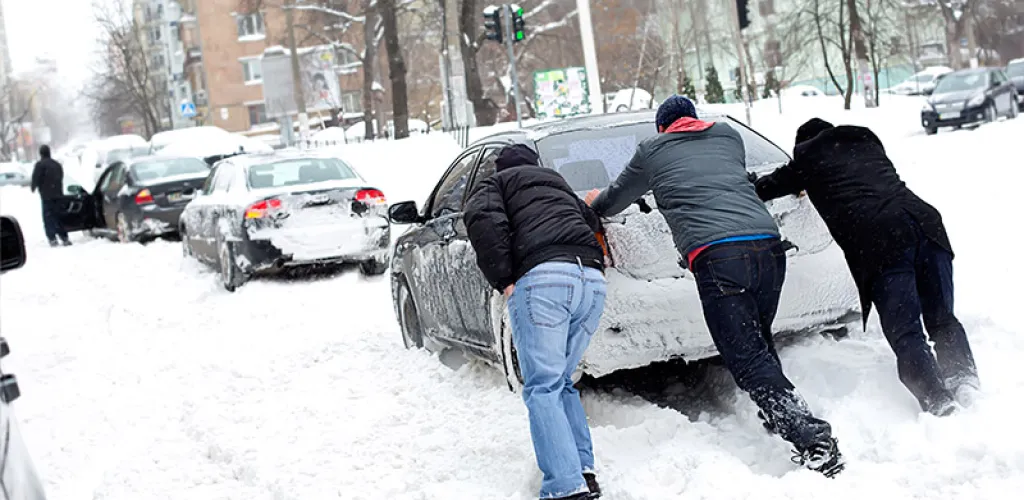
If you have passengers, they can get out of the car to reduce weight and help by pushing. Coordination is essential - the driver must communicate clearly when accelerating, and those pushing should be positioned safely.
Safety Rules for Pushing
- Push only from the rear of the car
- Never stand in front of the vehicle
- Maintain constant communication with the driver
- Stop immediately if the wheels start spinning in place
When to Call for Professional Help
There are situations where personal effort isn’t enough and professional intervention is necessary:
- Snow is very deep (above half the wheels)
- Ice underneath prevents any traction
- The vehicle is dangerously tilted
- Temperatures are extreme (below -20°C)
- The area is isolated and safety risks are high
Available Assistance Services:
- Professional roadside towing
- De-icing services
- Installation of snow chains
- 24/7 road assistance
Essential Winter Equipment
Preventive preparation can prevent many of these uncomfortable situations:
Winter Emergency Kit:
- Foldable snow shovel for snow
- Bag of sand/salt (10-15 kg)
- Snow chains compatible with your tires
- Jump-start cables
- Bright flashlight with spare batteries
- Blankets and warm clothes
- Charged phone for emergencies
- Windshield scraper
- Antifreeze windshield fluid
Final Recommendations
Getting stuck in snow should not become a panic situation. With proper preparation, the right equipment, and correct application of the described techniques, most situations can be resolved without external help. Stay calm, don’t force the engine, and don’t hesitate to seek help when the situation demands it.
Remember that personal safety is always the number one priority. If weather conditions are extreme or you are in a dangerous area, it is preferable to wait for professional help rather than exposing yourself to unnecessary risks.