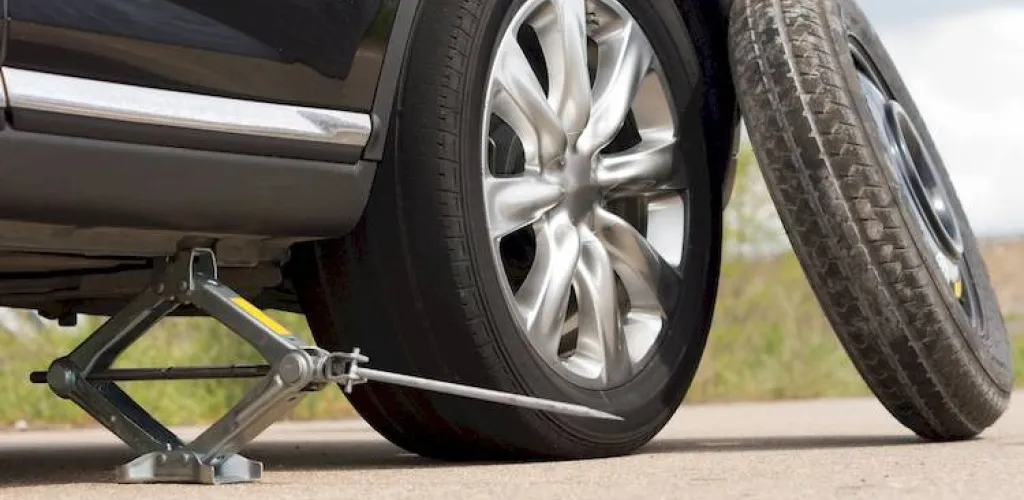
- Slim spare is a temporary fix; max distance 80–112 km, 80 km/h.
- Braking worsens, the car may pull to the side with the slim wheel.
- Check pressure around 60 PSI (4.2 bar) before use.
- Safety systems like ESP, ABS, TPMS may malfunction.
The slim spare wheel is a temporary solution designed to help you reach the nearest service center safely. Unlike a conventional spare wheel, which matches the size of the standard wheels, the slim spare is compactly designed to save storage space in the vehicle.
Although it may seem like a simple solution, driving with a slim spare wheel requires strict safety rules and awareness of its limitations. Ignoring these aspects can endanger both your safety and that of other road users.
Distance and speed limitations
Slim spare wheels are designed exclusively for short distances. Most automakers recommend a maximum distance of 80 to 112 km, information that can be found in the vehicle’s technical manual.
The maximum recommended speed is 80 km/h. This limitation is not arbitrary - the compact construction of the slim wheel, the materials used, and the reduced size do not allow safe operation at higher speeds.
The driver must understand that this wheel is a temporary emergency measure, not a long-term solution. The more you drive on the slim wheel, the greater the risk of damage to it or of an incident.
Effects on vehicle behavior
Changes to handling and braking
The slim spare wheels have a smaller footprint on the road compared with standard wheels, which significantly affects the vehicle’s braking. The braking distance can increase considerably, and the braking system’s efficiency decreases.
The vehicle will tend to pull toward the side where the slim wheel is mounted due to height and rigidity differences. This phenomenon is called ‘pull’ and can be confusing for drivers who are not prepared.
Handling in turns
Negotiating turns becomes more difficult due to:
- Reduced grip of the slim wheel
- Suspension geometry changes
- Difference in behavior between standard wheels and the slim wheel
It is recommended to take turns at reduced speed and avoid sudden steering maneuvers.
Essential safety precautions
Checking the tire pressure
The most important check before starting a trip is checking the pressure of the slim spare wheel. The recommended pressure is about 60 PSI (4.2 bar), considerably higher than that of normal tires.

Being stored for a long time without use, the spare wheel can lose pressure. Insufficient pressure can lead to:
- Damage to the wheel structure
- Unpredictable vehicle behavior
- Increased risk of puncture or blowout
Deactivating safety assistance systems
A crucial aspect many drivers ignore is that slim spare wheels deactivate or affect the operation of electronic safety systems:
- Electronic Stability Control (ESP/ESC)
- Traction control system (ASR/TCS)
- ABS may function improperly
- Tire Pressure Monitoring System (TPMS) will report an error
These systems are calibrated to operate with wheels of identical size. The difference in diameter and the behavior of the slim wheel can send erroneous signals to the electronic control units.
Usage restrictions
Avoiding highways
Although it is technically possible to drive on a highway with the slim wheel, following the 80 km/h limit, this is not recommended for several reasons:
- Large speed difference from normal traffic (130 km/h)
- Increased risk of rear-end collisions
- Additional stress on the slim wheel
- Difficulty in safe overtaking
Adverse weather conditions
Avoid driving with the slim wheel in conditions of:
- Heavy rain
- Snow or ice
- Strong crosswinds
The reduced grip of the slim wheel combines dangerously with these conditions, significantly increasing the risk of an accident.
Recommendations for safe driving
- Check the spare wheel pressure immediately after mounting
- Adhere to the maximum speed of 80 km/h
- Increase following distance by at least 50%
- Avoid abrupt steering and pedal maneuvers
- Choose alternative routes without highways whenever possible
- Schedule immediate replacement with a standard wheel
- Periodically check the condition of the slim wheel during use
When not to use the slim spare wheel
There are situations where using the slim spare wheel can be extremely dangerous:
- Carrying heavy cargo (exceeding the maximum load)
- Traveling with the vehicle fully loaded
- Towing a trailer
- Driving long distances (over 100 km)
- Extreme weather conditions
In these cases, it’s safer to call a tow service rather than risk an accident.
Maintenance of the slim spare wheel
To ensure the slim spare wheel works when you need it:
- Check the pressure every 3 months
- Visually inspect the tire for cracks or damage
- Rotate the position of the slim wheel periodically for even wear
- Replace the wheel if it is over 6 years old, even if it looks new
Remember that the slim spare wheel is an emergency temporary solution, not a permanent replacement. Your safety and that of other road users depends on strictly following these recommendations.
Photo source: armudi.com.ph, nonda.co