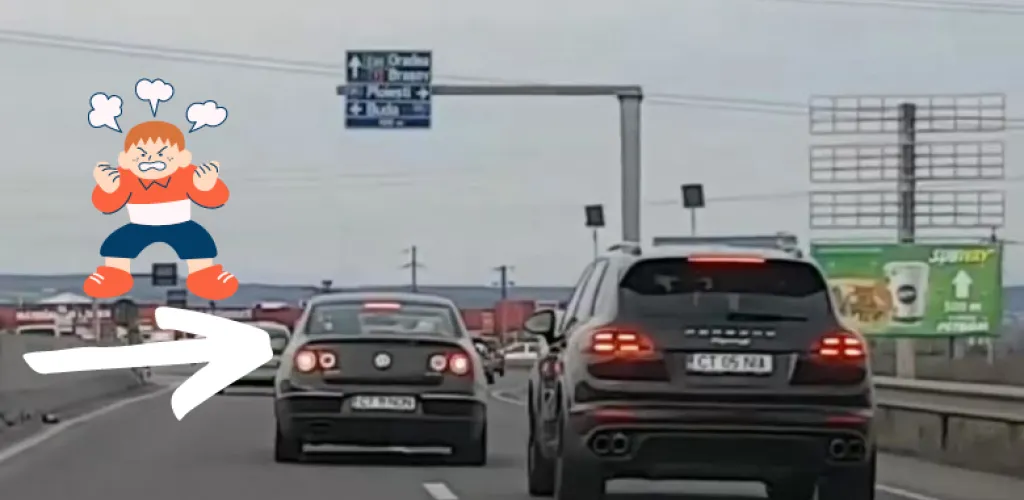
- Blocking lanes or slow speeds cause traffic jams, pile-ups, and risky overtakes
- Aggressive lane changes without signaling or space trigger rear-end collisions and stress
- Sudden braking to harass others raises rear-end crash risk; stay calm and lawful
Memories from the driving test are still vivid for many of us. The intense emotions, hands trembling on the wheel, every maneuver performed with maximum care under the examiner’s watchful eye. On that day you knew any mistake could cost you your license. But what happened afterward?
For many drivers, the relief after the test came with adopting some bad habits behind the wheel. Behaviors we could hardly imagine during training, yet they have become surprisingly common in everyday traffic. Unfortunately, these habits not only irritate other road users but can also create dangerous situations.
Blocking Lanes and Inappropriate Speed
One of the most frustrating situations in traffic is finding yourself behind a driver who blocks the passing lane on the highway, moving along at 105 km/h and refusing to move back to the right lane. Equally annoying is following a vehicle traveling at 35 km/h on a section with a 50 km/h limit, with no apparent reason.
Why it is dangerous:
- Creates unnecessary traffic build-ups
- Can trigger pile-ups
- Forces other drivers to perform risky overtakes
- On highways, vehicles merging from the acceleration lane directly onto the second lane at speeds far too low pose a major hazard
The solution: If you cannot or do not want to drive at the legal speed limit, stay in the right-hand lane. For overtakes, move to the left, complete the maneuver quickly and safely, then return immediately to the right lane. Speed limits are not arbitrary — they are calculated to ensure smooth traffic flow and safety for all road users.
Aggressive Lane Changes and Cutting Off Other Vehicles
Aggressive weaving through traffic, sudden lane changes and cutting off other vehicles are another dangerous behavior increasingly common. Many drivers seem to forget that behind the wheel you are not driving only for yourself, you are part of a complex flow of vehicles, each with its own trajectory and speed.
Why it is risky:
- You cannot anticipate other drivers’ reactions
- Forces other participants to brake suddenly
- Can cause rear-end collisions or more serious accidents
- Creates tension and stress in traffic
Correct conduct: Before any lane change, always use your indicators. Check the mirrors and blind spots. Make sure you have enough space to maneuver without forcing other cars to brake. Defensive driving means anticipating, not reacting at the last moment.
Sudden Braking as a Harassment Tactic
This is undoubtedly one of the most dangerous and irresponsible manifestations of road rage. The familiar scenario is this: you anger a driver, you position yourself in front of them and repeatedly press the brake with the explicit aim of intimidating or punishing them.
Consequences of this behavior:
- Extremely high risk of a rear-end collision
- Potential injuries for all occupants
- Property damage to both vehicles
- Legal liability in the event of an accident
- Escalation of a tense situation
Civilized alternative: If another driver clearly made a mistake and you feel the need to communicate this, you can:
- If you are in town, stop safely and explain the situation politely
- Use a courteous gesture to draw attention to the error
- Or simply let the incident pass — most traffic mistakes are not intentional
The key question is: what do you gain from this harassment? In the best case, nothing. In the worst, a damaged vehicle and potential injuries. It is not worth it.
Improper Use of Lights
Headlight usage in traffic is a long and complex topic in Romania. From drivers who permanently use high beams to those who drive with fog lights on in normal conditions, or misaligned headlights that blind other road users.
Common problematic situations:
- High beam kept permanently on
- Fog lights used in normal conditions
- Misaligned headlights that shine too high
- One headlight burned out, the other compensating with higher intensity
- Aggressive flashes instead of a discreet overtaking signal
Effects on safety:
- Temporary blinding of other drivers
- Eye fatigue over long distances
- Reduced visibility for those ahead
- Creating dangerous situations at night
Correct use of lights: High beams should be used only on unlit roads with no oncoming traffic or vehicles ahead. When you meet another vehicle, switch to low beams immediately.
Fog lights are intended for foggy conditions, not to impress or because they are thought to improve visibility. Using them without necessity is illegal and dangerous.
Check periodically:
- Headlight alignment (at service or RAR)
- Proper functioning of both headlights
- Clean lenses for uniform light
Excessive and Unjustified Honking
Some drivers seem to treat the horn as an extension of their personality — they use it for anything, from expressing frustration to greeting acquaintances. There are even drivers who would honk at their own shadow if possible.
When not to honk:
- The light has just turned green and the car in front did not move instantly
- You want someone to hurry up who is driving legally
- To express anger toward other drivers
- As a greeting to friends on the street
- From impatience in heavy traffic
When you should use the horn:
- To warn other road users of an imminent danger
- When a pedestrian steps onto the crosswalk without noticing you
- In curves with limited visibility on narrow roads
- To prevent an accident that is about to happen
Why it matters: The horn is a safety device, not a means of emotional expression. There are zones where honking is completely prohibited (hospitals, schools) precisely because excessive noise can affect people. Noise pollution is a real problem in large cities, and unjustified honking contributes significantly to it.
Conclusion: Civilized Conduct Saves Lives
These five behaviors may seem minor or even justified at the moment you adopt them. Yet, each of them contributes to a more dangerous and stressful traffic environment for everyone. Driving behavior reflects the respect we have for other road users and for ourselves.
Remember the emotions of the first exam? That heightened focus, the care to do everything correctly? You do not have to drive with that tension every time, but the basic principles — respect, prudence and defensive driving — should accompany you on every trip.
Traffic becomes safer and more enjoyable for everyone when each driver takes responsibility for their own behavior behind the wheel. It is not only about avoiding fines or accidents — it is about contributing to a road culture based on mutual respect and safety.