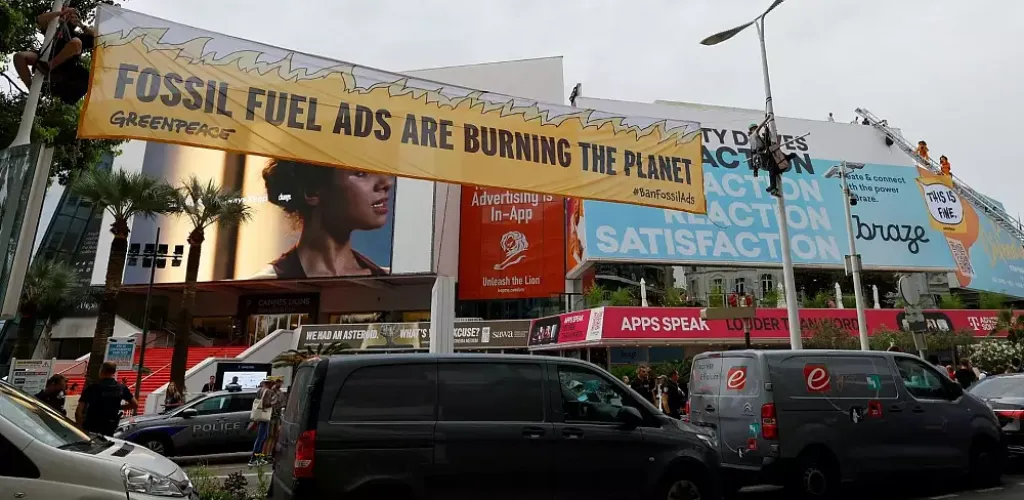
- France imposes penalties up to €100,000 for fossil-fuel advertising.
- Initial fines range €20,000–€100,000; repeats incur higher penalties.
- Advertising petroleum products and coal energy is prohibited under the new law.
- Natural gas advertising has a temporary exemption until summer 2023.
France marks a historic moment in the fight against climate change, becoming the first European country to impose penalties for fossil fuel advertising. The new climate legislation provides fines of up to €100,000 for companies that promote petroleum products or coal energy, according to Euronews.
These measures aim to curb the normalization of fossil fuels and accelerate the transition to cleaner energy sources across the economy and society.
What are fossil fuels and why are they problematic
Fossil fuels are hydrocarbon compounds formed through natural processes, such as the anaerobic decay of dead organisms, a process that spans millions of years. During formation, sediment layers are subjected to high pressure and heat, resulting in three major forms: oil, coal, and natural gas.
Burning these fuels significantly contributes to atmospheric pollution and the greenhouse effect, putting the future of humanity at risk in the long term. Effects manifest in ozone layer thinning, rising global temperatures, and a growing incidence of respiratory diseases.
Details of the new French legislation
The law takes effect with the following provisions:
- Initial fines between €20,000 and €100,000 for violations
- Penalties double for repeat offenses
- Prohibition of advertising for petroleum products and coal energy
- Temporary exemption for natural gas (until summer 2023)
Loopholes and criticisms of the legislation
Environmental organizations such as Greenpeace consider the legislation not stringent enough. Activists point to several issues:
- Advertisements for natural gas remain permitted until 2023
- Event sponsorship by fossil fuel companies remains legal
- There are numerous exemptions that companies can exploit
According to an official Greenpeace statement on Twitter: “You will read everywhere that fossil fuel advertisements are now banned, but this is not true!”
Reaction from fuel suppliers
The energy industry raises legitimate concerns about the law’s implementation. Suppliers argue that:
- They cannot efficiently inform customers about fuel price changes
- The restrictions come at a difficult economic moment when the cost of living is high
- A lack of advertising could affect market competitiveness
The situation in Romania: An aging car fleet
In Romania, the problem of road transport pollution is particularly acute. Statistics show a troubling reality:
- Over 50% of cars on Romanian roads are over 16 years old
- Approximately 400,000 used vehicles are registered annually
- Many of these are over 15 years old at the time of purchase
- Numerous vehicles do not meet even the older pollution standards
The European Union requires Romania to remove 250,000 polluting vehicles from traffic by 2026, but the current pace of fleet renewal is moving in the opposite direction.
Impact on public health
The figures are alarming: between 16,000 and 26,500 Romanians die prematurely each year due to the effects of pollution, according to data from the European Environment Agency and the World Health Organization.
Transition to electric mobility
The context of France’s legislation fits into a broader international trend: seeking urgent solutions to end the era of internal combustion engines. The future of the auto industry belongs to electric propulsion, and such legislative measures accelerate this transition.
International perspectives
France’s initiative could pave the way for similar measures in other European countries. However, implementation remains controversial:
Advantages:
- Accelerating public awareness about fossil fuels
- Boosting investments in green energy
- Reducing the normalization of hydrocarbon consumption
Disadvantages:
- Potential negative short-term economic impact
- Difficulties in communicating with consumers
- Risk of shifting marketing activities outside France
It remains to be seen how many countries will adopt similar measures and how effective this approach will be in reducing actual carbon emissions. France’s experience will serve as an important test for future European climate legislation.