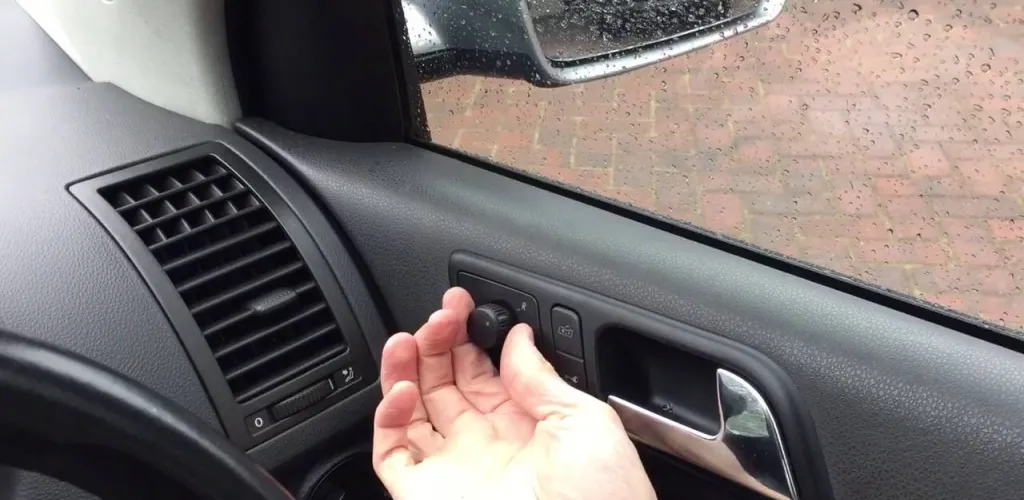
- Electric mirrors evolved from manual controls; electric operation gained traction around 1975.
- Many cars feature heated mirrors that defog automatically with rear-window defogger.
- Auto-fold reduces damage and saves space but increases battery consumption.
- Exterior mirrors are powered; interior mirror is usually manual.
Electric mirrors have become standard on most modern cars, offering greater comfort and safety behind the wheel. This technology has evolved significantly from the early manual systems, now including advanced features such as heated mirrors and automatic folding. Understanding how these systems operate can help you make informed decisions when buying a new car or when you encounter technical issues.
In this article, we explore the history, current capabilities, and maintenance of electric mirrors to help you choose the right setup for your vehicle.
Historical evolution of rear-view mirrors
On older car models, mirror adjustment was exclusively manual. Drivers had to roll down the window to adjust the exterior mirror position, a cumbersome process in certain weather conditions.
Around the 1960s, the auto industry introduced the first improved system allowing adjustment from inside with the windows closed. These primitive systems operated through a mechanical linkage — a joystick connected by a cable running from the door to the interior of the side mirror.
The real revolution began around 1975, when electrically operated mirrors started to gain ground in the automotive industry. Today, most cars include the heating function for the side mirrors, which activates automatically with the rear window defogger button.

Advanced features of modern electric mirrors
Auto folding
Depending on the car’s equipment, you can benefit from automatic folding of the mirrors inward when you exit the car and lock it. This function protects the side mirrors from potential damage, being located at the vehicle’s extremities. The system saves you from manual operation each time, though this convenience translates into higher battery drain.
Integrated heating
The heating system of the mirrors eliminates condensation and frost that can form on the reflective surface, maintaining optimal visibility in adverse weather conditions. This feature usually activates simultaneously with the defogging of the rear window.

Main components of electric mirrors
In today’s cars, the vast majority come equipped with electric mirrors, each mirror having its own actuation system:
- Individual electric motors — each mirror has its own motor for precise movement in all directions
- Electrical connectors — provide power and transmit control signals
- Directional control module — manages movements according to joystick commands
- Individual electrical circuit — each mirror has its own circuit for independent operation
- Position sensors — in the case of advanced systems with memory of positions
How electric mirrors are operated
For standard vehicles, typically only the exterior rear-view mirrors can be controlled electrically. The interior rear-view mirror is usually manually adjustable, except for premium models that also include electronic adjustment features.
Control system
The button that controls the mirrors has three distinct positions:
- Left position — activates control of the left mirror
- Right position — activates control of the right mirror
- Central (off) position — deactivates any actuation command
The central position serves as a safety measure against unintended actuation while driving, preventing accidental mirror movements that could affect visibility.
Operating principle
The system operates with a simple and intuitive principle:
- Select the desired mirror (left or right) with the main switch
- Use the joystick to move the mirror in the desired direction
- The joystick can be moved in the four available directions: up, down, left, right
- Movement is proportional to the duration of the press — short presses for fine adjustments, longer presses for larger changes
Importance of correct adjustment for safety
For your safety, make sure the mirrors are adjusted to provide optimal visibility of what is happening behind the car and to its sides. Proper adjustment contributes to the safety of all road users.
Eliminating blind spots
For extra safety, you can opt for convex rear-view mirrors that increase the field of view. These are relatively affordable and allow you to see a wider angle behind the car.
These mirrors help cover the blind spot, which is particularly dangerous for motorcycles approaching from behind. Due to their small size, in adverse conditions they can lead to accidents if not noticed in time.
Features of additional convex mirrors
- Size: 40–80 mm diameter
- Installation: quickly attaches to factory mirrors with double-sided adhesive tape
- Ideal positioning: on the extreme edge of the rear-view mirror, on the lower surface
- Advantages: extended field of view, detection of vehicles in the blind spot
Maintenance of electric mirror systems
Common problems
- Jammed motors — due to frost or accumulated dirt
- Electrical problems — corroded contacts or blown fuses
- Wear of mechanisms — especially on high-mileage cars
- Joystick failures — worn contacts in the control module
Preventive maintenance
- Periodically check the operation of all directions of movement
- Clean the articulation areas to prevent jams
- Avoid forcing the system if the mirrors are frozen
- Check the condition of electrical connectors during regular service
Photo source: YouTube