- A quality wrap lasts 3-5 years, up to 7 with proper care.
- Material quality, professional installation, and care largely determine lifespan.
- UV exposure and temperature changes accelerate degradation, especially in sunny climates.
- Damaged areas can be repaired or replaced without rewrapping the entire car.
Car wraps have become increasingly popular among car enthusiasts in Romania. They offer a quick and affordable way to change the vehicle’s appearance while protecting the bodywork from the elements. Unlike a full repaint, which can cost thousands of euros and require days of work, car wraps are cheaper, install in a few hours, and can be swapped out anytime.
Lifespan of Car Wraps
A quality car wrap lasts on average between 3 and 5 years under normal use. This period can vary significantly depending on several factors, and some premium wraps can reach up to 7 years with proper care.
Lifespan depends mainly on:
- Quality of the material used – premium wraps contain UV inhibitors and specialized adhesives
- Installer expertise – professional installation eliminates air bubbles and ensures proper adhesion
- Storage conditions – garaging or outdoor parking
- Exposure to UV radiation – intense sunlight degrades the material faster
- Temperature fluctuations – freeze-thaw cycles stress the material
- Frequency and method of maintenance – proper washings vs neglect
Factors Influencing Car Wrap Longevity
According to industry specialists, there are three main variables that determine how long the wrap will last on your car:
Material Quality
Car wraps vary greatly in quality. Premium materials such as 3M, Avery Dennison or KPMF contain advanced UV protection technologies and adhesives that leave no residue upon removal. Cheap wraps can begin to discolor or crack in as little as 1–2 years.
Installation Quality
Professional installation makes the difference between a wrap that lasts 5 years and one that starts peeling after a few months. Experienced installers know how to properly prepare the surface, remove impurities, and apply the wrap without creating stresses in the material.
Care and Maintenance
How you care for your car after applying the wrap has a major impact. Aggressive high-pressure washes, strong chemicals, or harsh brushes can prematurely damage the wrap.
Climate Factor
Climate plays a crucial role. In areas with intense sun and high temperatures, such as southern Romania during summer, wraps can degrade faster. UV radiation is the main enemy of vinyl materials, causing discoloration and brittleness.
Protecting the Car Wrap for Maximum Lifespan
Over time, even the best quality wraps will begin to show signs of wear. Typically the first affected areas are horizontal surfaces – the hood, trunk, and roof – because they are directly exposed to sunlight and precipitation.
Symptoms of Wrap Wear
- Yellowing or discoloration of the material
- Fine cracks, especially at corners and edges
- Lifting of wrap edges
- Loss of gloss or matte finish
- Appearance of air bubbles under the surface
If only certain areas show problems, it is not necessary to replace the entire wrap. Many shops can replace only the damaged sections, significantly reducing costs.
Protective Measures
Garaging or shaded parking – The most effective way to extend wrap life is to keep the car away from direct sun. A garage or carport makes the difference between a wrap lasting 3 years and one reaching 5–7 years.
Quality car cover – If you don’t have a garage, invest in a breathable cover that protects against UV rays, rain, and dust. Avoid cheap covers that can scratch the wrap.
Regular and proper washing – Wash the car every 2–3 weeks with products designed for car wraps. Avoid:
- High-pressure jets directly on edges
- Harsh brushes or abrasive sponges
- Automatic car washes with brushes
- Harsh chemicals or solvents
Wax or ceramic coating – Periodically apply wrap-specific wax or opt for a professional ceramic coating. These create an extra protective layer against UV and make cleaning easier.
Avoid extreme temperatures – Do not leave the car in direct sun above 40°C and avoid washing with cold water when the wrap is very hot.
How to Correctly Remove a Car Wrap
When the wrap has fulfilled its life cycle or you want to change color, the removal process must be done correctly to avoid damaging the paint underneath.
Suitable Conditions
Temperature – Never try to remove the wrap at temperatures below 15°C. The material becomes rigid and can crack into small pieces, turning the process into a nightmare. An ideal temperature is 20–25°C.
Removal Process
-
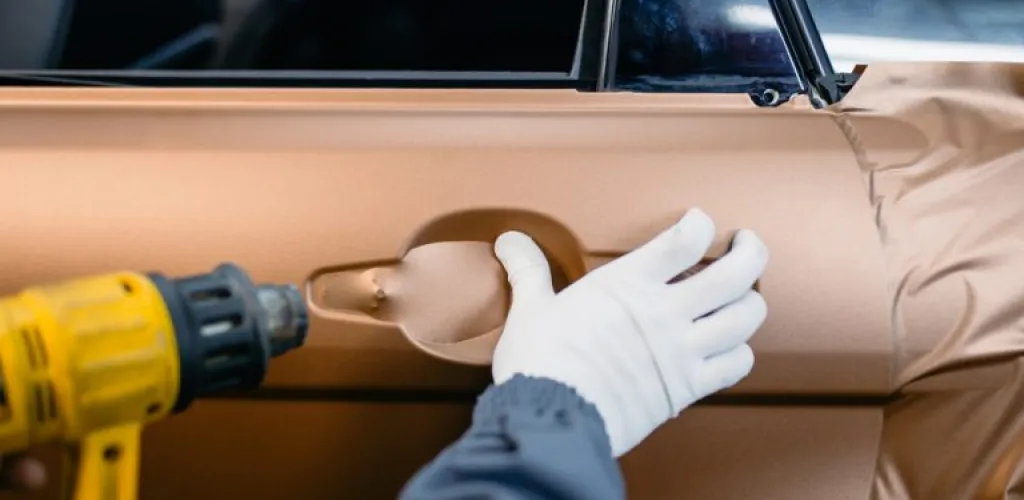
Heating – Use a heat gun or a strong hair dryer to evenly warm the wrap to about 60–70°C. Do not keep the heat source on one spot for more than a few seconds to avoid burning the material or damaging the paint.
-
Start from a corner – Lift a corner of the wrap and pull it at a 45-degree angle to the surface. This angle is crucial – pulling perpendicular will tear the wrap, while pulling parallel will leave adhesive on the surface.
-
Slow and steady pull – Continue heating the front area while pulling smoothly. Do not rush or yank the wrap.
-
Adhesive removal – If adhesive traces remain, use a specialized wrap-removal product. Check the wrap manufacturer for specific recommendations. Alternatively, 90%+ isopropyl alcohol works well for most adhesives.
When to Call Professionals
If the wrap is very old (over 7–8 years), significantly damaged, or you’re not comfortable with the process, it is safer to go to a specialized workshop. The cost of professional removal (150–400 lei depending on car size) is much cheaper than repairing damaged paint.
When It’s Worth Investing in a Car Wrap
A car wrap is a great solution in several scenarios:
Rapid and reversible customization – If you want to change the car’s color without compromising the original paint, a wrap is the ideal solution. You can return to the original look anytime.
Protection for new cars – Many owners choose to apply a transparent PPF (paint protection film) to new cars to protect the paint from stone chips, insects, and minor scratches.
Diverse design options – From elegant matte finishes and striking chromatic colors to carbon look or color-shifting effects, the possibilities are practically unlimited.
Price-to-performance ratio – A full wrap costs between 1,500 and 4,000 lei, depending on quality and the car’s complexity, versus 5,000–15,000 lei for a full professional repaint.
Additional protection – Even color wraps offer UV protection, protection against acidic rain, and surface scratches.
Resale value – At resale, you can remove the wrap and present the car in its original color, often with the paint in excellent condition thanks to the wrap protection.