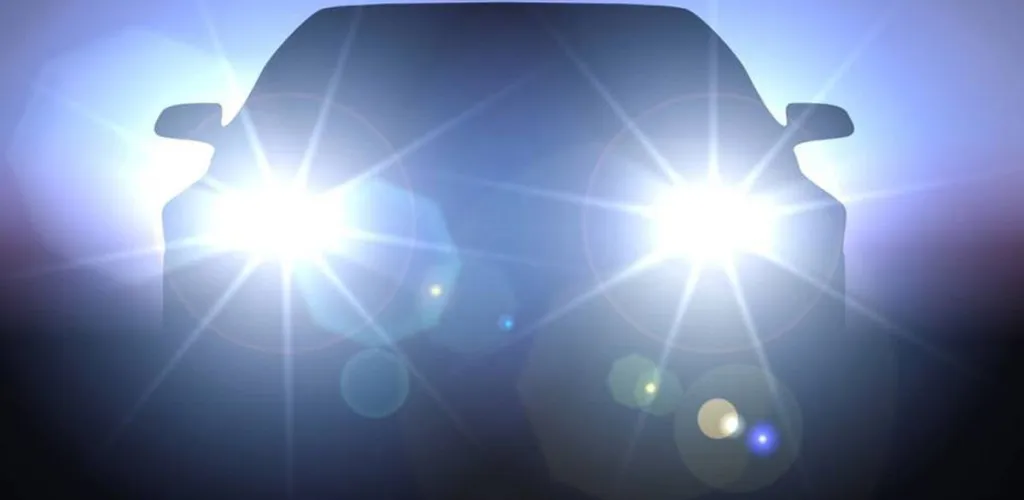
- Check high-beam bulbs for wear; replace if light output is reduced.
- Upgrade to premium bulbs for brighter light, up to 130% more output.
- Verify beam angle with a wall test; adjust screws or seek professional alignment.
- Maintain protective covers to prevent oxidation, scratches, deposits, or cracks.
High beam is a crucial safety feature for any driver on Romanian roads, especially at night on unlit or poorly lit sections. Although there are strict rules governing high-beam use—particularly in towns, villages, or when meeting oncoming traffic—following these rules ensures a safe and comfortable driving experience.
However, many drivers face the issue of a weak high beam that doesn’t provide the expected brightness compared with approaching headlights. In such cases, it is necessary to identify and resolve the cause of the problem to reap maximum safety on the road.
Checking and replacing bulbs
Although the high-beam bulbs are not used as frequently as the low-beam headlights, they can lose efficiency over time. The filament can gradually degrade, reducing light output even if the bulb hasn’t burned out completely.
Signs that bulbs need replacement include:
- Light output lower than usual
- Uneven illumination
- Vibration or intermittent flickering
- Color of the light has changed
Replacing worn bulbs can significantly improve high-beam performance and should yield a visible difference immediately after installation.
Upgrading to premium bulbs
Factory original bulbs are not always the most performance-oriented options available on the market. Bulb manufacturers offer upgraded variants that can deliver substantially better brightness.

Advantages of premium bulbs include:
- Brightness increase - up to 130% more light
- Improved durability - better resistance to vibrations and thermal shocks
- Optimized color temperature - whiter light for better visibility
- Efficient energy consumption - maximum performance without overloading the electrical system
Legislation does not impose strict limits on high-beam brightness, which allows the use of higher-performance bulbs for unlit roads.
Headlight beam angle adjustment
Incorrect beam angle can dramatically reduce high-beam efficiency. Headlights set too low will illuminate only the nearby road, while those set too high will dazzle oncoming drivers and fail to provide optimal visibility.
How to verify the correct angle:
- Position the vehicle 7.5 meters from a wall or garage
- Measure the height of the center of the headlight above the ground
- Mark on the wall a point at the same height
- Turn on the high beam and check where the center of the beam lies
- Adjust using the adjustment screws until the light center aligns with the mark
A professional alignment at a service may be necessary for optimal results.
Maintaining protective covers
Plastic headlight covers can degrade over time due to external factors, significantly reducing light transmission.
Common cover problems:
- Oxidation - the surface becomes dull and yellowed
- Scratches - reduce clarity and create light dispersion
- Deposits - dirt and residues accumulate
- Cracks - allow moisture to enter the headlight
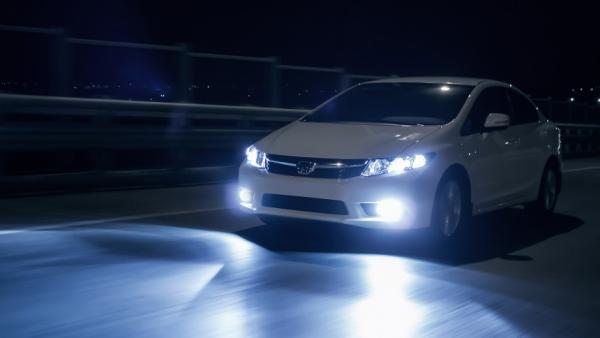
Restoration methods:
Professional cleaning:
- Use specialized restoration kits
- Progressive sanding with fine abrasive paper
- Polishing with abrasive paste
- Applying a UV-protective layer
Full replacement:
- Necessary in case of severe damage
- Ensures maximum transparency
- Long-term investment
Xenon technology for the high beam
Xenon headlights (HID - High Intensity Discharge) represent the most efficient solution for a strong high beam, offering superior performance compared to traditional halogen bulbs.
Advantages of Xenon:
Brightness superior:
- Three to five times more light than halogen
- Whiter and more uniform beam
- Significantly greater illumination distance
Durability:
- Lifespan of 2000-3000 hours (vs. 500-1000 for halogen)
- Resistance to vibrations (no filament)
- Maintains performance over time
Energy efficiency:
- Reduced current draw
- Minimal warm-up
- Lower impact on the electrical system
Installation considerations:
- Compatibility - check the vehicle’s electrical system
- Legal compliance - conformity with current regulations
- Professional installation - precise adjustments and safety
- Costs - higher initial investment but long-term savings
Comprehensive diagnosis of problems
To identify the exact cause of a weak high beam, follow these steps:
Checklist:
- Test the bulbs - compare with new ones or those from another vehicle
- Inspect covers - check transparency and overall condition
- Check electrical connections - corrosion can reduce performance
- Check fuses - a blown fuse can limit current
- Measure voltage - insufficient voltage affects brightness
- Test the switch - faulty contacts can cause intermittent problems
Maintaining optimal performance
To keep the high beam at optimum parameters in the long term:
- Clean headlight covers regularly
- Periodically verify beam angle adjustment
- Replace bulbs proactively before full burnout
- Protect the vehicle from the elements when possible
- Schedule annual professional checks
A bright high beam is not only a matter of comfort, but a crucial safety element on unlit roads. Investing in quality components and regular maintenance will ensure maximum visibility in any nighttime driving condition.
Photo sources: theglobeandmail.com, caranddriver.com, buyacar.co.uk