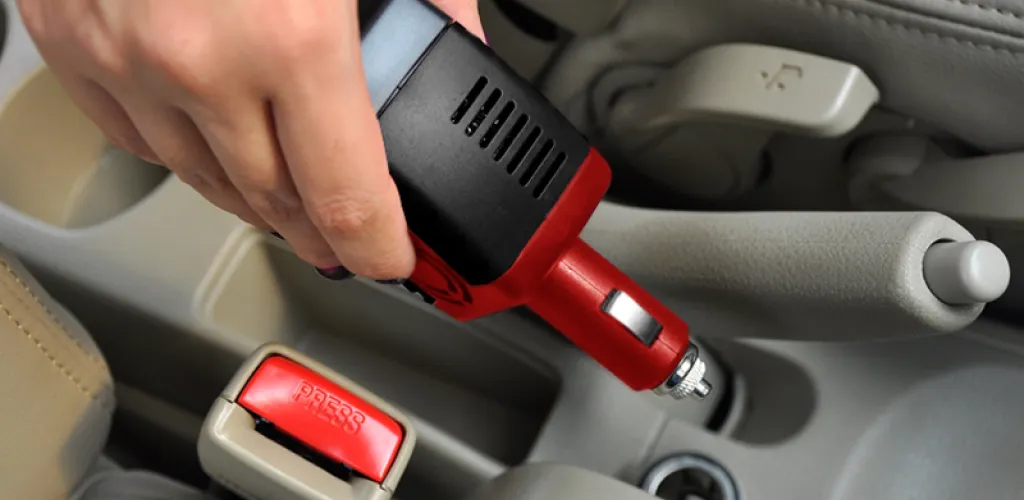
- Converts 12V car battery to 220V AC for devices.
- Choose wattage at least equal to device power; ranges 150W–800W, 1000W–2000W, over 2000W.
- Use modified sine wave for most devices; pure sine for sensitive electronics.
- Under 150W: use cigarette-lighter connection; Over 150W: connect directly to battery with safety precautions.
Installing a power inverter in a vehicle is a practical solution for powering household electrical appliances directly from the car’s battery. This 12V DC to 220V AC conversion allows you to use laptops, TVs, chargers, or even power tools during trips or in emergencies.
A power inverter is an electronic device that converts the 12-volt DC current from the vehicle’s battery into 220-volt AC, matching household electrical networks. This transformation is achieved through electronic circuits that generate a waveform similar to that of the public grid.
Choosing the inverter type
Inverter power
Inverter power is measured in watts (W) and must be at least equal to the maximum power of the devices you plan to power. Inverters for cars are available in various power ranges:
- 150W–300W: Suitable for charging laptops, phones, and small appliances
- 500W–800W: For televisions, game consoles, and medium-power devices
- 1000W–2000W: For power tools and high-consumption appliances
- Over 2000W: For professional installations or industrial applications
Types of waveforms
Modified sine wave inverter: The most common and affordable option, suitable for most household electronics.
Pure sine wave inverter: Delivers high-quality power, identical to grid supply, and is necessary for sensitive devices such as CPAP machines, medical equipment, or high-fidelity audio equipment.
Inverter installation step by step
For devices under 150W - Connecting to the cigarette lighter socket
Step 1: Remove the cigarette lighter from the 12V outlet and place it in a safe location.
Step 2: Insert the inverter adapter into the cigarette lighter socket, ensuring a good contact.
Step 3: Check that the inverter’s switch is in the OFF position before connecting any device.
For devices over 150W - Direct connection to the battery
Step 1: Turn off the vehicle engine and remove the key from the ignition for safety.
Step 2: Open the hood and locate the battery. Make sure there is enough workspace around the battery.
Step 3: Put on safety glasses and gloves to protect against any acid leaks or sparks.
Step 4: Connect the red clamp of the inverter to the positive terminal (+) of the battery. The clamp should make solid contact with the terminal.
Step 5: Connect the black clamp to the negative terminal (-) of the battery or to a solid metal mass of the vehicle.
Step 6: Double-check all connections to ensure they are safe and correct.
Using the inverter safely
Step 1: With the inverter off, connect the 220V device to the inverter’s outlet.
Step 2: Switch on the inverter. Most models have an indicator LED confirming operation.
Step 3: Turn on the connected device and use it normally.
Step 4: Monitor the vehicle’s battery level. If the battery discharges too much, start the engine to recharge.

Important safety measures
Vehicle battery protection
The vehicle battery will discharge during inverter use. To avoid complete depletion:
- Start the engine periodically to recharge the battery
- Use an inverter with low-voltage protection
- Monitor the battery voltage with a voltmeter
- Avoid prolonged use with the engine off
Correct connections
- Red to positive (+): The red clamp ALWAYS connects to the positive terminal
- Black to negative (-): The black clamp to the negative terminal or to the vehicle’s chassis
- Check polarity twice before starting
- Never reverse the connections – you can damage both the inverter and the vehicle’s electrical system
Power limits
- Never exceed the inverter’s maximum specified power
- Calculate the total power of all devices connected simultaneously
- Leave a safety margin of 20% above the maximum power
- Devices with motors (refrigerators, vacuum cleaners) have an initial surge 2–3 times higher
Tips for efficient use
Inverter placement
- Mount the inverter in a ventilated location to avoid overheating
- Avoid areas with high humidity or excessive dust
- Keep cables away from moving engine parts
- Secure the inverter to prevent vibrations
System maintenance
- Periodically check connections for corrosion or loosening
- Clean the battery terminals if you notice white or green deposits
- Regularly test the inverter to ensure it functions correctly
- Replace blown fuses immediately
Troubleshooting common problems
The inverter won’t start
- Check the battery voltage (it should be above 11V)
- Check all connections
- Check the inverter fuses
- Test with a device of lower power
The connected device doesn’t work
- Ensure the device power does not exceed the inverter’s capacity
- Check if the device requires pure sine wave
- Inspect the device’s power cord
The inverter overheats
- Reduce the power of the connected devices
- Improve ventilation around the inverter
- Check for blocked vents
Installing and using a power inverter in a vehicle can provide great flexibility and comfort on the road, but following safety measures and choosing the right equipment are essential for a safe and efficient experience.