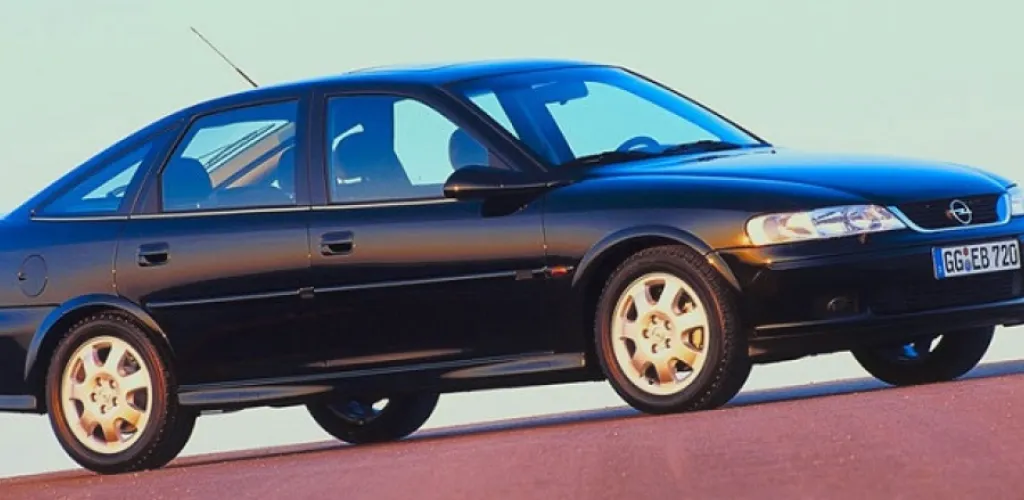
- Opel Vectra B (1995–2002) offered sedan and estate with many engines.
- GM markets: Vauxhall, Holden, and Chevrolet Vectra branding.
- Romanian buyers valued price-to-quality and low maintenance costs.
- Common issues include handbrake cable problems and rear suspension bushings.
Opel Vectra B represents the second generation of the German family car, produced between 1995 and 2002. This mid-size car marked a significant step forward from its predecessor, introducing for the first time an estate variant and benefiting from modern technologies for its era. With a wide range of engines and a solid build, the Vectra B became a popular choice for European families seeking a affordable alternative to premium models.
In the Romanian market, the Vectra B enjoyed steady popularity thanks to a good quality‑to‑price ratio and relatively low maintenance costs. The model was offered in various body configurations and with multiple engine options, from naturally aspirated units to turbo diesel versions.
History and launch of the model
The Opel Vectra B was officially unveiled in October 1995 at the Frankfurt Auto Show, marking a new era for the German brand. The design was completely refreshed, offering more modern and aerodynamic lines compared with the previous generation. The sedan version was released first, followed in September 1996 by the five‑door estate.
The model was marketed under different names in international markets: Vauxhall Vectra in the United Kingdom (replacing the Vauxhall Cavalier), Holden Vectra in Australia, and Chevrolet Vectra in Latin America. This multi‑branding strategy allowed GM to maximise penetration across regional markets.
Between 1998 and 2001, Holden’s factory in Australia assembled Vectra for export to other right‑hand drive markets, exporting around 60% of production. However, the Asian economic crisis of the period negatively affected these export plans.
Owner opinions: why they chose the Vectra B
DailyDriven collected real testimony from Romanian Opel Vectra B owners to offer an authentic perspective on this model.
Experiences with the 1.6i 16V (100 hp)
Cioboata Constantin explains the choice: “It’s a common but stylish car with affordable maintenance, it has enough power and I’m quite satisfied with it.”
Luca Cristian chose this model for a practical reason: “I picked this car for daily commuting to work.”
Experiences with the 1.8 16V (125 hp)
Bivol Viorel shares a passion for personalization: “It was a car that turned heads back in its day; I managed to add a more aggressive body kit, sport suspension, leather Recaro interior, factory navigation, etc.”
Cătălin Cornel describes the moment of discovery: “I was initially looking for something else, a Berlina automatic or a wagon. The first time I saw it from the rear in a parking lot, I was very impressed—the rear end was beautifully designed. I did a test drive and knew it had to be mine.”
Common problems on the Opel Vectra B
After years of use and owner feedback, a few recurring weak points for this model have been identified:
Braking system
- Handbrake: A common issue affecting parking efficiency
- Requires periodic adjustment and replacement of cables
Suspensions
- Rear bushings: A widespread problem on the Vectra B, typically needing replacement about once a year
- Shock absorbers wear prematurely, affecting ride comfort
- Pivot joints require periodic replacement
Timing system
- Timing belt: Risk of rupture that can cause major engine damage
- Requires preventive replacement per service intervals
- Water pump can leak
Electronic system
- ECU: May exhibit functional issues
- Fuse box may need replacement due to short circuits
- EGR valve on diesel versions can cause operating problems
Corrosion
- Rust: Age-related, particularly in areas exposed to humidity
- Rear wheel arches are vulnerable to corrosion
Available engines
The Opel Vectra B benefited from a wide range of powerplants to suit different needs and budgets:
Petrol engines
Naturally aspirated units:
- 1.6 MPI: 101 hp – Ideal for moderate urban consumption
- 1.8 MPI: 125 hp – The most balanced engine in the lineup
- 2.0 MPI: 136 hp – Stronger power for highway cruising
- 2.2 MPI: 147 hp – Top gasoline version
V6 engines:
- 2.5 V6: 195 hp – Superior performance and smooth operation
- 2.6 V6: 170 hp – Balance between power and efficiency
Diesel engines
Economy-focused options:
- 1.7 TD: 82 hp – Basic diesel variant, very economical
- 2.0 DI: 82 hp – Direct injection for better efficiency
- 2.0 DTI: 101 hp – Turbo diesel with improved performance
Real-world reliability
Experience with the 1.6i 16V (100 hp)
Cioboata Constantin reports: “Generally, about once a year I replaced the rear bushings (a common issue on the Vectra B). Major problems occurred when the timing belt broke and I had to rebuild the engine, but it was the mechanic’s fault and he paid for the repair.”
Luca Cristian confirms reliability: “The car is very reliable; I had oil-related issues, I changed the oil type and the smoking from the tappets disappeared after a week, then I changed the oil again and I have no more problems.”
Experience with the 1.8 16V (125 hp)
Bivol Viorel offers the view of an owner with experience: “Problems were my fault—such as a seized planet gear, some mice in the engine wiring. If those weren’t there, I wouldn’t have problems. For a car with 230,000 km, it feels very reliable.”
Cătălin Cornel details his three-year experience: “The most serious issue was a short in the fuse panel due to some wires. The coil also failed just before a trip to the coast. There was a failing air conditioning hose that cracked and leaked refrigerant. Otherwise, minor issues: a few bushings, a pivot, and rust typical for a car of its age.”
Experience with the 2.0 DTI 16V (101 hp)
Popa Alexandru evaluates the diesel: “Quite reliable. It’s easy to drive, even for beginners. The biggest issue was the EGR valve. I spent nearly six months in service before the problem was found. We replaced lots of parts before discovering that they weren’t the defect.”
Buying tips
Engine recommendations
Cioboata Constantin suggests: “If someone wants the Opel Vectra B, they should choose the 1.8 125 hp Euro 4 engine. Pay attention to the rear wheel arches, ensure the engine doesn’t consume oil, and that’s about it.”
Checking the car history
Cătălin Cornel warns: “Be careful who owned the car before you. If the owner says, ’Since I bought it I’ve only spent money on oil and filters,’ stay away. Every car has its issues and may need components replaced. But if something breaks and you don’t fix it, problems accumulate and you’ll end up with a junker.”
Fuel consumption considerations
Popa Alexandru cautions about running costs: “Budget for fuel. It consumes a lot of diesel. Not because it has a problem, but no matter how you drive, you won’t get under 8 L/100 km. I personally spend about 2k lei per week on diesel and use it mainly for commuting to work.”
Buying checks
Before buying a second-hand Vectra B, verify the following aspects:
Mechanical checks:
- Condition of rear suspension bushings
- Operation of the handbrake
- Oil consumption of the engine
- Condition of the timing belt
- Functioning ECU
Visual checks:
- Presence of rust in the wheel arches
- Condition of the body and paint
- Operation of all electrical systems
- Condition of the interior and upholstery
Documentation checks:
- Service history
- Preventive replacement of wear parts
- Number of previous owners
Opel Vectra B remains a solid choice for a family car with reliable maintenance costs, provided you perform careful checks at purchase time.