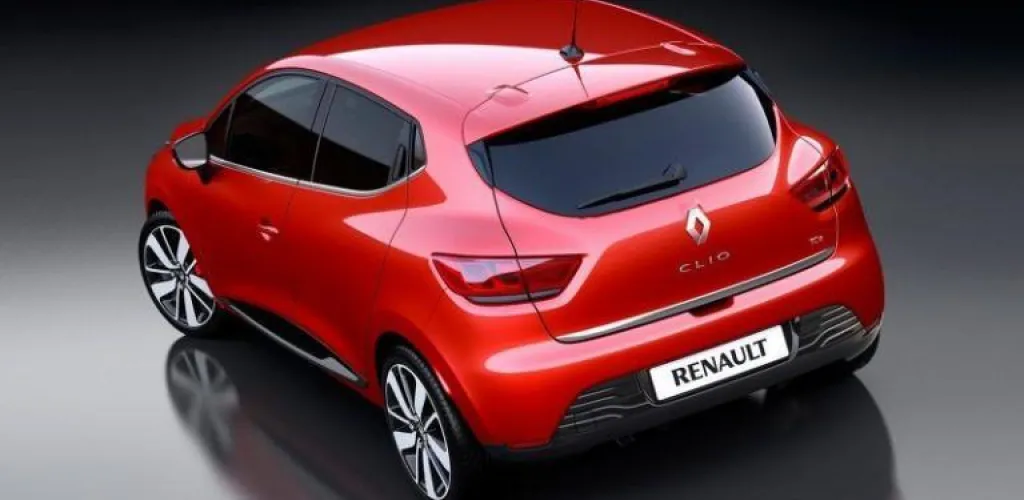
- Popular B-segment hatch in Europe with better space and modern tech
- Clio IV production: 2012 Paris Auto Show reveal; five-door only; produced in Flins and Bursa
- Chosen for design, space, and appeal to young buyers
- Common issues: suspension wear, electrical failures, DPF problems, and EDC gearbox
Renault Clio IV remains one of the most popular cars in the B-segment in Europe, valued for its modern design, efficient fuel economy, and value for money. Launched in 2012, this generation brought meaningful improvements over its predecessor, offering more interior space and modern technologies.
Based on real experiences of owners who answered our reviews, here is a comprehensive guide to help you understand what it means to own a Renault Clio IV and what to watch for if you’re considering purchasing such a car.
History and evolution of the Clio model
Renault Clio is a small car in the B-segment, produced by the French manufacturer Renault since 1990. The model quickly gained popularity, consistently one of the best-selling cars in Europe and contributing significantly to Renault’s revival after a difficult period in the late 1980s.
Clio is one of only two cars (the other being the Volkswagen Golf) to be voted European Car of the Year twice, in 1991 and 2006. The name comes from Clio, one of the nine muses in Greek mythology.
In Japan, the model is marketed under the name Renault Lutecia, because Honda owns the rights to the Clio name after producing the Honda Clio in 1984. The Lutecia name derives from Lutetia, the ancient Roman city that was the predecessor of Paris.
Overview of the Clio IV generation
Clio IV was unveiled at the Paris Auto Show in September-October 2012 and began marketing a month later. It is available in the hatchback body style and, starting in 2013, as a wagon. Production takes place in the plants at Flins, France and Bursa, Turkey.
A distinctive feature of this generation is that it is available only with five doors, with the rear door handles hidden near the windows. The wheelbase was significantly extended and now approaches that of a compact car, while the length and width were also increased.
Why owners choose the Clio IV
To better understand the model’s appeal, we collected responses from real owners. Here is what they told us:
Robert Sculschi chose the 1.5 Energy dCi (90 HP) start&stop: “I chose this model on a friend’s recommendation, after several checks and considering other models, I stayed with this one.”
Cristian Iordache owns a Clio 1.2 16V (75 HP): “I chose to buy it because of its design, and because although it’s a small car it has enough space and it is aimed at us, young people starting our careers.”
Common problems of Renault Clio IV
As with any vehicle, Clio IV has some weak points that show up over time. The most well-known issues include:
Suspension problems
The suspension can show premature wear, especially at high mileage or when used heavily in cities with poor road infrastructure.
Electrical problems
Electrical systems can fail, especially on older models or those with high mileage.
DPF-related problems
Diesel engines may require frequent regenerations or fail if the car is used mainly in the city.
Problems with the automatic gearbox
The automatic EDC gearbox may have operating issues, especially on early production models.
Engine options for Clio IV
The engine range offers options for different needs and budgets:
Petrol engines
- 0.9 12v Energy TCe (H4Bt 400): 90 HP and 135 Nm - small-displacement turbo engine, efficient for city use
- 1.2 16v (D4F 740): 75 HP and 107 Nm - basic engine, reliable but less performant
- 1.2 16v TCe (H5Ft): 119 HP and 190 Nm - turbo engine with good performance for this class
- 1.2 16v Energy TCe (H5Ft): 118 HP and 205 Nm - optimized version for efficiency
Diesel engines
- 1.5 8v dCi (K9K 612): 75 HP and 200 Nm - base diesel, economical
- 1.5 8v Energy dCi (K9K 608): 90 HP and 220 Nm - stronger and more efficient
Driving experience and consumption
Traffic behavior and long-distance comfort
Robert Sculschi says: “In the city it is very good in traffic; it’s small, you can weave through quickly. Especially in parking.” Cristian Iordache confirms: “Being small, you can thread through traffic and park without problems. It is comfortable on long trips, even though it’s a car meant for the city.”
Real-world fuel economy reported by owners
- 1.5 Energy dCi (90 HP):
- City: 5-5.5 L/100 km
- Highway: 3.5-4 L/100 km
- 1.2 16V (75 HP):
- City (winter): about 8.2 L/100 km
- City (summer): 7.1-7.2 L/100 km
- Highway: 5.2 L/100 km (can exceed 6.4-6.6 L/100 km in sporty driving)
- 1.5 dCi (75 HP):
- Normal driving: about 4 L/100 km
Reliability in owners’ experience
With cars as popular as Renault Clio, there’s no need to compromise on service history: if the car you’re looking at doesn’t have it, you’ll surely find one that does.
Be especially mindful of the bodywork, as Clio has always been popular among young drivers who may not be as careful as more experienced ones. Look for rear damage, as rear visibility leaves a lot to be desired.
Real reliability experiences
Robert Sculschi (1.5 Energy dCi 90 HP): “I was surprised by the reliability; I didn’t expect it. The only issue I encountered, a minor one, was with the exhaust flap, but from what the mechanic said it was probably my fault because I always disabled the start&stop function and it didn’t complete its locking/unlocking cycles. And for this reason it would get stuck.”
Cristian Iordache (1.2 16V 75 HP): “I haven’t had any problems so far. Renault gave me this car as if new and very well cared for. It is very reliable and I’m sure it will maintain its position over time.”
Mercaldi Paolo (1.5 dCi 75 HP): “I haven’t had any problems; as long as you service it and do oil changes regularly, it’s all good. The door seals could use a bit of improvement.”
Second-hand market prices
In the Romanian second-hand market, prices for a Clio IV vary depending on year, mileage, and engine:
- Renault Clio 1.5 dCi (2016, 160,000 km): approximately €6,250
- Renault Clio 0.9 TCe (2018, 19,500 km): approximately €8,500
These prices vary based on vehicle condition, service history, and additional equipment.
Buying tips
To make a well-informed purchase, current owners offer the following advice:
Robert Sculschi recommends: “My tip for those seeking such a car is to be very careful when buying from a private seller. Since it’s used, I recommend visiting a dealer; I think it’s the safest place. You should pay attention to the engine type. I recommend everyone a thorough diagnostic before purchase.”
Cristian Iordache suggests: “Think carefully about what you need and what you don’t necessarily. That is, distinguish between practicality and a whim.”
Buying checklist:
- Check the service history - ensure maintenance has been performed on time
- Inspect the bodywork - pay particular attention to the rear area
- Test all electronic systems - verify the operation of all equipment
- Assess the suspension condition - listen for unusual noises while driving
- For diesel, check the DPF - ensure it functions correctly
- Request a full diagnostic - at an authorized dealer if possible
Conclusion
The Renault Clio IV proves to be a solid choice for those seeking a small, economical, and practical city car. While it shows some age-related issues, owner feedback is generally positive, especially regarding reliability and fuel economy.
To have a pleasant experience with a used Clio IV, thorough pre-purchase checks and regular maintenance according to the manufacturer’s recommendations are essential.
Sursa foto: car-recalls.eu