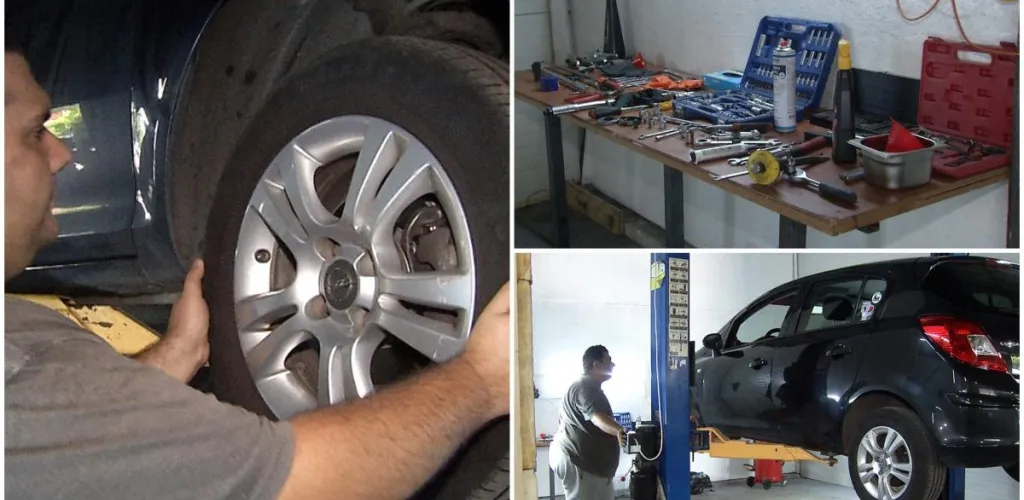
- Romanian car owners increasingly use self-service shops to DIY repairs.
- Typical rate is 60 RON per hour for space and tools.
- Most users are men aged 21-61 with basic mechanical knowledge.
- Savings vs traditional shops are significant, e.g., headlight replacement 150-200 RON.
In recent years, a notable trend is shaping the Romanian automotive market: more car owners are choosing to perform maintenance and repair work themselves in specialized self-service auto shops. This shift comes from both the desire to achieve substantial savings and experiences with traditional workshops. For an hour of work in such spaces, drivers pay around 60 RON and gain access to all the tools and equipment needed.
This article explores who uses self-service auto shops, the significant savings they offer, the lack of trust in traditional service centers, the facilities provided, the types of interventions performed, safety considerations, and the future outlook for self-service in Romania.
Who are the self-service auto shop clients
Most of those who use these services are men aged 21 to 61, who have basic technical knowledge of automotive mechanics. They are not professional mechanics, but car enthusiasts who want to understand their own vehicle better and have full control over the interventions performed.
Alexandru, one of the loyal clients of such a self-service, visits the workshop at least once a month. A car enthusiast with solid knowledge in the field, he prefers to check his vehicle himself and carry out minor repairs.
“I had to check some sounds in the suspension because there are clunks when I turn the steering wheel to full lock on take-off, and I wanted to be sure it’s not something that would leave me stranded in Pitesti, in Ploieesti or elsewhere and that I won’t lose a wheel on the road,” explains Alexandru about his motivation.
Significant savings on service costs
The main advantage of self-service auto shops is the substantial savings that car owners can achieve. To better understand the cost difference, consider the example of a simple operation such as replacing a headlight:
- At a traditional service: 150-200 RON (including labor and markup)
- At a self-service: 60 RON/hour (space and tools only) + cost of the part
For more complex tasks, such as a full inspection, the differences become even more evident. “We save money, first and foremost. At least for me, a student, it’s very important. A typical routine inspection on a car usually lasts up to about 2 hours, from the moment you lift the car onto the lift to the moment you lower it and drive away. At a normal service, this would take about a day because they have other cars prioritized,” says Alexandru.
Lack of trust in traditional service centers
Beyond the financial aspect, many drivers choose self-service due to negative experiences with mechanics and auto shops over time. Tales of botched interventions, replaced parts without need, or repairs performed superficially are common among car owners.
“Here I can check for myself what needs to be done and ensure that I get what I need and that there aren’t other things added that shouldn’t have or that could have been replaced. And I want to be sure that the job I’m doing is done by me, with my own hands,” emphasizes Alexandru.
This lack of trust in professionals may seem paradoxical, but it is the direct consequence of numerous cases of dishonest practices in the industry. When you work on your own car, you know exactly which parts were replaced, what work was done, and you can be sure that everything was done to standard.
What facilities does a self-service auto shop offer
According to Dan Pantilin, founder of a self-service auto shop, “It’s a place where you can come and work on your own car. We have ideal conditions, we have tools, we have professional lifts, and a very nice workspace.”
These spaces provide customers with:
- Professional lifts to raise the car safely
- Complete tool sets – wrenches, torque wrench, hydraulic jack, trolleys for floor work
- Well-organized workspaces with proper lighting and suitable work surfaces
- Personal protective equipment – gloves, goggles, stands for parts
- Washing and cleaning zones for components
Types of interventions performed at self-service
“If we start with the simple things, first check what a car has, that it rattles, that it clatters, that there is a noise. Then comes the oil and filter change, the usual service, and, climbing the ladder of complexity, a belt and accessory replacement, hoses, bulbs or headlights,” explains Dan Pantilin.
The most frequent operations performed in self-service shops are:
Basic work:
- Oil change and oil filter replacement
- Replacing air, cabin, and fuel filters
- Checking and topping up fluid levels
- Replacing bulbs and fuses
Intermediate work:
- Replacing brake pads and discs
- Replacing shocks and other suspension components
- Battery replacement
- Checking and replacing hoses
Advanced work:
- Timing belt replacement (for experienced users)
- Replacing complete headlights
- Repairs to the exhaust system
- Diagnostics and solving mechanical noises
Statistics and frequency of use
According to data provided by self-service shop owners, “at least seven drivers come to this self-service every day to check or do small repairs on their cars.” This means over 200 customers per month for a single location, indicating a steady demand for such services.
Most clients are repeat customers, returning monthly or every few months for routine vehicle maintenance. This demonstrates that the self-service model works and meets a real market need.
Safety considerations
Although self-service auto shops offer many advantages, it’s important for users to be aware of their limits. Complex tasks requiring specialized diagnostic equipment or advanced technical knowledge should remain the responsibility of professionals. Also, safety guidelines are essential—proper use of lifts, wearing protective gear, and avoiding working under unstable cars are imperative.
For those who want to learn more about automotive mechanics, there are online resources, video tutorials, and even specialized courses that can help develop the skills needed to safely perform basic repairs.
The future of self-service auto shops in Romania
The trend of doing car work yourself is not unique to Romania—it is seen in many European countries where labor costs are high. As more drivers realize the savings and control they can gain over their vehicle maintenance, the number of self-service shops is expected to grow.
These spaces do not replace professional workshops for complex tasks; they offer a viable alternative for routine maintenance and simple repairs. For many car owners, they represent a way to learn more about their vehicle, save money, and have the confidence that the work is done correctly.
Photo source: observatornews.ro