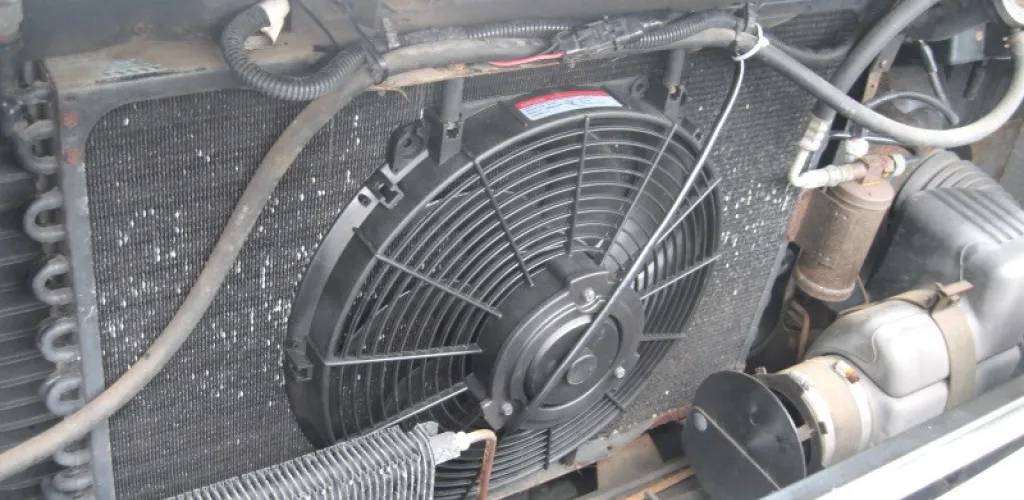
- Faulty radiator fan can cause engine overheating and costly failures.
- Abnormal noise or absence of the fan sound signals a defect.
- Rising coolant temperature or coolant level drop indicates cooling problems.
- Check the relay first; the motor is expensive and may require a mechanic.
The radiator fan is a crucial component in the engine cooling system, tasked with keeping the coolant temperature at an optimal level. Positioned strategically between the radiator and the engine, this element may seem insignificant, but its importance becomes evident when it fails.
Without a functioning fan, the coolant cannot effectively absorb the engine’s heat on its way between radiator and the cooling system. This situation can lead to engine overheating and costly failures.
Key symptoms of a defective radiator fan
Early recognition of fault signs can prevent serious and costly problems. Natural wear and heavy use are the main causes of fan deterioration.
Abnormal noise or absence of the characteristic sound
A functional fan produces a specific sound familiar to the owner. This noise comes from the electric motor that drives the fan blades and can be heard both from inside and outside the vehicle.
The complete absence of this sound or a significant change in it indicates a problem that requires immediate attention. Ignoring this symptom can lead to more serious and expensive failures.
Rising coolant temperature
An engine operating at high temperatures can suffer serious damage requiring costly repairs. To avoid this, repair the fan at the first signs of overheating.
The main role of the fan is cooling, and its cessation causes the engine temperature to rise. The coolant no longer efficiently absorbs heat, and the thermostat will indicate this issue on the dashboard. It is crucial not to ignore this symptom, as it can lead to multiple failures.
Coolant level drop
When the system temperature is not kept constant, coolant can evaporate more quickly. To prevent this evaporation and maintain coolant at the optimal temperature, the radiator and fan must function properly.
A defective fan can be one of the main reasons the coolant level drops unexpectedly. Keeping the fan in good condition is essential for maintaining an optimal cooling agent level.
Diagnosis and testing of the components
The radiator fan system consists of three main components that must work perfectly together: the electric motor, the control relay, and the speed resistor. A fault in any of them can compromise the entire system.
Fan relay - first check
The relay provides the proper electrical supply to the fan, drawing power from the vehicle battery and delivering the voltage and current required. Acting as a safeguard, it can fail due to power surges or aging.
Before replacing the entire fan, check the relay, as swapping it is much more economical. A faulty relay can mimic the symptoms of a defective fan.
The fan motor - the main component
The electric motor is probably the most expensive component, which is why the diagnosis should be performed by a specialized mechanic. It transfers electrical energy from the battery to the fan blades and operates continuously when the cooling system is active.
Because of heavy use, the motor is prone to wear. A faulty operation causes the fan to stop or run at insufficient capacity to cool the coolant.
The resistor - speed control
The resistor allows the fan to operate at different speeds, adapting to the engine’s cooling needs. This small but crucial component significantly affects the overall system performance.

The efficient operation of the resistor prevents issues caused by overheating of the motor, providing precise fan speed control based on the engine temperature.
Repair and replacement costs
Costs vary depending on the faulty component and the repair complexity. In principle, repairing an electrical circuit should not be overly expensive.
Costs for individual components
Fan relay: The most economical option, costing between 100-200 lei and can be replaced by the owner.
The resistor: Price ranges between 200-300 lei, depending on the manufacturer and vehicle specifications.
The fan motor: The most expensive component, with prices between 1,000-2,500 lei, depending on the brand, model, and year of manufacture.
Fan blades: Costs depend on the manufacturing material (metal or plastic), metal being preferred for durability.
Factors influencing costs
- Vehicle age: Rare or very old cars may present difficulties in finding parts
- Brand and model: Premium vehicles have higher parts costs
- Labor: Adds roughly 200-300 lei to the total cost
Thermocouple - the crucial temperature sensor
The thermocouple is a specialized sensor used to monitor temperatures in the automotive industry. It contributes to optimizing engine performance and ensuring system protection.
How the thermocouple works
The thermocouple contains at least two wires of different metals that, when joined, form an electrical circuit with two junctions. The first junction is located where the temperature is unknown, and the second where the temperature is known.
The difference between the two temperatures generates a voltage in the circuit, and the resulting current is used for precise measurement of the unknown temperature.
Symptoms of thermocouple failure
The fan does not stop: When the fans run continuously, even after the engine is turned off, the thermocouple may transmit incorrect data to the ECU. The engine management system believes the coolant temperature is higher than it actually is and keeps the fans active.
The fan does not start: The opposite situation may indicate the same problem - a faulty thermocouple transmits erroneous information, causing the ECU not to activate the cooling system when needed.
Diagnosing the thermocouple
To test the thermocouple, temporarily disconnect it. If the fans stop, you have identified the problem. Replacing the defective thermocouple will restore proper system operation.
If the problem persists, check the electric supply to the fan. Absence of current requires consulting a specialized auto electrician.
Maintaining the entire cooling system in good condition, including the fan and the thermocouple, is essential for optimal engine operation and preventing costly repairs.