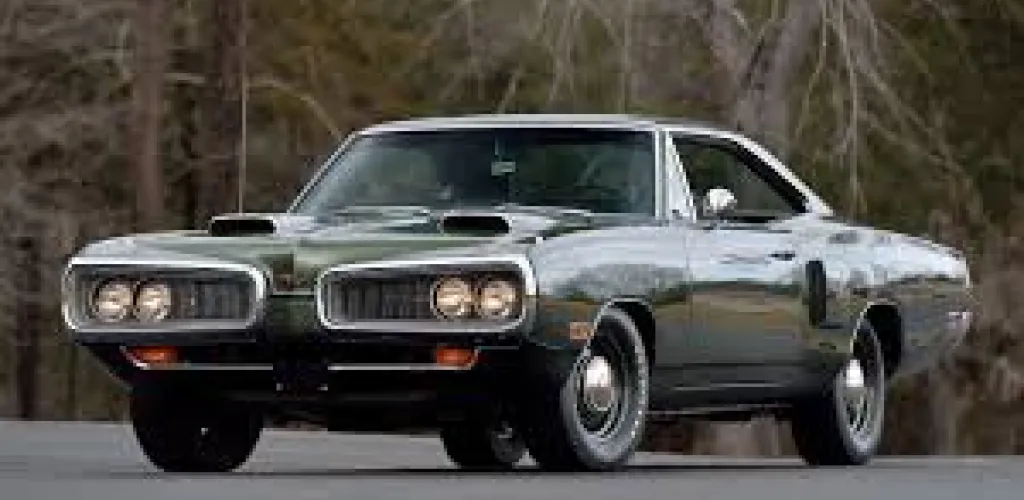
- Hemispherical chambers enable larger valves, better airflow, central spark, and higher compression.
- European roots preceded Chrysler, which made the concept a brand phenomenon.
- Chrysler built V8 Hemis starting 1951–1958; 1964 426 cu in dominated racing.
- The 1965–1971 street Hemi 426 delivered about 425 HP, massive torque, and iconic roar.
The Hemi engine is one of the most iconic innovations in automotive history, synonymous with raw performance and advanced engineering. The name comes from the hemispherical shape of the combustion chambers, paired with domed pistons, rather than the flat, conventional configuration.
This distinctive architecture is not just a matter of aesthetics—it carries significant technical advantages that transformed the Hemi into a living legend in the automotive world.
The technology behind the Hemi engine
- Larger valves: The hemispherical configuration creates more vertical space in the combustion chamber, allowing larger intake and exhaust valves.
- Improved air flow: Larger valves facilitate more efficient flow of the air-fuel mixture into the cylinders and exhaust gases out.
- Optimal spark plug placement: The spark plug can be positioned centrally in the combustion chamber, exactly in the middle of the hemispherical volume, ensuring a more complete and uniform burning of the mixture.
- Superior compression ratio: The chamber shape allows higher compression ratios without the risk of detonation.
These technical features translate directly into higher power output, quicker response to acceleration, and improved thermal efficiency.
European origins of the Hemi concept
Although many associate Hemi engines exclusively with Chrysler and American auto culture, the concept of hemispherical combustion chambers has European roots. European automakers experimented with this technology as early as the 1900s, recognizing the theoretical advantages of the design.
Yet Chrysler Corporation managed to turn this technical concept into a cultural phenomenon and a successful commercial brand.
Birth of the legend: Chrysler’s Hemi
Chrysler began producing V8 engines with hemispherical combustion chambers in 1951, continuing until 1958. Interestingly, in this initial phase, the company did not use the term Hemi in its marketing campaigns, treating this feature purely as a technical advantage.
The major turning point came in 1964, when Chrysler unveiled a 426 cubic inch Hemi race engine that would revolutionize American motorsport. This monstrous V8 dominated both NASCAR and drag racing, shattering records and beating competition with impressive regularity.
On-track performances drew immediate attention from racing authorities, who requested Chrysler to produce a street version of the engine to meet homologation rules. This decision would transform the 426 cu in Hemi from a pure race engine into a street legend.
Hemi 426: The legend of the ’60s-’70s
Between 1965 and 1971, Chrysler produced the street version of the 426 cubic inch Hemi, an engine that quickly earned a quasi-mythical status among performance enthusiasts. The features that made it legendary included:
- Powerfully brute output (officially 425 HP, but in reality much more)
- Enormous torque available at low rpm
- Distinctive, unmistakable sound
- Surprisingly reliable for an engine this high-performance
Chrysler quickly recognized the value of the Hemi brand and registered the Hemi trademark, protecting this iconic name.
The powerplant was fitted to the most legendary American muscle cars: Plymouth Road Runner, Plymouth Barracuda, Dodge Charger, Dodge Challenger, and others. Today, vehicles equipped with the original 426 cubic inch Hemi are highly sought after by collectors and can fetch astronomical prices at auctions.
Revival of the Hemi name in the modern era
In 2003, when Chrysler—then part of Fiat Chrysler Automobiles—reintroduced the Hemi name for the new engines intended for Dodge Ram pickup trucks, purists raised concerns.
Reason? The new Hemi engines were “Hemi” only in name. The combustion chambers were no longer hemispherical, being almost flat, similar to conventional engines. Technically, these engines no longer benefited from the geometric advantages that made the original design famous.
Nevertheless, Chrysler leaned heavily on the strength of the Hemi brand, using it extensively in marketing for the modern V8 engines available in Ram, Jeep, and Dodge vehicles.
The Hemi Legacy Today
Although modern Hemi engines have no direct technical connection to the legendary 426 cubic inch unit from the 1960s, the name continues to evoke performance, power, and American tradition. Modern Hemi V8 engines, available in displacements of 5.7L, 6.2L, and 6.4L, deliver impressive performance and keep the flame alive for large naturally aspirated engines.
Today, the Hemi engine remains a strong cultural symbol, representing the golden era of American muscle cars and continuing to inspire automotive enthusiasts worldwide. Even though technology has evolved and the design is no longer authentically hemispherical, the Hemi legend lives on.
Photo source