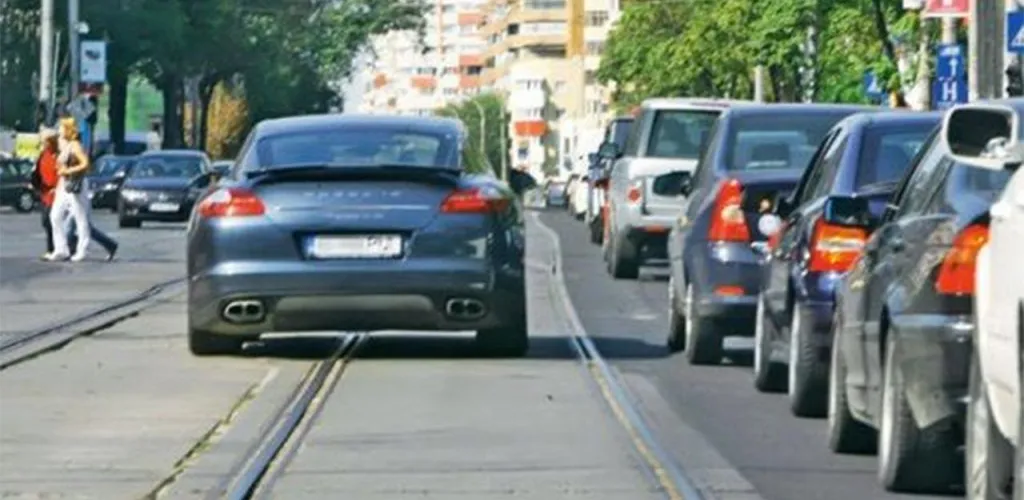
- Two lanes per direction allow tram-line driving; three or more lanes forbid it.
- Obey signs: ‘keep the tram line clear’ and cross-hatched markings prohibit entry.
- Slippery rails increase risk; trams have priority and may move unexpectedly.
- If signs don’t prohibit, follow lane-count rule to determine legality.
Driving on tram lines is a common scenario in Romania’s major cities, but many of the rules governing it remain unclear for many drivers. Understanding the legislation is essential not only to avoid fines but also to protect all road users—drivers and passengers alike.
In this comprehensive guide, we detail when driving on tram lines is allowed, which road signs apply, and the risks associated with this maneuver. Practical tips help you stay safe and compliant.
Risks of driving on tram lines
Before discussing when driving on tram lines is permitted, it’s important to understand the challenges and hazards of this maneuver.
Driving on tram tracks requires heightened attention and experience. The steel rails create a surface that is extremely slippery, especially in wet conditions or during winter. When both wheels are on the rails, grip is dramatically reduced, making braking and steering management extremely difficult. The car can slide easily, endangering both the driver and other road users.
Trams have their own traffic rules and priority in traffic. For example, trams have priority at intersections over vehicles coming from the right, and drivers must be wary of their sudden movements. Additionally, trams cannot make sharp turns to avoid obstacles due to the constraints of the rails, which makes any vehicle traveling in their lane a real danger.
Road signs regulating tram line traffic
The first and most important step before driving on tram lanes is to carefully check the road signs in the area. They regulate the movement, and ignoring them can lead to severe penalties.
Situations where driving is prohibited
There are two main types of signs that prohibit driving on tram lines:
- The keep the tram line clear sign — a specific sign that explicitly prohibits vehicles from driving on the lane designated for trams
- Dashed road markings on the carriageway — areas marked with cross-hatched lines indicate that the lane must be kept clear for trams
In the presence of these signs or markings, drivers are not allowed to enter the tram line under any circumstances, regardless of traffic density or other circumstances.
Legal conditions for tram line driving
In the absence of signs prohibiting driving, the law allows the use of the tram line by ordinary vehicles under certain clear conditions.
Two-lane rule
The main criterion determining whether you may or may not drive on the tram lines is the number of lanes available in your direction of travel. According to the traffic legislation:
- On roads with a maximum of two lanes of traffic per direction, drivers may legally drive on the tram line
- On boulevards with three or more lanes per direction, driving on the tram line is strictly prohibited, regardless of the situation
This rule applies even if the first lane may be occupied by parked cars or other obstacles. Even if you appear to have only two free lanes available, if the road has three or more marked lanes, you may not enter the tram line.
Obligations towards trams and passengers
Even when driving legally on the tram line, you have certain strict obligations:
- You must not disrupt the operation of public transport. This means you must constantly monitor rearview mirrors for approaching a tram and clear the lane in a timely manner.
- You must not endanger passengers. When a tram stops at a station, you must wait until it resumes moving. Overtaking is allowed only after the tram has resumed movement and it is safe to do so. This rule is essential to protect passengers boarding or alighting from trams.
- You must yield to trams. If a tram is approaching, you are obliged to leave the lane and allow it to pass without delay.
Penalties for driving illegally on tram lines
Violating tram line rules is considered a serious offense and carries severe penalties.
Fines and license suspension
Drivers who drive on tram lines when it is prohibited face:
- Substantial fines — the exact amount varies with current law, but can be significant
- License suspension for a minimum of 30 days — this means you will be without the right to drive for at least one month
- Penalty points — added to your driver record and may lead to further suspensions for other offenses
Practical tips for safe driving
To avoid dangerous situations and penalties:
- Study the route in advance — if you are not familiar with the area, check the number of lanes and traffic rules ahead of time
- Pay attention to signs — watch for any sign regulating tram line traffic
- Avoid tram lines in wet weather — even if legal, the risk of skidding increases significantly
- Always respect trams — give them priority and do not block their movement
- Be prepared to exit the lane quickly — continuously monitor traffic behind you to notice approaching trams
- Do not overtake trams stopped at stations — wait until they start moving and it is safe
Understanding and respecting these rules will help you drive legally and safely in areas with tram lines, avoiding accidents and legal penalties.