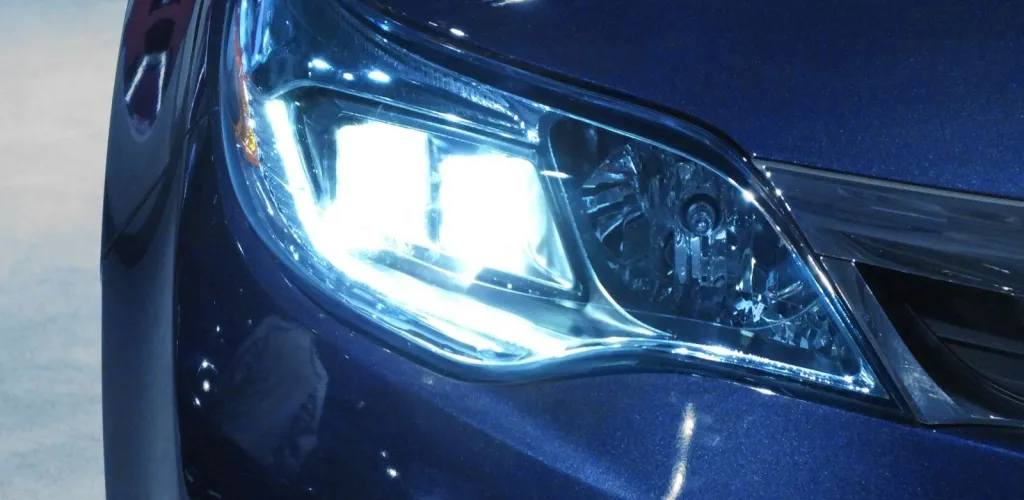
- Xenon HID headlights emit 3000–3500 lumens with 4300–6000K white light.
- Xenon headlights provide 200–300% higher light output and 35% energy savings.
- Color temperature 4300–6000K; daylight-like light improves contrast and visibility.
- Glare can dazzle other drivers, especially in oncoming traffic.
Xenon-based headlights represent one of the most advanced automotive lighting solutions currently available on the market, delivering performance markedly superior to traditional halogen systems. For owners of older vehicles equipped with halogen headlights, upgrading to xenon technology can be a valuable investment that dramatically changes night driving.
Xenon technology relies on using xenon gas - an odorless, colorless noble gas which, when energized, ionizes and emits bright, white light. This technology provides not only superior illumination but also improved energy efficiency compared with conventional systems.
What xenon headlights are and how they work
Xenon headlights, also known as HID (High Intensity Discharge) headlights, operate by creating an electric arc between two electrodes inside a quartz capsule filled with xenon gas and mercury vapor. This process generates high-intensity light of roughly 3000–3500 lumens, compared with 1000–1500 lumens for halogen headlights.
The technology requires an electronic ballast that controls the current and voltage needed to start and maintain stable lamp operation. At startup, the system delivers a startup pulse of roughly 25,000 V to ignite the arc, after which the voltage drops to 85 V for normal operation.
Advantages of xenon headlights
Whiter and more natural light
Xenon headlights produce light with a color temperature between 4300K and 6000K, much closer to natural daylight compared with halogen headlights (3200K). This white light offers:
- Improved contrast on the road
- Superior visibility of road markings
- Easier identification of obstacles and traffic signs
- Up to 40% greater coverage range
Cleaner and more focused light
The most significant advantage of xenon headlights is the superior light quality and precise focus. Compared with halogen systems, xenon headlights offer:
- Luminous intensity 200-300% higher
- Uniform distribution of light on the road
- Clear and precise outline of the illuminated area
- Elimination of unwanted shadowed zones
Longer lifespan
Xenon bulbs have a considerably longer service life:
- Halogen headlights: 400-1000 hours
- Xenon headlights: 2000-3000 hours
- Some premium models can exceed 4000 hours
This durability is due to the absence of a metal filament, the component most often defective in halogen bulbs.
Superior energy efficiency
Xenon headlights consume about 35% less electrical energy than equivalent halogen systems:
- Halogen headlights H7: 55W
- Xenon headlights D1S: 35W
- Reduced load on the vehicle’s alternator
- Lower operating temperature

Disadvantages of xenon headlights
Glare for other road users
The high light intensity of xenon can cause discomfort and safety concerns for other drivers:
- Intense reflections in the mirrors of vehicles in front
- Temporary dazzle for oncoming drivers
- Discomfort especially for older vehicles without heliomate mirrors
- Increased risk of accidents due to glare
These issues are amplified if the installation is improper or the system is used on vehicles not prepared for this technology.
High cost of components
Investment in xenon technology involves significantly higher costs:
- Halogen bulbs: 20-50 lei
- Xenon bulbs: 150-400 lei each
- Electronic ballasts: 200-600 lei
- Professional installation and alignment costs
System complexity
Xenon headlights require additional components and specialized maintenance:
- Electronic ballast to control current
- Auto-leveling system required by law
- Headlamp washers required
- More complex diagnostics and repairs
Xenon headlight retrofit: legal and technical aspects
Legal vs. illegal retrofit
There are two types of retrofit for xenon headlights, with different legal implications:
Legal retrofit:
- Using factory xenon headlights
- Complete replacement of the headlight assembly with homologated units
- Mandatory installation of headlamp washers
- Functional auto-leveling system
Illegal retrofit:
- Aftermarket kits for halogen headlights
- Modification of lenses or reflectors
- Absence of headlamp washers
- Lack of auto-leveling
Technical requirements for legal retrofit
To legally install xenon headlights on a vehicle, the following are required:
- Xenon-homologated headlights - with the appropriate lenses and reflectors
- Headlamp washing system - mandatory under ECE Regulation R48
- Automatic auto-leveling - to prevent dazzling other drivers
- ECE-certified ballasts - certified for use
- Updated ITP - with the modifications legally registered
Costs of a complete retrofit
A legal retrofit can cost between 1500-4000 lei, including:
- Homologated headlights: 800-2000 lei per pair
- Headlamp washing system: 300-800 lei
- Auto-leveling: 200-500 lei
- Installation and adjustment: 200-400 lei
The right choice for your vehicle
Before opting for a xenon upgrade, consider:
- Available budget – for installation and maintenance
- Night driving frequency – to justify the investment
- Legal considerations – ensuring regulatory compliance
- LED alternatives – newer technology with similar advantages
Xenon technology remains an excellent solution for improving nighttime visibility, provided legal and technical requirements are met. An investment in a correctly installed and homologated system will offer years of safe and comfortable driving.