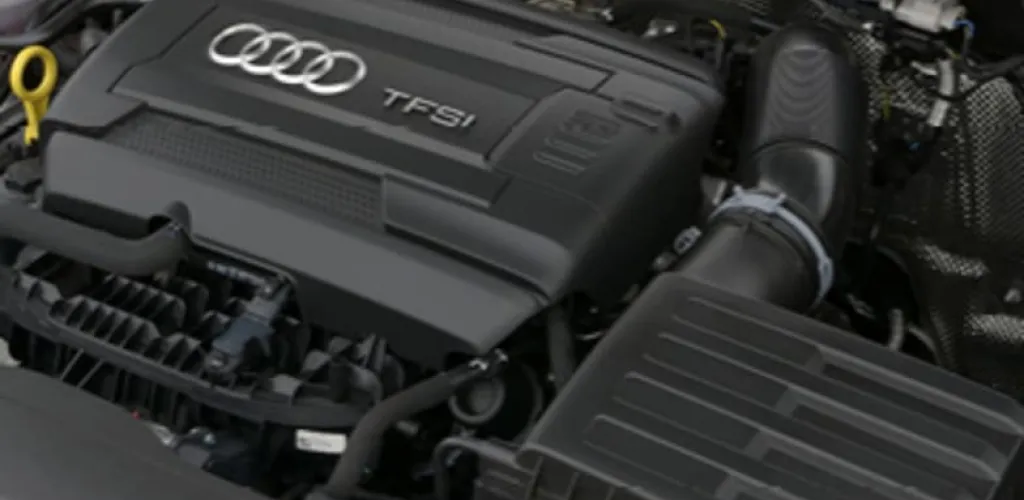
- TFSI stands for Turbocharged Fuel Stratified Injection.
- Post-2017 models use a two-digit power rating before TFSI or TDI.
- TFSI and TSI are similar mechanically; branding differs.
- TFSI engines are reliable with proper maintenance; TFSI-e adds up to 50 km EV range.
TFSI engines are one of Audi’s best-known technologies, appearing in nearly the entire lineup of the German carmaker. If you’ve ever wondered what lies behind this name and how reliable these power units are, this article provides all the answers.
In this guide, you’ll learn what TFSI means, how it differs from TSI, and the specifics of hybrid TFSI e variants, plus maintenance tips to maximize longevity.
What TFSI means for Audi
TFSI is the acronym for Turbocharged Fuel Stratified Injection, meaning the engine uses a turbocharged gasoline unit with stratified injection. This technology represents the natural evolution of FSI engines, which operated similarly but without turbochargers—units that are no longer produced today due to lower performance.
When you search for an Audi on the market, you’ll notice that the model name is never just the simple name (for example, ‘Audi A5’); it always includes the engine type (‘Audi A5 30 TFSI’). This approach allows quick identification of the vehicle’s technical characteristics.
Power rating system
In models produced after the end of 2017, Audi introduced a two-digit numbering system (ranging from 25 to 70) placed before the TFSI or TDI badge. These numbers indicate the engine’s power level and do not correspond to engine displacement or exact horsepower.
This system was designed to enable easier comparison between diesel, petrol, electric and hybrid vehicles. Customers can choose whether they want these symbols visible on the vehicle or not.
TFSI vs TSI: differences and similarities
Although Audi is part of the Volkswagen Group, it is the only brand that uses the name TFSI, while the others (Volkswagen, SEAT, Škoda) use TSI (Turbo Stratified Injection).
Key points to remember:
- On vehicles produced in the last 2–3 years there are no significant technical differences between TFSI and TSI engines
- Both technologies share the same constructive philosophy
- The main difference lies in the branding of each brand
TFSI hybrid engines (TFSI e)
When you see the letter “e” after TFSI, you’re looking at a completely different category of powertrain. TFSI-e marks plug-in hybrid engines (PHEV) that combine:
- A traditional gasoline engine
- One or more electric motors
- High-capacity batteries
Advantages of the TFSI e technology:
- Electric range: up to 50 km in pure electric mode
- Reduced consumption: significant improvement in fuel efficiency
- Lower operating costs: in the long term
- Flexibility: the ability to choose between operating modes
The actual electric range depends directly on driving style and traffic conditions.
Reliability of TFSI engines: technical analysis
General reputation
At an international level, TFSI engines are considered reliable and durable, with remarkable longevity when properly maintained. There are no major typical defects or recurring problems affecting this family of engines.
Minor issues identified
Oil consumption (pre-2012 models)
On TFSI engines produced before 2012, there was a tendency toward higher oil consumption. This issue:
- Is not technically critical
- Involves additional costs of about 50–100 RON per year
- Can accelerate piston wear if not monitored
Recommendations for managing this issue:
- Use a premium, high-quality engine oil
- Regularly check the oil level
- Avoid driving with a low oil level
- Periodically clean the pistons
Components that require attention
EGR valves:
- May require periodic cleaning
- Generally have a satisfactory lifespan
- Failures manifest as unstable idle
Injectors:
- Generally reliable components on TFSI/TSI engines
- May require cleaning after 100,000–150,000 km
- Failure affects performance and consumption
Preventive maintenance for longevity
To ensure optimal long-term operation, follow these principles:
Regular service programs
- Oil changes at the recommended intervals
- Replacing air and fuel filters
- Inspecting the turbocharging system
Use of the right fuel
- Gasoline with the recommended octane (minimum 95)
- Avoid fuels of questionable quality
- Periodic use of additives for system cleaning
Driving style
- Avoid sudden accelerations when the engine is cold
- Let the engine warm up gradually
- Avoid immediate stops after sporty driving
Conclusion: Is TFSI a smart choice?
Audi’s TFSI engines represent mature and reliable technology, with minor issues that can be easily managed through preventive maintenance. The blend of performance, efficiency and durability makes them a reasonable choice for most users.
For an optimal experience, sticking to the service schedule and using high-quality parts and consumables remain the key elements for the longevity of these engines. In the case of TFSI e hybrid models, the additional benefits in terms of efficiency and operating costs make the technology even more attractive for modern users.