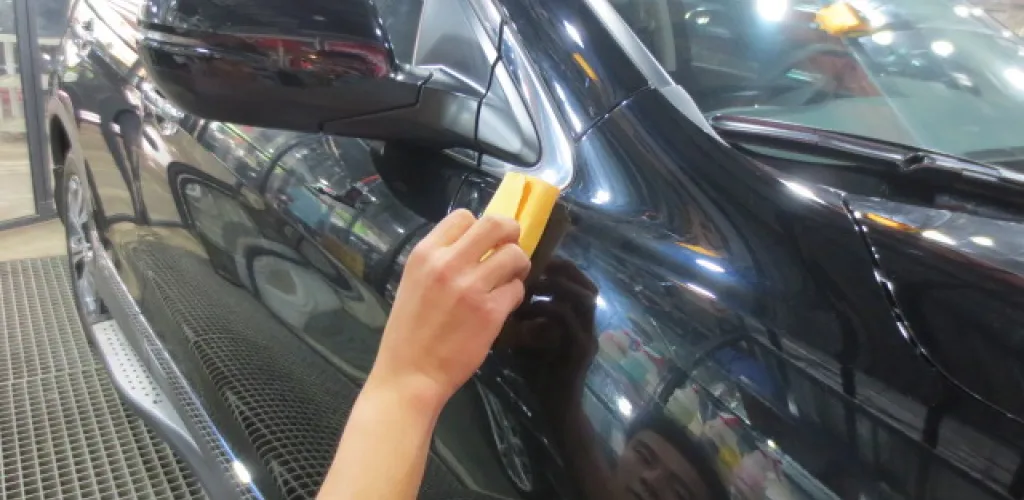
- Lasts 2–5 years, with some coatings offering up to a 5-year warranty
- Bonds chemically to paint (SiO2-based), forming a durable hybrid protective layer
- Provides hydrophobic, chemical, UV protection, and minor scratch resistance
- Requires more complex application and upfront cost, but saves maintenance
Ceramic coating for cars has become one of the most popular solutions for maintaining the pristine appearance of the paint over the long term. Unlike traditional wax treatments that offer temporary protection, ceramic coating creates a hard and durable layer that can last for years.
This innovative treatment uses a liquid polymer based on resin or quartz, which chemically bonds to the original paint. Through nanotechnology, the coating spreads evenly and penetrates all pores of the paint, creating an almost invisible but highly effective protective barrier.
What is automotive ceramic coating and how it works
Automotive ceramic coating is an advanced liquid solution that, once applied to the car’s paint, forms a transparent and hard layer. Unlike traditional waxes that sit on the surface of the paint, ceramic coating bonds at the molecular level, creating a hybrid surface that combines the properties of the paint with those of ceramic.
Its special composition, based on silicon dioxide (SiO2), gives it unique properties: it is incredibly durable, resistant to extreme temperatures, and provides superior protection against environmental factors.
4 major benefits of automotive ceramic coating
Exceptional durability of protection
The main difference between ceramic coating and other treatments lies in its impressive longevity. While car waxes need reapplication every 3–6 months, a quality ceramic coating can offer protection for 2–5 years, depending on product quality and usage conditions.
The most advanced ceramic systems come with up to a 5-year warranty and maintain protective properties even under heavy use. This makes the initial investment cost-effective in the long run.
The application process is more complex and takes longer than wax treatments, but the superior results justify the extra effort.

Comprehensive protection against environmental factors
Automotive ceramic coating provides remarkable resistance to a wide range of external threats:
Advanced hydrophobic protection
- The ceramic layer creates an extremely hydrophobic surface
- Water beads off quickly, reducing mineral deposit formation
- The beading effect facilitates maintenance and washing
Superior chemical resistance
- Protection against bird droppings (extremely acidic, pH 3–4)
- Resistance to de-icing salts and road chemicals
- Protection against industrial contaminants and urban pollution
UV filter efficiency
- Blocks up to 99% of harmful UV rays
- Prevents fading and paint oxidation
- Maintains color intensity for years
Mechanical protection
- Resistance to minor scratches (up to 9H on the hardness scale)
- Protection against abrasion from improper washing
- Resistance to damage from suspended particles
Ease of maintenance and permanent cleanliness
The anti-adhesive properties of ceramic coating radically transform car care:
- Dust and fine airborne particles are repelled
- Mud and roadway residues are easier to remove
- Insects and organic residues are less likely to cling
- Water spots and mineral deposits are minimized
These properties mean the car stays cleaner for longer, and when it needs washing, the process is much simpler. In many cases, a simple high-pressure rinse is enough to remove most contaminants.

Enhancement of the aesthetic appearance
Ceramic coating not only protects but also significantly enhances the vehicle’s visual appeal:
Intense shine
- Creates a mirror-like effect that amplifies natural gloss
- Deepens colors and makes them more vibrant
- Gives the paint a permanently “wet” look
Clarity and visual purity
- Eliminates the matte appearance caused by micro-scratches
- Smooths the surface for a flawless finish
- Maintains clarity for years
Important note: To achieve these results, the paint must be in optimal condition before application. Any existing defects (scratches, oxidation, stains) will be sealed under the ceramic layer, so proper preparation is crucial.
Costs of automotive ceramic coating in Romania
The price for applying a professional ceramic coating varies based on several important factors:
Factors influencing the price
Quality and brand of the ceramic product
- Entry-level systems: 1,500–2,500 RON
- Premium systems: 2,500–4,000 RON
- Top professional systems: 4,000–6,000 RON
Size and type of vehicle
- Compact cars: base price
- SUVs and large cars: +20–30% to the price
- Luxury vehicles: +30–50% due to extra attention
Paint condition and required preparation
- Paint in good condition: minimal preparation cost
- Need for polishing: +500–1,000 RON
- Major defect correction: +1,000–2,000 RON
Experience of the applicator
- Specialized, certified studios: premium price justified
- Studios with limited experience: risk of subpar results
Indicative prices on the Romanian market
Professional full application: 2,000–4,000 RON
- Includes paint preparation
- Application under controlled conditions
- 2–5 year warranty
- Post-application follow-up
DIY kits: 100–500 RON
- Variable quality
- Results depend on user experience
- No professional warranty
- Risk of incorrect application
Proper preparation for ceramic coating application
The success of the ceramic treatment largely depends on paint preparation:
Essential preparation steps
-
Thorough decontamination wash
- Removal of all surface contaminants
- Use of clay bar for embedded particles
- Chemical decontamination if necessary
-
Evaluation and correction of defects
- Identify scratches and imperfections
- Gradual polishing to even out the surface
- Removal of holograms and polishing marks
-
Final preparation
- Cleaning with isopropyl alcohol
- Ensuring a perfectly clean surface
- Checking for absence of product residues
Optimal conditions for application
- Ambient temperature: 15–25°C
- Humidity: below 70%
- No direct sun exposure
- Surface completely dry
- Uninterrupted working time
Choosing the right supplier
To achieve optimal results, it is essential to choose an experienced specialist:
Selection criteria
- Certifications and training from ceramic system manufacturers
- Proven portfolio with previous work
- Clear warranties and maintenance terms
- Adequate facilities for application (heated booth, professional lighting)
- Premium products from recognized brands
Important questions to ask the supplier
- Which brand of ceramic protection do you use?
- What is your experience with the specific type of paint?
- What warranty do you offer and what are the terms?
- What follow-up services are available?
- Can I see examples of similar work?
Investing in a quality ceramic coating is a smart decision for any car owner who values their vehicle’s appearance and value. The long-term benefits—both aesthetic and financial—more than justify the initial cost, provided you choose a professional supplier and high-quality products.