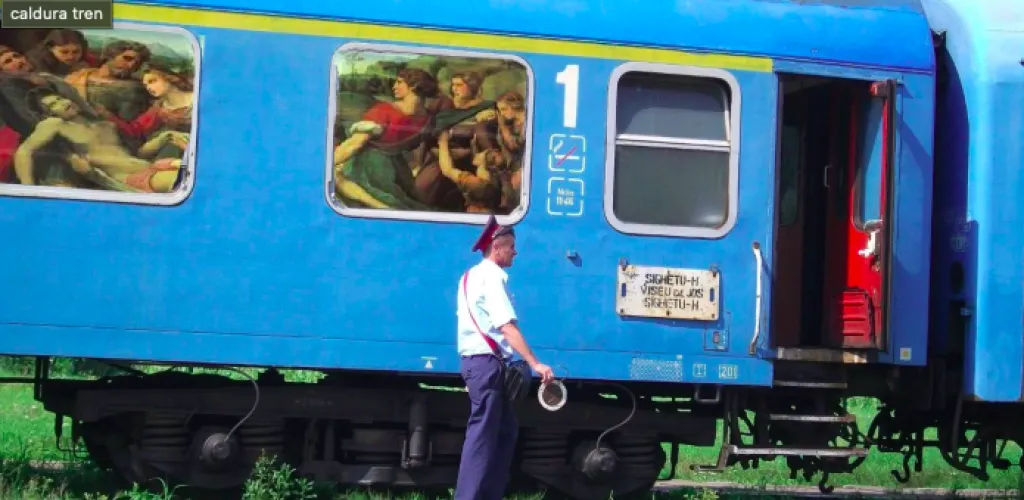
- CFR Călători cites extreme heat and climate-zone II limits as AC faults.
- Officially: no systemic problems; overheating triggers cooling fault mode and temporary shutdowns.
- July 5 AC failed for six hours; train continued 11:00–17:00 with no info.
- Company admits climate change requires adapting rail climate control and standards.
Travelers on trains to and from Henri Coandă International Airport have recently faced a serious issue: the lack of functional air conditioning during the peak heat of summer. Club Feroviar publicly highlighted this situation, and CFR Călători’s official response has sparked controversy among passengers.
CFR Călători’s statements have raised questions about whether the problem is temporary and weather-related or indicative of deeper design inadequacies. This article reviews the official explanation, traveler experiences, and the broader implications for climate adaptation in rail transport.
Official explanation by CFR Călători
The management of the National Company for Passenger Rail Transport offered an unexpected explanation for the climate control system dysfunction. According to official statements, the outside temperature would be far too high for the air conditioning installations to operate at optimal parameters. Moreover, representatives of the company stated that Romania is not in a climate zone that would permit the use of appropriate technologies for the extreme temperatures specific to scorching days.
Operation of the air conditioning system in extreme conditions
Technically, CFR Călători claims that the entire rail fleet is subjected to regular checks before leaving on a route. The company denies the existence of systemic technical problems, attributing the deficiencies exclusively to extreme weather conditions.
- At very high temperatures, the air conditioning installation becomes overstressed
- In case of overheating, the system automatically enters cooling fault mode
- Operation is stopped preventively to avoid more serious failures
- This protection should be temporary, not extended over long periods
Discrepancies between statements and travelers’ experiences
July 5 incident
The on-the-ground reality partially contradicts the official explanations. On July 5, the situation was far more severe than the official communique suggests. According to testimony from the person responsible for ticket control, the air conditioning was not functioning at all between 11:00 and 17:00, when the train arrived at Bucharest North Station.
Problematic aspects include:
- Total lack of air conditioning for six consecutive hours
- Absence of information about the system’s operation after 17:00
- No stated intention to withdraw the train from service
- The journey continuing in conditions unacceptable to passengers
Climate zones and adaptation to climate change
Current classification
CFR Călători explains that Romania is classified in climate zone II with respect to the design and construction of air conditioning systems in railway vehicles. This classification implies maximum temperatures lower than in climate zone I, where countries such as Italy and Spain are located.

Recognizing the need for adaptation
In a rare moment of candor, the company acknowledges that climate change has modified the parameters under which rail transport operates. The last two years have brought summers with temperatures much higher than the historical average, making current systems underdimensioned.
CFR Călători notes that it is considering reclassifying Romania into climate zone I, which would involve:
- Installing more powerful air conditioning systems
- Adapting technology to temperatures above 40°C
- Substantial investments in modernizing the rail fleet
- Alignment with standards from Italy and Spain
The Romanian paradox of air conditioning in rail transport
What CFR Călători’s response actually means
Analyzing the official statements, we can reach two contradictory conclusions:
First interpretation: The air conditioning installations will work better in winter, when temperatures are lower and the systems will not enter fault mode. This is an indirect admission that, paradoxically, the cooling system functions best when it is not needed.
Second interpretation: There is no functional air conditioning in trains in summer because Romania is not in climate zone I (countries like Spain or Italy), but is classified in climate zone II. This justification ignores the fact that temperatures in Romania in recent years have matched or even exceeded those in southern Europe.
Responsibility toward travelers
Regardless of the climate zone in which the country is classified, CFR Călători has a legal and moral obligation to ensure decent travel conditions. Passengers who pay for rail transport services have the right to:
- Acceptable interior temperature inside cars
- Functional ventilation systems
- Accurate information about travel conditions
- Alternatives or compensation in case of major service deficiencies
Solutions for the future
The company must come back with concrete measures to prevent the repetition of such situations:
- Investments in modern climate control systems adapted to current climate realities
- Intensified preventive maintenance in the pre-summer periods
- Backup plans for situations where the systems go into fault mode
- Transparency in communication - informing travelers about technical problems
- Compensation for passengers in case of major service deficiencies
Climate change is not an excuse for poor services, but a warning that infrastructure must adapt urgently to new realities. Romanian travelers deserve the same transport conditions as those in climate zone I, especially when temperatures are similar or even higher.
Photo source: Club Feroviar