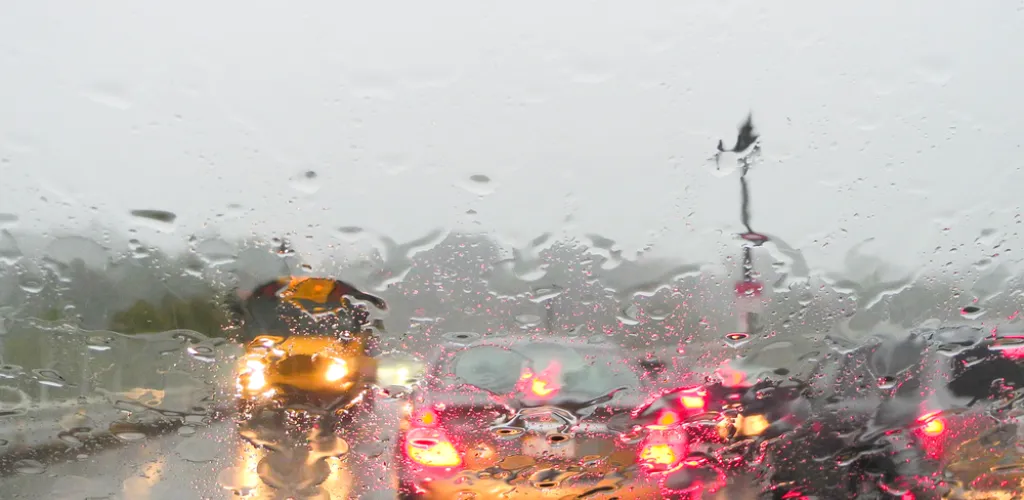
- Heavy rain reduces visibility, traction, fatigue, and increases stress, especially at night.
- Slow down and increase following distance to 3-4 seconds; braking distance grows.
- Use low beams and fog lights, avoid high beams; ensure lights function.
- Do not use cruise control in heavy rain; adjust speed manually.
Driving in heavy rain conditions presents one of the greatest challenges for drivers, regardless of experience behind the wheel. Whether we live in an area with frequent rainfall or rarely face this phenomenon, driving in the rain requires heightened attention and specific safety knowledge. Although postponing travel until weather conditions improve is always the safest option, reality shows this isn’t always possible. Below, we will explore all technical and practical aspects of safe driving in heavy rain conditions.
Risk factors while driving in the rain
Driving in heavy rain involves a complex combination of factors that significantly affect safety:
- Reduced visibility - raindrops on the windshield and fog dramatically limit the field of view
- Loss of traction - a layer of water on the road significantly reduces the contact between tires and asphalt
- Increased fatigue - the need for constant attention and extra concentration provokes fatigue more quickly
- Additional stress - the ongoing pressure to anticipate and respond to dangerous situations
These factors are amplified considerably at night, when darkness adds to the other challenges. In these conditions, even a moment of inattention can have serious consequences.
Speed and following distance adjustments
In many countries, including Romania, road regulations impose reduced speed limits in rain, especially on highways. It is essential to respect these limits and even drive at a speed lower than the limit when the intensity of the rain increases.
Why reducing speed is critical
On a wet road, braking distance increases significantly. If on dry asphalt a car traveling at 90 km/h stops in about 45 meters, on a wet surface this distance can reach 60-70 meters. At higher speeds, the difference becomes even more dramatic.
The safety distance should be a minimum of 3-4 seconds behind the vehicle in front, double the distance under normal conditions. This distance gives you the time needed to react in case of a sudden braking or an unforeseen situation.
Visibility and correct use of lights
In heavy rain, visibility drops dramatically, affecting both our ability to see and other road users’ ability to notice us.

Essential rules for lighting
- Always use low beams, even during the day
- Activate fog lights in conditions of very reduced visibility
- Avoid high beams - they reflect off the raindrops and blind other drivers
- Check the functionality of all lights before long trips
Headlights are not only for seeing the road, but also to be seen by other road users. The more visible you are, the lower the chances of being involved in an accident.
Driver assistance systems - when to deactivate them
Although modern driver assistance systems are extremely useful under normal conditions, in heavy rain some of them can become dangerous.
Cruise Control
Never use cruise control in heavy rain. This system maintains a constant speed, which is risky for several reasons:
- Inability to react quickly to changes in grip
- Increased risk of aquaplaning when passing through puddles
- Reduced driver attention
- Increased reaction time in emergencies
The driver must have full control over the accelerator pedal to instantly adapt speed to road conditions.
Maintenance of essential components
Windshield wipers
Wipers are the first line of defense against rain. They are equipped with rubber or silicone blades that wear over time and lose effectiveness.
Signs that the wipers need replacement:
- They leave streaks on the windshield
- They make noise when operating
- They skip over certain areas of the windshield
- They are more than 12 months old
Replacing the blades is simple and can be done even at a gas station. It’s a small investment that can save lives.
Tires
Tires are the only contact point between the car and the road. The tread depth is critical for water evacuation:
- Legal minimum: 1.6 mm
- Safety-recommended: at least 3 mm
- New tires: 7-8 mm
Periodically check tire pressure — correct pressure ensures an optimal contact patch with the road and efficient water evacuation.
Night driving in the rain
The combination of darkness and heavy rain creates some of the most dangerous driving conditions. Visibility is drastically reduced, and reflections from headlights on raindrops and puddles can be highly disorienting.
Tips for night rain driving
- Check that the lighting system is fully functional before departure
- Clean the headlights and taillights — dirt can reduce lighting efficiency by up to 50%
- Keep the interior of the windshield clean to reduce reflections
- Use the anti-fog function to prevent condensation
- Maintain an even greater distance from vehicles ahead
- Do not be intimidated by aggressive drivers pressuring you to go faster
Aquaplaning - the greatest danger
Aquaplaning (aquaplaning or hydroplaning) is the phenomenon where tires lose all contact with the road, traveling on a thin layer of water. In this situation, the driver loses full control of steering and braking.
When aquaplaning occurs
Aquaplaning occurs when the following conditions are met:
- Speed is too high for the road conditions
- Significant water accumulation on the road
- Worn tire tread that cannot evacuate enough water
- Incorrect tire pressure
The risk dramatically increases at speeds above 80 km/h, but it can occur at lower speeds if the water depth is large.
How to react in case of aquaplaning
If you enter aquaplaning, strictly follow these steps:
- Do not panic — stay calm and avoid sudden movements
- Do not brake — braking will lock the wheels and you will lose full control
- Ease off the accelerator — let the car slow down naturally
- Keep a firm grip on the steering wheel with both hands at the 9 and 3 o’clock positions
- If the rear of the car begins to skid, gently steer in the same direction the rear is moving — it may seem counterintuitive, but it’s essential to realign the wheels
- Wait until you feel contact with the road again — you will sense a clear difference when the tires regain solid ground
- Only then brake progressively to regain full control of the vehicle
Preventing aquaplaning
- Reduce speed before entering areas with standing water
- Avoid large puddles — if possible, steer around them
- Do not follow exactly in the path of the wheels in front of you — they can spray water
- Keep tires in good condition
- Be vigilant for water-accumulation zones: depressions, sections of road with poor drainage
Strong winds - an overlooked factor
Heavy rain often comes with strong winds, adding an extra level of danger. Lateral wind can destabilize the vehicle, especially on highways and open areas.
High-risk zones
- Open plains without natural obstacles
- Bridges and viaducts
- Exits from tunnels
- Mountainous areas with wind corridors
How to drive in strong winds
- Reduce speed and maintain a large distance from other vehicles
- Keep the steering wheel firmly with both hands
- Anticipate gusts of wind and be prepared to correct the direction
- Extra attention to large vehicles — trucks, buses, and trailers are much more vulnerable to wind
- Maintain a sufficient lateral distance from large vehicles that can be pushed by the wind into your lane
Trucks have a large lateral surface area that the wind can act on with tremendous force. It is not rare for trucks to be toppled by strong gusts. If you overtake a truck in a strong crosswind, do so quickly but safely, and keep as much lateral distance as possible.
Focus and fatigue management
Driving in heavy rain is mentally exhausting. Constant concentration, stress, and the need to process multiple streams of information lead to quicker fatigue than in normal conditions.
Tips for maintaining focus
- Take frequent breaks — every 1-2 hours
- Maintain a comfortable cabin temperature — not too hot, not too cold
- Ensure proper ventilation to prevent drowsiness
- Avoid distractions — phone, loud radios, intense conversations
- If you feel fatigued, stop safely at the first opportunity
Conclusion
Driving in heavy rain requires a combination of technical vehicle preparation, theoretical knowledge, and practical skills. Reduced speed, increased following distance, well-maintained equipment, and constant vigilance are the key elements to reach your destination safely. Remember that no road is so urgent that it justifies risking lives. If conditions are very dangerous and you lack experience driving in the rain, the wisest course is to postpone the trip.