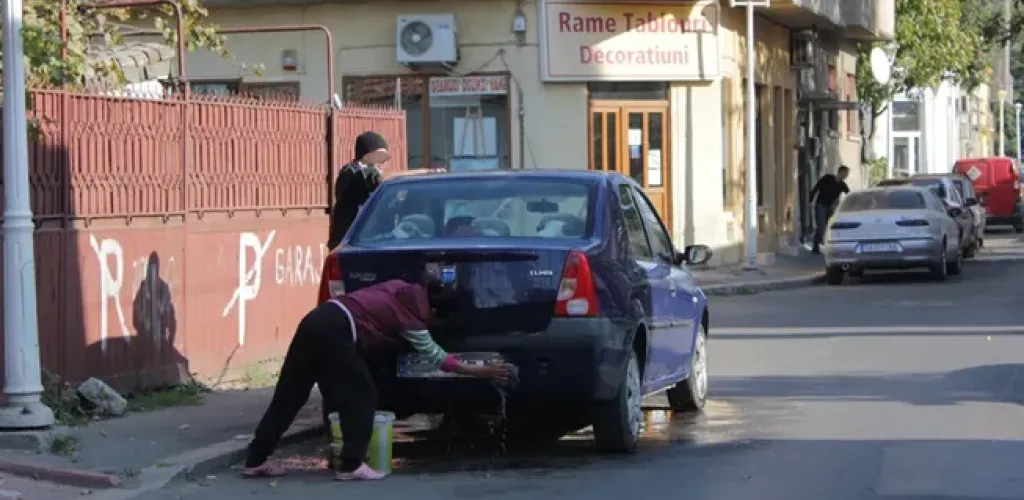
- Fines for washing in public vary by city; Bucharest individuals 200–500 lei.
- Bucharest companies face up to 1,000 lei or more.
- Cluj fines residents 500–1,000 lei for public or private spaces.
- Local rules derive from OG 21/2002; check regulations before washing.
Nearly half of Romanian car owners choose to wash their vehicles without professional services. Reasons vary: saving money, enjoying working on their own vehicle, or the satisfaction of a clean car done by hand. However, many do not realize that washing a car in front of the block or in the courtyard can be illegal and can carry significant penalties.
As self-service car washes gain ground as a legal and accessible alternative, many drivers continue washing their cars in public spaces, risking steep fines. It is important to know the law and to understand why this seemingly harmless activity is prohibited in most Romanian municipalities.
Fines for Washing a Car on Public Property
Bucharest: fines between 200 and 500 lei for individuals
In the capital, regulations are clear: individuals who wash their car on the public domain of the municipality may receive fines between 200 and 500 lei.
Bucharest: fines up to 1,000 lei for companies
For firms and legal entities, penalties are harsher, potentially reaching 1,000 lei or more, depending on the severity of the violation and the number of vehicles washed.
The City Hall of Bucharest explicitly prohibits spreading or direct discharge onto soil - on public domain, vacant lands or green spaces - of wastewater resulting from washing balconies, terraces or cars. This regulation rests on environmental protection and the maintenance of public hygiene.
Cluj: fines up to 1,000 lei
Cluj residents who choose to wash their car themselves in public or private spaces such as sidewalks, driveways, front of garages, roadways, inner courtyards or recreational areas may face fines from a minimum of 500 lei up to 1,000 lei. Local authorities in Cluj apply these regulations strictly, given that uncontrolled washing of vehicles can lead to soil and groundwater pollution.
Other localities in Romania
Although we presented examples from Bucharest and Cluj, most Romanian cities have adopted similar regulations. Even though there is no nationwide uniform law prohibiting car washing on public property, OG 21/2002 (recently amended) provides the framework under which local councils can issue their own regulations.
Before deciding to wash your car in front of your house, always check local regulations in your city or commune. Local police and the public guard have clear duties in enforcing these penalties.
Why is washing a car on public property prohibited?
There are several reasons why authorities prohibit this practice, all connected to environmental protection and public health:
- Soil and groundwater pollution: Detergents and chemical products used in car washing contain harmful substances that reach the soil and, subsequently, the groundwater.
- Visual pollution: Puddles of dirty water, oil stains and debris left on sidewalks and paths reduce the visual quality of residential areas.
- Deterioration of infrastructure: Water and detergents can damage asphalt, concrete and sewer systems.
- Public hygiene: Washing vehicles on public property contributes to unsanitary conditions and can attract pests.
- Blocking common spaces: Occupying driveways, sidewalks or parking spaces for car washing infringes on other citizens’ right to use these spaces.
Citizens’ responsibilities regarding public cleanliness
According to OG 21/2002 on urban and rural local governance (recently amended), citizens have clear obligations regarding cleanliness in public areas:
- Cleanliness of sidewalks in front of the property or living area
- Keeping the adjacent roadway clean
- Care of public places and parking spaces they use
- Respect for local regulations ensuring public hygiene
These responsibilities do not include the right to wash a car on these surfaces. On the contrary, washing vehicles contributes to the dirtiness of spaces that citizens are expected to keep clean.
Each local council can establish and apply specific regulations that provide fines for washing cars in prohibited places. Noncompliance with these regulations not only leads to financial penalties but can affect neighborly relations.
Legal alternatives for washing your car
Fortunately, there are several legal and responsible options for those who want to keep their car clean:
Self-service car washes
- These facilities have become very popular in Romania, offering professional equipment at affordable prices.
- Advantages include:
- Low prices (usually between 10 and 30 lei for a full wash)
- Full control over the washing process
- High-pressure professional equipment
- Specialized cleaning products
- Proper collection and treatment of wastewater
- Extended hours, many operating non-stop
Traditional auto washes
- For those who prefer their car to be washed by professionals, traditional auto washes offer full services at reasonable prices. Many of these also include waxing, polishing or interior cleaning.
Private property washing with collection system
- If you own a private yard, you can wash your car there, but ensure that:
- Waste water does not drain onto public property
- Use biodegradable eco-friendly products
- Respect the homeowners association regulations or local authorities
- Do not disturb neighbors with excessive noise
How to protect yourself from fines
To avoid financial penalties and help protect the environment, follow these recommendations:
- Inform yourself about local regulations – contact the city hall or local police to know exactly what restrictions apply in your area
- Use authorized washes – either self-service or staffed by professionals
- Educate family and friends – many people do not know this practice is illegal and may be fined
- Avoid washing on sidewalks, driveways, streets or in front of the block – even if you see others doing it
- Report abuses – if you see individuals or companies regularly washing cars on public property, you can notify local authorities
Conclusion
Although washing a car at home may seem convenient and cost-saving, the potential fines often exceed the savings. In Bucharest, Cluj and most Romanian cities, this practice is prohibited and penalties are significant.
Legal alternatives, such as self-service washes, provide an affordable, efficient and environmentally responsible solution. By respecting local regulations and choosing legal options, you contribute not only to avoiding fines but also to protecting the environment and maintaining a high standard of public hygiene in your community.