

When it frequently happens that the car doesn’t perform well, but you don’t suspect any major technical malfunction, it’s possible that this occurs because the Limp Mode is activated. The decrease in the car’s performance due to entering Limp Mode can happen without prior warning.
What does Limp Mode mean? We could say it’s the mode in which the car protects itself when it detects an error or a technical malfunction. More precisely, in situations where signs of a malfunction appear, the engine’s computer activates the car’s safety mode or Limp Mode by reducing the power, typically limiting it to 2500 RPM for diesel engines and 3000 RPM for gasoline engines.
The sudden activation of Limp Mode in an Peugeot Partner can catch you by surprise and put you in a difficult situation, especially when driving at high speeds. That’s why we found it very useful to provide you with all the information that can help you understand how Limp Mode works, recognize when the safety mode is activated, and, most importantly, know how to react to avoid any danger. Keep reading!
Why does an Peugeot Partner enter Limp Mode?
Firstly, it’s essential to understand how the car’s safety mode manifests itself. The not-so-good news is that the transition to Limp Mode usually occurs without warnings, without noticing other dysfunctions in the car. You can recognize the change in the car’s behavior - it won’t rev to its maximum capacity, and the speed won’t exceed 100 kilometers per hour or even less.
The good news is that, although you don’t receive prior signals before entering Limp Mode, once it’s activated, the Check Engine light on the dashboard will illuminate. Very few situations make an exception and are not signaled by the permanent or intermittent illumination of this dashboard warning light. When you turn off the engine and restart it, the car may exit Limp Mode temporarily, but shortly after, the safety mode and the Check Engine light will turn on again. The safest solution when an Peugeot Partner enters Limp Mode is to have it checked in a service center as soon as possible.
Most commonly, an Peugeot Partner enters Limp Mode due to electrical issues. However, sensor failures or ECU problems can also occur.
How can you remedy the situation when Limp Mode is activated?
There is only one recommended solution when the car enters Limp Mode, and that is to go to a service center for a check-up.
The most common electrical failures can be a faulty EGR valve, a non-functioning catalytic converter, a clogged DPF or particulate filter, or malfunctioning sensors. Even if it seems that the symptoms of the malfunction have disappeared when you turn off and restart the engine, delaying proper diagnosis and repair will only worsen the malfunction and create even higher service costs. This is precisely the purpose of the safety mode, to protect the engine as much as possible and minimize the damage that would occur if the car were to run under the same conditions as when its technical condition is good.
What specifically causes an Peugeot Partner to enter Limp Mode?
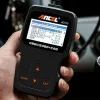
There are many reasons that can trigger the entry into Limp Mode. To be on the safe side, you need to scan the car with original testers like Launch or Autel. These are specialized equipment available in the service center, and you can’t use them at home unless you are specialized in mechanics. The tester performs a complete diagnosis of the car, which will be explained to you by a mechanic later.
Diagnosis can confirm whether the car is indeed in safety mode and finds the error that shows which engine component is no longer functioning correctly.
4 components that can cause an Peugeot Partner to enter Limp Mode:
Turbocharger: If the turbocharger is not functioning correctly, the engine’s computer will transmit the information and activate the safety mode.
EGR valve: A clogged EGR valve due to exhaust gases containing residues can be one of the causes of Limp Mode activation.
DPF (Diesel Particulate Filter): When the DPF or particulate filter gets clogged, the car enters Limp Mode. The particulate filter is a more common issue in diesel cars, but it’s important to know that, in general, cars with DPF are not exempt from the problems it causes. The solution is to clean the filter.
Incorrect fuel/air mixture: This error is penalized by the ECU by activating Limp Mode.
Even though we mentioned earlier that the entry into Limp Mode is abrupt and without warning signals, there are several measures you can take to avoid it. These include regular maintenance and timely servicing, as well as checking the car in an authorized service center when you notice any dysfunctions.