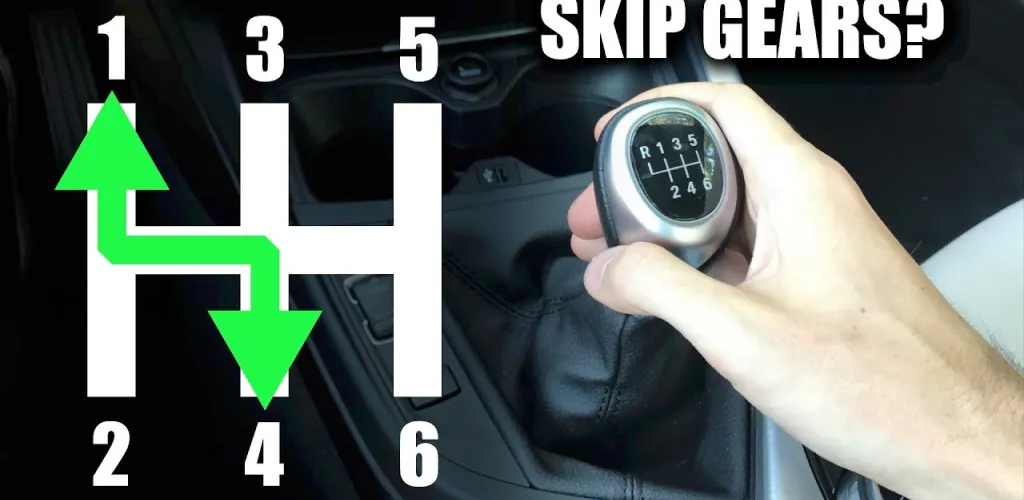

- Gears control engine power; first for starting, highest for top speed.
- Up-shifts: 1-2 at 10–20, 2-3 at 35–45, 3-4 at 60–80, 4-5 at 80–110.
- Down-shifts: 6-5 100–90, 5-4 75–65, 4-3 55–45, 3-2 45–30.
- Gas engines shift at higher RPM than diesel; gears may be skipped when needed.
When it comes to changing gears, we believe that every driver should master at least three important aspects to consider themselves proficient in driving a car. The first of these is the ability to smoothly shift gears, while the other two are clutch control and steering control.
Most people, even if they are not drivers, probably already know that gears can be shifted up and down. Most cars have up to 6 forward gears and a reverse gear, but in some cases, especially with automatic transmissions, there can be more. As the car’s speed increases, we increase the gear number, and when we brake and the speed decreases, we decrease the gear to provide more power to the engine. Gears determine the amount of power available from the engine, and it’s crucial to use them correctly, not only to maximize the car’s performance but also because they are helpful in various driving situations.
First gear always provides the most power but the lowest speed potential and is usually used only for starting from a standstill, while the highest gear offers the least power but the highest speed potential. In the following, we will present the typical engine speeds at which you should shift gears.
Shifting Up Gears
Speed 1-2, shift gear between 10-20 km/h, around 2000-2500 rpm
Speed 2-3, shift gear between 35-45 km/h, around 2500-3000 rpm
Speed 3-4, shift gear between 60-80 km/h, around 2500-3000 rpm
Speed 4-5, shift gear between 80-110 km/h, around 3000-3500 rpm

Speed 5-6, shift gear between 110-130 km/h, around 3000-3500 rpm
Shifting Down Gears
Speed 6-5, shift gear between 100-90 km/h, around 2000-2500 rpm
Speed 5-4, shift gear between 75-65 km/h, around 2000 rpm
Speed 4-3, shift gear between 55-45 km/h, around 2000 rpm
Speed 3-2, shift gear between 45-30 km/h, around 1800 rpm
Speed 2-1, we do not recommend this type of gear change
It’s essential to know and understand that the way you shift gears can vary significantly depending on the type of engine and its power. With gasoline engines, you should always shift gears at a higher RPM, about 500 RPM more than with diesel engines. Also, more powerful engines may require shifting gears at a higher RPM. It’s crucial to follow these RPM guidelines to ensure smooth gear changes and make the most of the engine’s power. The example provided is for a medium-sized, 2.0-liter gasoline engine.
Every time you change gears, you should also consider the other components in the engine’s drivetrain. You can downshift to avoid using the brakes or upshift to reduce acceleration.
Gear changes should be made at the right moments to ensure maximum vehicle performance. Additionally, gear changes can be selective, meaning you can skip certain gears in some situations. For instance, if you’ve been involved in an overtaking maneuver and have accelerated strongly or if you’ve braked hard to avoid an obstacle, you can shift two gears without any issues.
In addition to the points mentioned above, it’s crucial to ensure your safety when changing gears. Any situation that requires you to use both hands on the steering wheel indicates that it’s not the right time to shift gears. This applies especially to situations like turning, navigating narrow roads, or changing lanes. We also don’t recommend changing gears during overtaking unless it’s necessary, as it can result in a loss of power. When you press the clutch, you should release the accelerator pedal simultaneously, and both actions should occur quickly. Pressing the clutch almost completely cuts off the power from the engine to the gearbox, allowing for smooth gear changes.