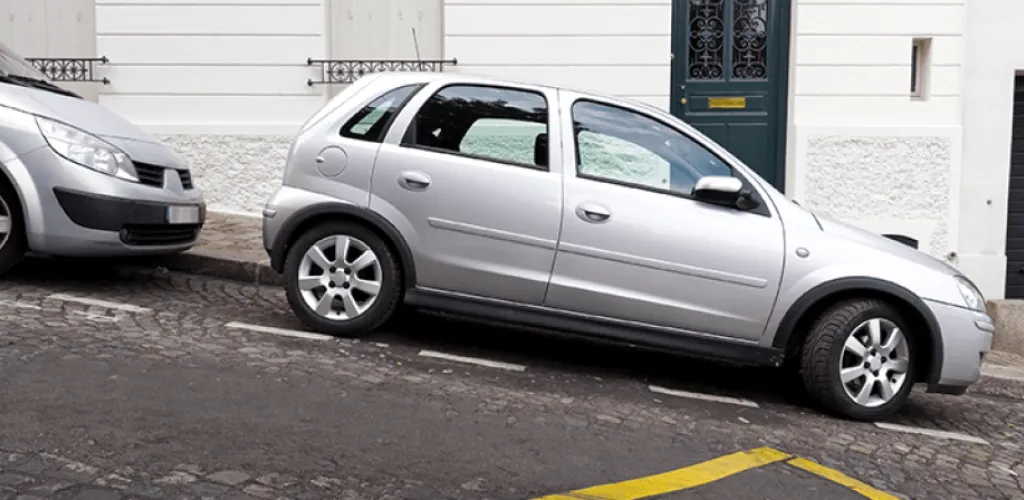
- Leaving the car in gear adds backup to the handbrake on slopes and in impacts.
- It creates a direct mechanical link between wheels and engine, resisting movement.
- First gear offers maximum resistance, more wheel turns per engine rotation, and redundancy.
- For most parking, first gear is preferred due to higher gear ratio and distributed wear.
Proper parking of a car is a fundamental aspect of defensive driving that many drivers neglect or apply differently, depending on habits or information heard along the way. The way we leave the car in gear when parking can make the difference between a securely parked vehicle and one exposed to the risk of moving uncontrollably.
Most drivers have probably faced the unpleasant moment when returning to the car and discovering that it rolled toward a neighboring vehicle or, worse, had moved a considerable distance from the original parking spot. This nightmare scenario can be easily avoided by correctly applying parking rules.
The importance of leaving the car in gear
Leaving the car in gear when parking is not just a recommendation but an essential safety measure that offers multiple advantages:
Multilayer protection against movement: When the gear is left engaged, the entire responsibility of keeping the car in place does not fall solely on the handbrake. If the handbrake fails due to wear, improper adjustment, or excessive load on a slope, the car can still move. The engaged gear provides a second level of protection.
Increased safety on inclined surfaces: On uphill slopes, engine compression offers resistance against rolling. This becomes crucial on steep ramps where the handbrake alone may not be sufficient.
Backup in impact situations: If another vehicle hits your parked car, the engaged gear can compensate for a weak handbrake and prevent uncontrolled movement of the automobile.
The mechanical principle behind the function
Understanding the mechanism that makes leaving the car in gear effective helps you appreciate the importance of this practice. When you engage a gear and switch off the engine, you create a direct mechanical connection between the wheels and the engine through the gearbox and drivetrain.
In this scenario, for the car to move, the wheels must turn the driveshaft, which in turn rotates the crankshaft. This process requires compressing air in the cylinders, which creates significant resistance. The gear teeth of the manual transmission resist rotation, and the higher the gear ratio (as in first gear), the more rotations the wheels must perform to turn the engine once, providing greater resistance to movement.
First gear or reverse: which is the correct choice?
Advantages of the first gear
First gear is generally the most suitable option for most parking situations:
- Maximum gear ratio: First gear has the highest gear ratio among all forward gears, meaning it provides the greatest resistance to movement.
- Wheels turn more: To complete one engine rotation, the wheels must spin more times, multiplying the effort required to move the car.
- Redundancy: Unlike reverse, which is unique in the gearbox, we have multiple forward gears. If the first gear failed, the risk is smaller than if relying on reverse.
- Distributed wear: Using the first gear daily distributes wear across a mechanism that is used frequently and maintained properly.
When to use reverse
Reverse can be preferred in certain specific situations:
- Parking facing downhill on a slope: When the car is parked facing downhill, reverse provides natural resistance against forward rolling.
- Very steep incline: On some car models, reverse may have a gear ratio similar to or even higher than first gear.
- Psychological safety: Some drivers prefer reverse for the certainty that the car will not start moving forward if you forget to disengage the gear.
Complete safe parking procedure
On a straight road (no visible slope)
- Proper positioning: Park as close to the curb as possible, in line with other vehicles, obeying road markings.
- Engage the handbrake: Pull the handbrake lever fully and ensure it is securely engaged.
- Engage the first gear: With your foot on the brake, shift the transmission into first gear.
- Align the steering wheel: Keep the wheels straight to facilitate future departure and to avoid stressing the steering system.
- Turn off the engine: Only after completing all the previous steps, switch off the ignition.
On an uphill slope
- Park correctly: Position the car parallel to the edge of the road.
- Handbrake: Pull the handbrake fully.
- First gear: Engage the first gear.
- Turn the wheels toward the road center: If there is no curb, turn the steering wheel so that if the car slips, it moves toward the ditch or edge rather than into traffic.
- With a curb: If there is a curb, turn the wheels slightly toward it for additional support.
On a downhill slope
- Park parallel: Ensure the car is well aligned.
- Handbrake: Apply the handbrake fully.
- Reverse gear: Engage reverse for maximum resistance.
- Turn the wheels toward the curb: Turn the steering wheel so that if the car slides, the wheels are blocked by the curb.
- No curb: In the absence of a curb, turn the wheels toward the edge of the road, away from traffic.
Potential risks and how to avoid them
Mechanical stresses
There is a legitimate concern about wear on the transmission when the car is left in gear, especially if struck by another vehicle. In theory, a strong impact could damage the gear teeth of the manual transmission. In practice, this risk is minimal and far smaller than the risk of the car moving uncontrollably.
System limitations
There are situations where engine compression alone is not enough:
- Extremely steep ramps: On very steep uphill inclines, gravitational force can exceed the resistance provided by compression.
- Very worn clutch: A heavily worn clutch will not transmit power efficiently between the engine and the wheels.
- Extreme temperatures: At very low temperatures, thickened oil can offer different resistance.
When it is acceptable to leave the car in neutral
On perfectly flat surfaces, such as underground parking or level garages, it is acceptable to leave the gear in neutral and rely on the handbrake. However, to develop a consistent and safe habit, we recommend leaving the car in gear regardless of the situation.
Periodic checks for optimal safety
For this parking method to be effective in the long term, proper maintenance of the involved systems is essential:
Handbrake
- Monthly check: Test the handbrake on a gentle slope to ensure it holds the car in place.
- Regular adjustment: Handbrake cables stretch over time and require adjustment at service.
- Component replacement: The shoes or discs of the parking brake wear and must be checked during periodic revisions.
Clutch system
- Engagement point: A clutch in good condition has a clear and constant engagement point.
- Slipping: If the clutch slips, the connection between engine and wheels is compromised.
- Noises: Any unusual noise when pressing the clutch pedal warrants investigation.
The gearbox
- Smooth operation in all gears: Periodically verify that all gears engage easily without forcing.
- Oil level: The manual gearbox requires specific oil that must be checked and replaced according to the manufacturer’s recommendations.
- Noises or vibrations: Any anomaly in gearbox operation requires immediate attention.
Tires
- Proper pressure: Check tire pressure monthly according to the manufacturer’s specifications.
- Even wear: Uneven tire wear can indicate suspension or alignment issues.
- Tread depth: Ensure a minimum of 1.6 mm (legal), but ideally over 3 mm.
Myths and misconceptions
“Leaving in gear wears the gearbox”
This persistent myth has no real basis. The gearbox is designed to withstand forces far greater than those produced when the car is parked. The stresses during normal driving are orders of magnitude higher.
“The handbrake is enough”
Although the handbrake is effective under normal conditions, it can fail over time or in exceptional situations. The combination of the handbrake and a engaged gear provides maximum safety.
“You must absolutely use reverse for safety”
While reverse may be preferred in certain situations, first gear often provides equal or greater protection, with the benefit of a consistent gear ratio across most car models.
Special situations and recommendations
Parking on snow or ice
In low-traction conditions, leaving the car in gear becomes even more important. The wheels can slip more easily, and the handbrake alone might be insufficient. Always use either first gear or reverse, depending on the car’s orientation.
Long-term parking
If you park for extended periods (weeks or months), it is recommended to:
- Leave the transmission in neutral to avoid constant load on components
- Use wheel locks or other devices to block the wheels
- Park on a flat surface if possible
Trailers or caravans
When parking with a trailer attached, safety becomes even more critical. Always use the handbrake and first gear, and on slopes additionally secure the trailer with wheel chocks.
How to teach passengers and family
If you share the car with other family drivers, it is important that everyone adopts the same safe parking practices:
- Explain the mechanical principle: Understanding why we do something helps us remember to do it.
- Create a habit: Repetition turns the procedure into automatic action.
- Check each other: When you get into the car, verify that the gear is engaged before starting.
- Discuss special situations: Ensure everyone knows how to park on slopes.
Legislation and responsibility
Although Romanian road legislation does not explicitly mandate leaving the car in gear, the driver is responsible for ensuring that a parked vehicle does not pose a danger to other road users. In the event of an accident caused by a car that moved after parking, the owner can be held liable.
Final recommendations
Leave the car in gear every time you park, regardless of the situation. This simple habit will protect your vehicle and prevent uncomfortable situations caused by unintended vehicle movement.
The golden rule of safe parking: Always use both the handbrake and an appropriate gear (first gear or reverse, depending on the situation). This combination provides maximum safety and peace of mind.
Moreover, this practice does not significantly wear the gearbox, and you have everything to gain in terms of safety. In a few extra seconds at parking, you ensure the car stays exactly where you left it, protecting your investment and avoiding potential accidents or damage.
Leaving the car in gear is a simple, effective, and free way to add an extra level of safety to every parking maneuver. Make this gesture a habit and you’ll never have to worry that the car might roll away unexpectedly.