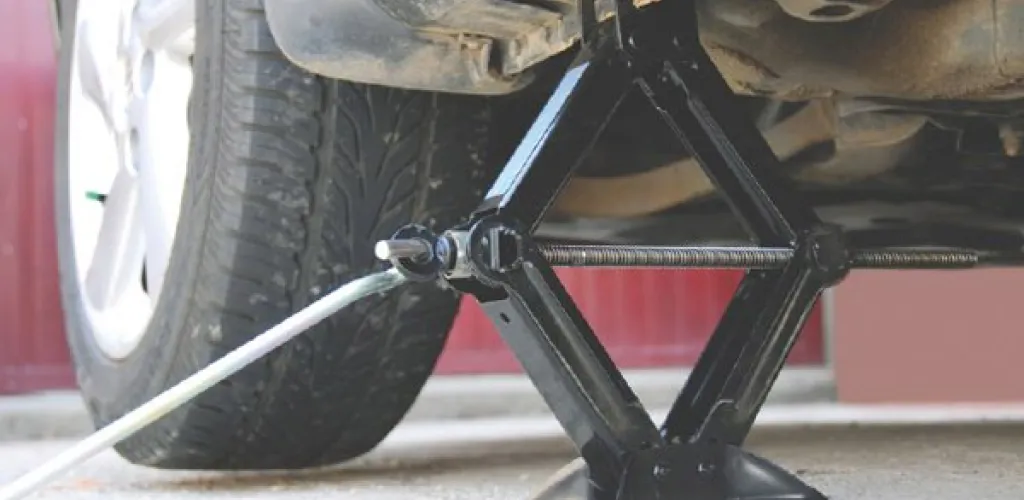
- Use the correct jack with adequate capacity (at least 35% of weight)
- Prepare the vehicle: engage parking brake, on a stable surface, engine off
- Identify correct contact points from the owner’s manual; avoid sills
- Always use a jack stand or spare wheel as backup
Lifting a car on a jack may seem straightforward, but ignoring safety rules can lead to serious accidents. Many drivers face dangerous situations because they don’t know the correct contact points or fail to take necessary precautions. This guide will show you step by step how to lift your car safely, avoiding risks and ensuring the operation goes smoothly.
Mastering proper lifting technique not only protects you but also safeguards the vehicle.
Essential safety measures before lifting with a jack
Choosing the right jack
- Use the original jack or one specifically designed for your car
- Check the load capacity - the jack must be able to lift at least 35% of the vehicle’s total weight
- Weight calculation: the front axle accounts for about 60% of the car’s weight, and the rear axle 40%. When lifting a front wheel, you will lift about 30-35% of the total weight
Preparing the vehicle
- Engage the parking brake before any handling
- Make sure the car is on a straight and stable surface
- Turn off the engine and remove the key from the ignition
- Place the car in Park (manual transmission) or in P (automatic)
Choosing the right surface
The surface you lift the car on is critical for safety:
- Ideal: concrete, asphalt, or other hard and stable surfaces
- Avoid: soil, sand, grass, or soft surfaces where the jack can sink
- If you have no alternative, place a wide plate under the jack to distribute the weight
Additional safety measures
For maximum safety, always use a jack stand or a spare wheel as supplementary support. Place it under the car’s pinch welds immediately after lifting the car onto the jack. If the jack fails, the car will rest on the auxiliary support, protecting you from serious accidents.
Although it’s rare for a jack to fail, this simple precaution can save lives and prevent serious injuries.
How to properly lift a car with a jack - step-by-step procedure
Step 1: Positioning the vehicle
- Find an optimal surface – straight and firm
- If you don’t have access to asphalt, use a wide plate under the jack to create a stable contact surface
- Position the car so that the wheel to be lifted is easily accessible
Step 2: Identifying the correct contact point
This step is crucial for safety and to avoid damage to the car:
- Look for the specific contact points marked in the owner’s manual
- They are usually reinforced flat areas or specially designed points
- Avoid the sills — they can bend or be damaged
- Look for special rubbers or indentations that indicate the correct points
- On some cars, the points are behind the sills, on others they are raised areas
Step 3: Mounting and lifting
- Position the jack under the identified contact point
- Check alignment – the jack should be perfectly perpendicular to the ground
- Begin lifting gradually, guiding the jack by hand to ensure it stays in the correct position
- Stop immediately if you notice the car tilting abnormally or the jack moving
Tips for special situations
On problematic surfaces
- Use wooden boards or thick mats under the jack for stability
- At night, use a flashlight to clearly see the contact points
- On a gentle incline, point the wheels toward the curb for extra safety
Final checks
- Test stability before working under the car
- Never put any part of your body under a car supported only by a jack
- Always use additional supports when working under the vehicle
Common mistakes to avoid
The most frequent errors that can lead to accidents:
- Lifting on soft or unstable surfaces
- Using incorrect contact points
- Not using auxiliary supports
- Lifting too quickly without checking stability
- Working under a car supported only by a jack
By adhering to these principles and following the correct procedure, you can lift the car safely every time, avoiding risks and protecting both your vehicle and your personal safety.