
- Odometer tampering is common; real mileage affects wear, maintenance, and price
- Blue exhaust smoke is the main sign of underreported mileage and engine wear
- Causes include worn valve seals, piston rings, oval cylinders, and turbo wear
- Test: check blue smoke at cold start and during hard acceleration
The used-car market remains the preferred choice for most Romanians due to affordable prices and slower depreciation compared to new vehicles. However, buying a used car comes with its own challenges, and one of the most common problems is mileage tampering.
Understanding the true degree of wear on a vehicle is essential to making an informed purchase. While the odometer reading on the dashboard should provide a clear picture of the car’s history, the reality is that this value is often manipulated, making it difficult to accurately assess the vehicle’s condition.
Why real mileage matters
The number of kilometers driven represents one of the most important indicators of the overall wear of the vehicle. An accurate mileage helps you:
- Estimate the remaining lifespan of major components
- Anticipate future maintenance costs
- Negotiate a fair price
- Assess the need for imminent repairs
- Understand the car’s usage history
A car with 100,000 real km will show a completely different level of wear than one with 300,000 km, even if both display the same number on the dash after the odometer has been tampered with.
The primary signal: blue exhaust smoke
The most visible and common indicator that the odometer reading is lower than the actual mileage is blue smoke emitted from the exhaust system. This specific sign can reveal serious engine problems, especially on cars that have actually surpassed 350,000 kilometers but display only 100,000–150,000 km.
What blue smoke indicates
Blue smoke is the result of burning oil in the combustion chamber, a phenomenon that should not be present in a well-running engine. This type of smoke signals:
- Oil leaks into the combustion chamber through worn seals
- Excessive burning of engine oil due to degraded parts
- Advanced wear of internal engine components
Technical causes of blue smoke
There are several mechanical faults that can cause this phenomenon, all tied to advanced wear:

Damaged valve seals: Valve seals prevent oil from entering the combustion chamber. Worn seals allow oil to seep in and burn along with the fuel.
Worn piston rings: Piston rings seal between the piston and cylinder. When worn after hundreds of thousands of kilometers, compression drops and oil reaches the combustion chamber.
Oval cylinders: The inner walls of the cylinders wear over time, becoming oval rather than perfectly circular. This wear lets oil pass the rings and burn.
Worn turbocharger: On turbo engines, a faulty turbocharger can allow oil into the intake system, which then reaches the cylinders.
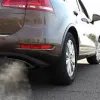
How to properly test a used car
When inspecting a used car, follow these steps to identify blue smoke:
-
Cold start: Observe the exhaust when the engine is started for the first time. An initial cloud of blue smoke may be normal, but if it persists, it’s a warning signal.
-
During acceleration: Accelerate hard and watch the exhaust. Thick blue smoke during acceleration indicates significant oil burning.
-
At idle after warm-up: After the engine is fully warmed up, check the exhaust again at idle. Persistent blue smoke suggests serious problems.
-
During deceleration: Release the accelerator and observe. Blue smoke on deceleration may indicate valve-seal issues.
Other signs of tampered mileage
In addition to exhaust smoke, check:
Interior condition:
- Shiny or excessively worn steering wheel
- Very worn pedals
- Deformed or torn driver’s seat
- Buttons worn smooth or with no inscriptions
Mechanical components:
- Very worn brake discs
- New tires on a car claimed to have low mileage
- Loose or noisy suspension
- Hard-shifting transmission
Documentation:
- Missing service book
- Contradictory ITP certificates
- Incomplete service history
What to do if you spot blue smoke
If you notice persistent blue smoke:
- Do not buy the car without a full inspection at a specialized service center
- Request a compression test to assess the engine condition
- Check oil consumption — a healthy engine uses very little oil between changes
- Ask for a substantial price reduction if you still want to buy the vehicle
- Budget for major repairs — an engine with such issues requires significant investment
Oil consumption: normal vs. abnormal
All engines consume small amounts of oil during operation, but:
- Normal: less than 1 liter per 10,000 km
- Acceptable: up to 1 liter per 5,000 km for older engines
- Problematic: more than 1 liter per 3,000 km
- Very severe: over 1 liter per 1,000 km
If a car advertised with 100,000 km consumes oil excessively and emits blue smoke, it is very likely that the real mileage is much higher.
Conclusion
Blue smoke from the exhaust is one of the clearest indicators that a used car has a real mileage far higher than what is displayed. This sign signals advanced engine wear typical of vehicles with hundreds of thousands of kilometers. Always pay close attention to this crucial detail when test-driving a used car, and don’t hesitate to walk away if you detect this symptom. A thorough inspection and a careful test drive can save you from a costly and disappointing purchase.