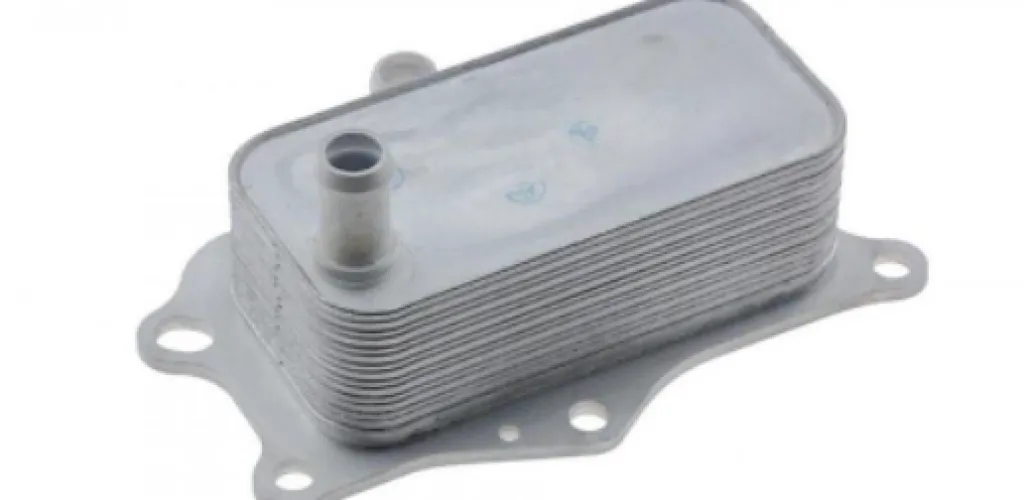
- Oil cooler keeps engine oil at optimal temperature, preventing overheating and damage
- It uses a diaphragm membrane to transfer heat between oil and coolant without mixing
- Diesel engines have higher thermal demands; oil cooler wear requires attention and maintenance
Although few drivers are aware of this part, oil cooler (also known as the oil radiator) plays a vital role in maintaining the engine at its optimum temperature. A failure of this component can lead to serious problems, including engine overheating and costly damage.
This component is especially important for diesel engines, which are more sensitive to temperature variations and require more careful heat management. In Romania, where the number of diesel cars significantly exceeds that of gasoline-powered ones, understanding how the oil cooler works becomes essential to maintaining the health of the engine.
What is the oil cooler and what role does it play
An oil cooler is a specialized heat exchanger designed to keep engine oil within its optimal temperature range. Its main function is to prevent engine overheating by efficiently cooling the oil that circulates through the lubrication system.
This component is especially important for diesel engines, which are more sensitive to temperature variations and require more careful heat management. In Romania, where the number of diesel cars significantly exceeds that of gasoline-powered ones, understanding how the oil cooler works becomes essential to maintaining the health of the engine.
How the oil cooler works
The principle of operation of the oil cooler is based on heat transfer between two distinct circuits:
- Oil circuit: The engine oil circulates through the engine, lubricates moving components, and absorbs heat generated by friction and combustion.
- Cooling circuit: The cooling liquid (antifreeze) circulates through the system and absorbs heat from the oil.
Inside the oil cooler there is a diaphragm membrane that physically separates the two fluids. This barrier is crucial — it allows heat transfer between the two circuits but prevents mixing of the fluids. When hot oil enters the oil cooler, heat is transferred through this membrane to the cooling liquid, which then carries the heat to the car’s radiator.
After the oil is cooled, it returns to the oil pan (crankcase), from where the oil pump will re-direct it back through the engine to resume lubrication.

Temperature ranges and thermal demands
The oil cooler operates under extremely demanding thermal conditions. During normal engine operation, oil temperature can reach 100–120°C, and under intensive operating conditions it can exceed these values.
The temperature differences to which the oil cooler is subjected are substantial:
- In cold weather, when we start the engine, the difference between component temperatures and ambient can be over 100°C
- Repeated heating and cooling cycles caused by frequent starting and stopping of the engine accelerate wear of materials
- Thermal shocks caused by abrupt temperature changes can compromise the integrity of the separating membrane
These thermal demands explain why the oil cooler has a limited lifespan and requires attention from the vehicle owner.
Lifespan and wear factors
Under normal operating conditions, the oil cooler has an average lifespan of 4–5 years. However, this duration can vary significantly depending on several factors:
Factors influencing the longevity of the oil cooler:
- Mileage: Vehicles with high mileage place greater demand on the cooling system
- Driving style: Rapid accelerations and aggressive driving generate more heat in the engine
- Preventive maintenance: Regular oil and coolant changes extend the life of the oil cooler
- Fluid quality: Using lower-quality oil and antifreeze can accelerate corrosion
- Operating conditions: Frequent starts, mountain trips, or heavy traffic put more stress on the system
Signs of failure and consequences
When the internal membrane of the oil cooler wears or cracks, a highly dangerous phenomenon for the engine occurs: the mixing of oil and coolant.
Consequences of oil cooler failure:
- Oil contamination: Antifreeze enters the oil circuit, dramatically reducing its lubrication capacity
- Coolant contamination: Oil enters the cooling system, reducing heat transfer efficiency
- Engine overheating: Inadequate cooling of the oil leads to higher engine temperatures
- Accelerated wear: Contaminated oil no longer protects moving components properly
- Risk of seizure: In extreme cases, severe overheating can cause engine seizure
Indicators that the oil cooler may be failing:
- Engine temperature rises above normal
- Oil appears foamy or emulsified (sign of antifreeze presence)
- Coolant level drops without visible leaks
- Presence of oily residues in the expansion reservoir
- White exhaust smoke (in severe cases)
Importance of timely replacement
Replacing a faulty oil cooler should be done urgently to prevent engine damage. The replacement cost is significantly lower than the repairs that would be required after its failure—ranging from engine overhauls to complete engine replacement.
Experts recommend periodic inspection of the oil cooler during technical inspections and preventive replacement after the car reaches 150,000–200,000 km, depending on the manufacturer’s recommendations and operating conditions.
Proper maintenance of lubrication and cooling systems, along with using high-quality fluids and adhering to service intervals, is essential to keeping the oil cooler in good working condition and, implicitly, to protecting the engine from costly damage.