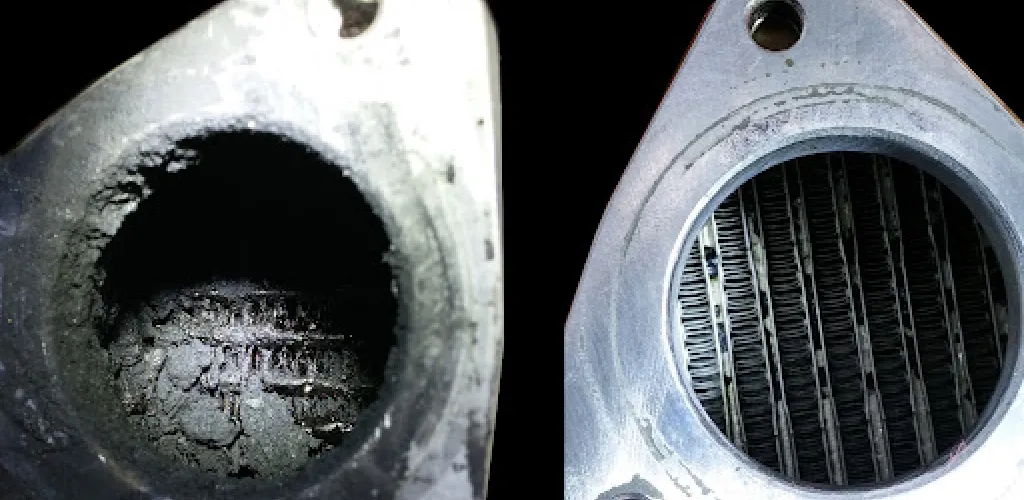
- Engine overheating from blocked cooler caused by carbon, soot, or corrosion
- Exhaust gas leaks cause squeals, whooshing, or cabin exhaust smells
- Higher emissions and poorer fuel efficiency with EGR cooler problems
- Check Engine light usually on; codes P0400–P0404 indicate EGR issues
The EGR cooler is an essential component of the exhaust gas recirculation system, present on many modern cars. Its primary role is to keep the exhaust gas temperature under control before it reaches the EGR valve. Exhaust gases are then recirculated back into the engine to reduce the combustion temperature in the cylinders and, consequently, NOx emissions.
Exhaust gases can reach extremely high temperatures—over 800°C in some cases—which gives the EGR cooler a crucial role in the proper operation of the system.
Main symptoms of EGR cooler failure
Engine overheating
The first and most evident symptom you will notice when the EGR cooler is not functioning properly is excessive engine heating. Any blockage in the airflow reaching the cooler can overheat the EGR and, by extension, the entire engine.
Common causes of blockages include:
- Carbon deposits that build up inside the cooler over time
- Soot particles from the exhaust gases
- Internal corrosion caused by acidic condensate
These deposits restrict the air flow and prevent gases from circulating freely. If the gases do not pass through the cooler, they do not cool down, and the engine begins to overheat dangerously.
Exhaust gas leaks
Gas leaks are a common issue affecting both the EGR gasket and the cooler itself. These leaks present as:
- Squeals under the hood
- Whooshing on acceleration
- Unusual noises from the EGR system area
- Smells of exhaust inside the cabin
Gas leaks reduce the overall efficiency of the EGR system and can significantly affect engine performance, leading to non-optimal combustion and higher fuel consumption.
Increased emissions
Problems in the EGR system inevitably lead to higher pollutant emissions. When the EGR cooler does not function properly, the combustion temperature in the cylinders rises, generating more NOx. Additionally, non-optimal combustion produces more particulates and unburned hydrocarbons.
Attention: Avoid driving the car to an emissions test when you suspect EGR issues, as it may fail the emissions test and require a return for repairs.
Check Engine light
When there are issues with the EGR system, the Check Engine light will certainly illuminate on the dashboard. The engine computer constantly monitors:
- EGR flow passing through the cooler
- Temperature within the recirculation system
- Pressure in the gas circuit
- Position sensor of the EGR valve
If the computer detects reduced gas flow or a temperature that’s too high, it will switch on the warning light to alert you of the problem. To confirm that the issue is with the EGR system, reading the error codes with a diagnostic tester is necessary.
Common error codes related to the EGR cooler
The most frequent error codes encountered are:
- P0400 – Insufficient EGR flow detected
- P0401 – Insufficient EGR flow detected
- P0402 – Excessive EGR flow detected
- P0403 – EGR circuit fault
- P0404 – Incorrect EGR circuit operation
Solutions for EGR cooler problems
If you have reasons to believe the EGR cooler is problematic, you have several repair options:
1. Cleaning the cooler and the EGR valve
This solution works when the problem is caused by carbon deposits:
- Dismantle the cooler and the EGR valve
- Clean with special decarbonization solutions
- Check gasket conditions and replace them if necessary
- Reinstall everything carefully to proper torque specifications
2. Complete replacement
When the cooler is cracked, corroded, or irreversibly blocked, replacement is the only viable solution. Choose OEM or quality aftermarket parts for maximum durability.
3. Involvement of a specialist
For those with less experience, consulting a specialized mechanic is recommended, especially since correct diagnosis requires specific equipment and experience in the field.
Preventing EGR cooler problems
To extend the life of the EGR cooler:
- Use quality fuel and perform periodic cleaning additives
- Perform regular maintenance according to the manufacturer’s schedule
- Avoid predominantly short trips that don’t allow the engine to fully warm up
- Periodically check the engine cooling system
Not all cars are equipped with an EGR cooler from the factory, but those that have this component require extra attention to maintain optimal performance and comply with emission standards.