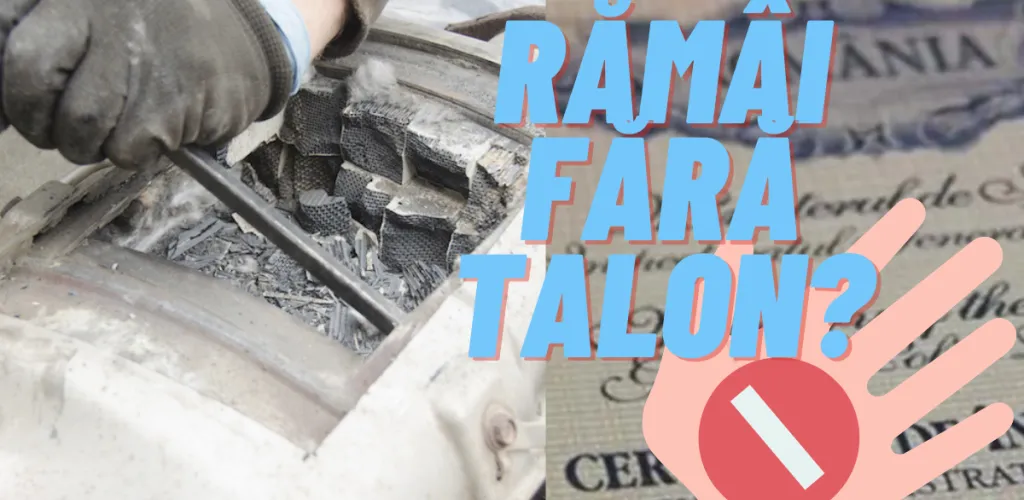
- DPF removal is illegal and can lead to registration and plate retention
- Workshops face fines of 5,000–10,000 lei and penalties
- ITP will fail due to missing DPF and higher emissions
- RAR approval is required; removal is not approved
An increasing number of diesel vehicle owners face the issue of defective Diesel Particulate Filters (DPFs) and wonder whether they can be removed without consequences. The reality is that this practice is strictly illegal and can lead to the loss of the registration certificate, hefty fines, and major problems at the periodic technical inspection.
The Diesel Particulate Filter (DPF) is a mandatory component for all modern diesel vehicles, being an integral part of the emissions control system. Removing it turns a Euro 4 vehicle into one that does not meet any pollution standard, with serious consequences for both the environment and the owner.
What is the Diesel Particulate Filter (DPF) and how it works
The acronym DPF comes from English: “Diesel Particulate Filter” and designates a particulate filter mounted on diesel vehicles. Recently, such filters have begun to equip petrol-powered cars as well.
The primary role of the DPF is to capture the fine particles from exhaust gases, i.e., the soot produced by burning fuel (PM 2.5 and PM 10). These particles have carcinogenic effects and represent a major public health hazard.
Regeneration process
Technically, the engine completes the combustion process at temperatures of 300-350°C, generating soot that requires temperatures of 600-700°C for complete disintegration.
The Diesel Particulate Filter:
- Captures particles during normal operation
- Regenerates periodically by burning off accumulated particles
- Is constantly monitored by the car’s computer
- Emits warning signals when regeneration cannot be performed
When the DPF fails to regenerate or the ECU initiates regenerations too frequently, there is a risk of complete blockage, which prevents the engine from starting.

Legal aspects: why DPF removal is prohibited
Romanian legal framework
Removing the particulate filter is strictly regulated by:
- Government Ordinance no. 78/2020
- Government Ordinance no. 81/2020
Any modification to the vehicle must pass through the records of RAR (Romanian Auto Registry), which will not approve DPF removal.
Sanctions applied
For vehicle owners:
- Retention of the registration certificate
- Retention of the registration plates
- Obligation to reinstall the filter to reobtain documents
For workshops performing removal:
- Fines between 5,000 and 10,000 lei
- Possible additional penalties for activities outside the legal framework
Beware of unauthorized workshops
Many workshops operate illegally, not registered in the RAR database. Operations performed by these workshops are legally invalid and expose you to major risks.
Consequences of DPF removal at the ITP
What happens at the periodic technical inspection
At the ITP, the vehicle will fail the inspection for the following reasons:
- The absence of the particulate filter is detected during the emissions control
- Exhaust emissions exceed the legal limits by a large margin
- The vehicle no longer complies with the Euro standard for which it was homologated
Remediation process
To pass the ITP, you will be obliged to:
- Install a new and functional particulate filter
- Reprogram the computer to recognize the DPF
- Return to the ITP for a new check
- Bear all associated costs
Costs associated with replacing the DPF
Prices for new filters
The cost of a new particulate filter ranges between:
- €1,500 - €3,000 depending on manufacturer and model
- The higher price is justified by the use of rare metals with special filtration properties
Lifespan and mileage
A new DPF is designed to last approximately:
- 400,000 kilometers under normal operating conditions
- The lifespan can vary depending on driving style and fuel quality
Legal alternatives to DPF removal
Filter cleaning
Instead of removing the filter, you can opt for:
- Professional cleaning at specialized workshops
- Use of dedicated DPF cleaning additives (such as Protec products)
- Forced regeneration through authorized diagnostics
Cleaning procedure with additives
For cleaning the DPF:
- Add the cleaning additive to the fuel tank
- Drive the vehicle according to the manufacturer’s instructions
- The additive lowers the temperature required for regeneration
- The particles burn more easily during regeneration
Impact on the environment and health
Protection of breathable air
The particulate filter:
- Protects air quality by removing fine particles
- Reduces the risk of respiratory diseases and cancer
- Contributes to reducing the greenhouse effect
- Meets the country’s environmental commitments
Individual responsibility
In the current context of fighting pollution and promoting electric vehicles, removing the DPF represents a major step backward in protecting the environment and public health.
Practical recommendations
For keeping the DPF in good condition
- Take long trips periodically to allow complete regeneration
- Use high-quality diesel from recognized stations
- Follow service intervals for system checks
- Do not ignore warning signals on the dashboard
In case of problems
- Consult an authorized service for a full diagnosis
- Avoid illegal DPF removal solutions
- Assess repair costs against the vehicle’s value
- Consider replacing the vehicle if repair is not economical
Removing the Diesel Particulate Filter (DPF) is not a viable long-term solution. The legal risks, additional costs, and negative impact on the environment and public health make this practice an ill-advised choice that can have severe consequences for any vehicle owner.