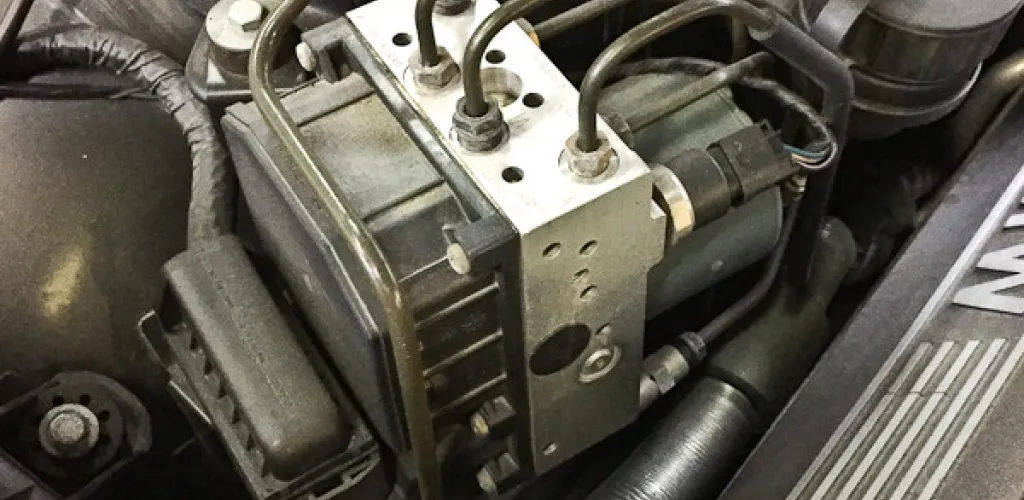
- A faulty ABS module can cause wheel lock, especially on wet or icy surfaces.
- ABS detects wheel lock and modulates hydraulic pressure to maintain traction.
- Warning lights (ABS or Check Engine) indicate diagnostics are needed.
- Brake pedal may respond slowly, not at all, or inconsistently when ABS fails.
Two paragraphs that introduce the importance of the ABS control module and its safety role are essential for understanding the rest of the article. When this module fails, the consequences can be severe, especially in challenging weather or on low-traction surfaces. Recognizing the symptoms early helps prevent accidents and save money on repairs.
The ABS control module (Anti-lock Braking System) works in tandem with the wheel-speed sensors mounted on each wheel. When the system detects that a wheel is starting to lock during braking, the module automatically reduces pressure in the hydraulic circuit for that wheel, allowing the wheel to keep turning and maintain traction. This process repeats dozens of times per second, producing the vibration in the brake pedal that is characteristic of how the ABS system operates.
How the ABS control module works
The ABS control module (Anti-lock Braking System) works in tandem with the wheel-speed sensors mounted on each wheel. When the system detects that a wheel is starting to lock during braking, the module automatically reduces pressure in the hydraulic system to the respective caliper, allowing the wheel to continue rotating and maintain traction.
This process repeats dozens of times per second, creating the vibration sensation in the brake pedal that is characteristic of how the ABS system operates.
Main symptoms of a defective ABS control module
Early recognition of ABS control module failures can prevent dangerous situations and reduce repair costs.
Wheel lock-up during braking
The most evident symptom of a defect in the ABS module is wheel lock during hard braking. Normally, the ABS should prevent this by modulating pressure in the system to keep the wheels turning.
If you notice the wheels locking up and the car skidding during braking, this is a clear sign that the ABS module is no longer functioning properly. This situation is extremely dangerous, especially on wet or icy surfaces.

ABS warning light on the dashboard
Modern vehicles are equipped with a dedicated ABS warning light that comes on when a fault is detected. ABS Warning Light is usually yellow and appears as a circle with the letters “ABS” inside.
On older vehicles without a dedicated ABS light, a fault in the control module may trigger the general Check Engine light on the dashboard. In both cases, the warning light indicates the need for professional diagnostics.
Brake pedal does not respond or responds slowly
A faulty ABS module can affect brake pedal response in several ways:
- Total lack of response: In severe cases, pressing the pedal produces no deceleration
- Delayed response: The car begins braking only after repeated pedal presses
- Inconsistent response: Braking effectiveness varies from one press to another
These symptoms indicate a serious defect that requires immediate intervention because they seriously compromise road safety.
Brake pedal becomes hard and difficult to press
Normally, the brake pedal should respond easily to pressing. When the ABS module is defective, an abnormal resistance at the pedal may appear, requiring significant effort to achieve the desired braking.
This pedal stiffness can be caused by:
- Blockage of hydraulic valves in the ABS module
- Faults in the hydraulic pump of the system
- Problems with the pressure sensor

Speedometer not functioning correctly
In a less common scenario, ABS module failure can affect the speedometer as well. This happens because both systems rely on wheel-speed information from the same sensors.
Speedometer problems may include:
- Displaying an incorrect speed
- Needle stuck at 0 km/h
- Uncontrolled fluctuations of the gauge
Even if the ABS warning light does not come on, speedometer malfunction together with braking issues indicates ABS control module failure. It is important to check the Check Engine light that may illuminate in these cases.
Common causes of ABS module failures
Electronic faults
The ABS module contains complex electronic circuits that can be affected by:
- Electrical overvoltages
- Water intrusion or moisture
- Wear of electronic components over time
Hydraulic problems
The ABS system uses hydraulic pressure to modulate braking:
- Blockage of hydraulic valves
- Contamination of the brake fluid
- Wear of the pressure pump
Sensor failures
Wheel-speed sensors can be affected by:
- Accumulation of dirt and debris
- Mechanical wear
- Damaged wiring
Repair and replacement costs
The cost of replacing the ABS control module varies considerably depending on several factors:
Factors influencing the cost
- Make and model of the vehicle: premium cars tend to have more expensive modules
- Year of manufacture: parts for older models can be harder to find
- Type of module: integrated modules vs. separate modules
- Labor: costs vary between service centers
Cost estimates
In Romania, the total cost for replacing the ABS module ranges between:
- Part: 1,500 - 3,000 RON
- Labor: 500 - 1,000 RON
- Total: 2,000 - 4,000 RON
Alternatives to replacement
In some cases, the ABS module can be repaired rather than replaced:
- Reconditioning: 800 - 1,500 RON
- Reprogramming: 300 - 600 RON (if the issue is software)
Recommendations for prevention and maintenance
Preventive maintenance
- Regular brake fluid checks
- Cleaning speed sensors
- Inspecting wiring condition
- Testing the ABS system at routine service
Early warning signals
- Watch for changes in braking system behavior
- Do not ignore warning lights on the dashboard
- Schedule regular checks at authorized service centers
The ABS control module is essential for safe driving, and its failure can have serious consequences. Recognizing the symptoms and acting quickly are crucial for maintaining safety and avoiding additional costs.