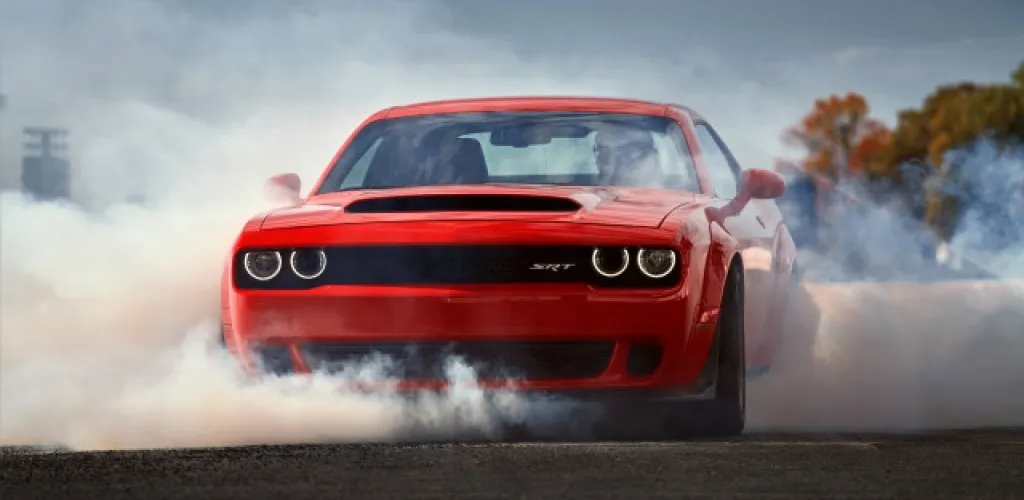
- Horsepower powers high-speed performance and sustained output at high RPMs
- Torque gives strong acceleration from standstill, hill climbing, towing, and urban driving
- Diesel engines typically deliver superior low-end torque for heavy loads
- Power equals torque times RPM divided by 5252; torque dominates below, power above
Deciding between torque and horsepower remains one of the hottest debates in the automotive world. It usually erupts when a group of enthusiasts tries to determine who owns the car with the best performance — some advocate horsepower supremacy, others argue that it all comes down to torque.
Understanding these fundamental concepts not only helps you make better decisions when purchasing a car, but also provides a valuable technical perspective on how modern engines work. Let’s analyze in detail these two essential characteristics.
Horsepower — the engine’s sustained power
Origin of the concept
The term originates from the era of early steam engines, when horses were the primary means of transport and motive power. Engineers wanted to create a direct comparison between the new technology and the power of animals.

The established standard defines one horsepower as the amount of force required to lift 15,000 kilograms to a height of 30 centimeters in one minute. This standardized value allows objective comparison of different engines.
Role of horsepower in performance
Horsepower determines the engine’s ability to sustain performance at high revs. Unlike torque, which excels at acceleration, horsepower becomes essential for:
- Maintaining high speeds on the highway
- Fast overtakes at high speeds
- Consistent performance under load
- Efficient operation at high RPM ranges
A high-horsepower engine will provide a smoother and more responsive driving experience, especially as speed increases.
Torque — starting power and acceleration
The physical principle of torque
For a clearer understanding, imagine using a fixed wrench. When you apply force on the handle to rotate a screw, you generate torque. The distance from the point of force application to the axis of rotation, multiplied by the force intensity, determines the torque value.
Importance of torque in engine operation
Torque excels in the following situations:
- Starting from a standstill: A high torque allows rapid accelerations from zero speed
- Climbing hills: High-torque engines handle inclines more easily
- Towing loads: Towing capacity depends directly on available torque
- Urban driving: In traffic with frequent stops, torque provides immediate response
Diesel engines are known for their superior low-end torque, making them ideal for commercial vehicles and large SUVs.
The relationship between torque and horsepower
There is a simple mathematical equation that links these two concepts:
Power (hp) = (Torque x RPM) / 5252
This relation shows that:
- At 5252 RPM, the torque and power values are numerically identical
- Below this threshold, torque is numerically higher
- Above this threshold, power exceeds torque

How to choose between torque and horsepower
The decision largely depends on your driving profile and specific needs:
Prioritize torque if:
- You drive frequently in city with heavy traffic
- You need to tow trailers or haul heavy loads
- You prefer brisk off-the-line acceleration
- You drive on mountain roads with steep grades
- You want a vehicle responsive to the pedal in any situation
Prioritize horsepower if:
- You drive regularly on highways at high speeds
- You participate in circuit competitions
- You want maximum performance at high revs
- You appreciate a smooth and progressive driving experience
- You need very high top speed
Additional factors to consider
Although torque and horsepower are important, remember that a car’s overall performance depends on multiple elements:
Torque and power curves
Not only the maximum values matter, but also how torque and power are distributed across the rev band. An engine with a flat torque curve over a wide RPM range will be more pleasant to drive than one with a sharp peak.
Vehicle weight
Power-to-weight and torque-to-weight ratios are more relevant parameters than the absolute values. A light car with moderate power can feel quicker than a heavy car with high power.
Transmission and final-drive ratios
The gearbox can amplify or diminish the torque effect through final drives. A well-calibrated transmission can compensate for engine deficiencies.
Auxiliary systems
Aspects such as the suspension system, brakes, tires, and steering system significantly influence the driving experience, regardless of engine power.
Conclusion
Both torque and horsepower are essential for the optimal operation of a car. There is no universal “correct” choice — it depends on your driving style, the conditions in which you use the vehicle, and personal preferences.
For most drivers, a reasonable balance between the two characteristics, combined with other high-quality technical aspects, will offer the best driving experience. Understanding these concepts will help you make more informed decisions and better appreciate the complexity of modern automotive engineering.
Photo sources: cars.usnews.com, driverbuddyapp.com, bimmertips.com