- Slipping transmission causes engine revs to rise without proportional speed gain.
- Idle oscillations and surging idle indicate torque converter faults.
- Overheating presents with high ATF temperature and burning smell.
- In severe cases, the vehicle won’t move and diagnosis is urgent.
The torque converter is one of the essential components of an automatic transmission, responsible for transferring torque from the engine to the gearbox. This complex part can develop various issues over time, affecting vehicle performance and driving comfort.
Automatic cars, especially older models, are prone to torque converter failures. Knowing the symptoms and diagnostic methods can prevent costly damages and extend the life of the transmission.
Symptoms of a faulty torque converter
Early identification of torque converter problems is crucial to avoid major transmission damage. The following symptoms indicate possible faults:
Slipping transmission
The most common indicator of a torque converter issue is a slipping transmission. This manifests as:
- The engine revs up (rpm increases), but the car does not gain speed proportionally
- The tachometer needle climbs quickly while speed remains constant or increases very slowly
- A feeling similar to clutch slipping in a manual transmission
This problem indicates a loss of torque transfer between the engine and the transmission, requiring immediate intervention.
Idle oscillations
A faulty torque converter can cause fluctuations in idle speed. These oscillations are characterized by:
- Idle speed rising or falling uncontrollably at idle
- The engine surging when the car is stationary with the transmission engaged
- Vibrations transmitted through the body
Slow acceleration
Driveability issues can point to internal converter faults:

- Delayed throttle response
- Loss of power on take-off
- The need to rev the engine excessively to accelerate
These symptoms result from hydraulic pressure differences or internal slipping of components.
Vehicle won’t move
In severe cases, the car may refuse to move in any direction:
- The engine starts normally, but the vehicle doesn’t respond to throttle input
- No power is transferred to the wheels
- A condition that requires urgent diagnosis to identify the exact cause
Transmission overheating
Slipping in the converter generates excessive heat:
- Transmission fluid temperature rises dramatically
- Burning smell from the ATF
- Activation of thermal protection systems (where available)
- Accelerated wear of transmission components
Modern vehicles may be equipped with temperature sensors that trigger warning lights on the dash.
Unusual transmission noises
Unusual sounds can signal wear of internal components:
- Metallic whine on acceleration
- Worn bearing noise
- Friction or knocking sounds
- Noise intensifies as the transmission heats up

How a torque converter works in an automatic transmission
To understand the problems, it’s essential to know the torque converter’s operating principle.
Hydrodynamic principle
The torque converter operates on the principle of hydraulic coupling:
- Pump rotor – connected directly to the crankshaft
- Turbine rotor – connected to the transmission input shaft
- Stator – a fixed component that redirects oil flow
- ATF fluid – the medium that transmits torque
Torque transfer process
Power transfer is achieved through:
- The pump rotor accelerates ATF oil
- The oil flow drives the turbine rotor
- The stator optimizes the flow for maximum efficiency
- A hydraulic connection is created between engine and transmission
Lock-up clutch
Modern cars include a lock-up clutch that:
- Eliminates slippage at cruising speeds
- Improves fuel efficiency
- Reduces transmission heating
- Is electronically controlled

Dual-clutch transmissions (DSG) have largely replaced traditional torque converters, offering superior efficiency and faster response.
Common torque converter problems
Understanding common failures helps with accurate diagnosis and choosing the right repair strategy.
Worn bearings
Bearing wear is a frequent issue that presents as:
Symptoms:
- Persistent metal noise
- Vibration on acceleration
- Metal particles in ATF oil
Causes:
- Normal wear over time
- Lack of preventive maintenance
- ATF oil contamination
- Repeated overheating
Diagnosis:
- Checking oil for metal particles
- Noise testing at different rpm
- Vibration analysis via test drive
Sealing failures
Faulty seals cause:
Hydraulic pressure leaks:
- Decreased torque transfer efficiency
- Transmission slip
- Overheating of components
System contamination:
- Impurity intrusion
- Rapid ATF oil degradation
- Accelerated component wear
Common leak locations:
- Input shaft seals
- Converter housing gaskets
- Hydraulic connections
Lock-up clutch faults
Issues specific to the lock-up system:
Stuck clutch:
- Strong idle vibrations
- Uneven behavior under load
- Possible engine stall
Slipping clutch:
- Reduced fuel efficiency
- Excessive heat
- Poor performance at higher speeds

Control solenoid fault
The lock-up clutch control solenoid can develop the following problems:
Electrical faults:
- Interruption of control circuit
- Coil short circuits
- Corrosion of connections
Mechanical faults:
- Piston stalling
- Wear of calibration orifices
- Contamination with particles
Symptoms:
- Diagnostic trouble codes
- Improper lock-up operation
- Increased fuel consumption
Repair methods and repairs
Correct repair approaches depend on the severity of the problem and transmission condition.
Changing the transmission oil and filter
Preventive maintenance is the first line of defense:
ATF oil condition check:
- Normal color: red, clear
- Worn color: brown or black
- Presence of metal particles indicates internal wear
- Burnt smell suggests overheating
Replacement procedure:
- Heat the transmission to operating temperature
- Fully drain the used oil
- Remove and clean the oil pan
- Replace the transmission filter
- Reassemble with specified torque
- Refill ATF per specifications
Repairing the sealing system
Seal interventions require:
Transmission removal:
- Detach the transmission from the engine
- Access the torque converter
- Identify leak points
Component replacement:
- New gaskets per OEM specs
- Proper application of sealant where necessary
- Check sealing surfaces

Lock-up clutch repair
Interventions on the lock-up system involve:
Electronic diagnostics:
- Reading fault codes
- Testing the control solenoid
- Checking power circuits
Mechanical repairs:
- Replacing friction plates
- Resurfacing contact surfaces
- Adjusting hydraulic pressure
Complete torque converter replacement
In severe cases, complete replacement is the most economical solution:
Advantages of full replacement:
- Extended warranty on the component
- Restored performance to original parameters
- Avoids repeated repairs
Replacement criteria:
- Multiple wear of internal components
- Repair costs close to the price of a new part
- High vehicle age
The importance of ATF transmission fluid
ATF plays several critical roles in the transmission system.
Main functions of ATF
Hydraulic power transfer:
- Medium for torque transfer in the converter
- Hydraulic pressure for actuator operation
- Working fluid for the control system
Lubrication and protection:
- Reduces friction between moving parts
- Anti-wear protection for metal surfaces
- Dissipates heat generated by friction
Cleaning and protection:
- Removes wear particles
- Prevents deposit formation
- Protects against corrosion

Interpreting ATF color
Oil color provides valuable information about transmission health:
Red, transparent – optimal condition:
- New or recently changed oil
- Full lubrication properties
- Normal transmission operation
Red, dark – good condition:
- Oil is used but still functional
- Maintenance can be postponed temporarily
- Regular monitoring recommended
Brown – advanced wear:
- Lubrication properties compromised
- Urgent replacement needed
- Risk of transmission damage
Black – severe deterioration:
- Oil burned due to overheating
- Possible internal transmission damage
- A full system assessment required
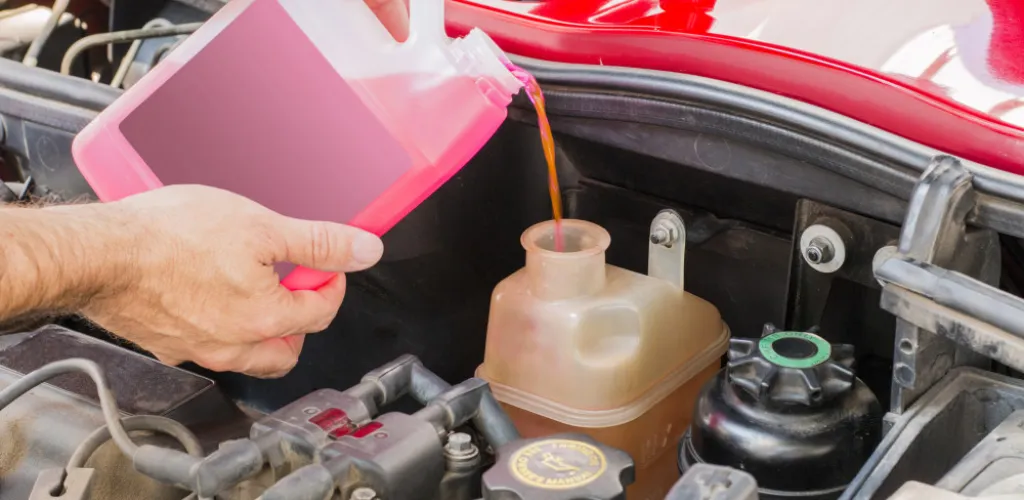
Pink – coolant contamination:
- Water intrusion into the system
- Risk of internal corrosion
- Immediate intervention required
What color is transmission oil in different situations
More details on color interpretation and ATF condition are available in our dedicated guide on this topic.
Testing and diagnosing the torque converter
Accurate diagnosis requires a systematic approach and proper testing techniques.
Preparing for testing
System warm-up:
- Start the engine and idle
- Heat ATF to 40-60°C
- Use a scanner to monitor temperature
- Time required: 10-15 minutes depending on ambient temperature
Preliminary checks:
- ATF level at operating temperature
- Oil visual condition and smell
- Check for visible leaks
- Test response to electronic commands
Static testing
Idle test:
- Engine at normal operating temperature
- Select gear ‘D’ (Drive)
- Keep service brake applied
- Listen for abnormal noises
- Observe engine behavior
Stall test:
- CAUTION: A test that can damage the transmission if not performed correctly
- Maximum duration: 5 seconds
- Monitor the maximum RPM reached
- Compare with the manufacturer specifications
Dynamic testing
Controlled test drive:
- Progressive starts from a stop
- Simultaneous monitoring of tachometer and speedometer
- Observe engagement points between gears
- Evaluate response to commands
Testing the lock-up clutch:
- Gradual acceleration up to 50-60 km/h
- Observe lock-up activation moment
- Check clutch engagement efficiency
- Test disengagement on braking
Electronic diagnostics
Error codes:
- Read fault memory
- Interpret transmission-specific codes
- Check real-time parameters
- Test actuators and sensors
Key parameters:
- ATF temperature
- Hydraulic pressures in the circuit
- Solenoid positions
- Input and output shaft speeds
Locating the torque converter
For repair work, knowing the exact placement of the component is essential.
Position in the transmission system
Physical placement:
- Between the engine crankshaft and the transmission input shaft
- Inside the bell housing
- Directly connected to the engine flywheel
- Protected by the lower protective plate
Service accessibility:
- Requires lifting the vehicle
- Remove lower shields
- Possible need to detach crossmembers
- Limited access in many cases
Repair costs and replacement
Economic assessment of repairs is crucial for making the right decision.
Cost of components
New torque converter:
- City cars: 800-1,500 lei
- Premium cars: 1,500-3,000 lei
- Commercial vehicles: 2,000-4,000 lei
- Performance vehicles: 3,000-6,000 lei
Repair parts:
- Seal kit: 200-500 lei
- Bearings: 300-800 lei
- Lock-up solenoid: 400-1,200 lei
- Filter and ATF oil: 300-600 lei

Labor costs
Factors influencing price:
- Transmission access complexity
- Need for specialized equipment
- Workshop experience with the specific brand
- Geographic region
Time required for interventions:
- Oil change: 1-2 hours
- Sealing repairs: 4-6 hours
- Torque converter replacement: 6-12 hours
- Full transmission overhaul: 12-20 hours
Economic considerations
Cost-benefit ratio:
- Vehicle value vs repair cost
- Vehicle age and mileage
- History of preventive maintenance
- Overall transmission condition
Cost-reduction strategies:
- Accurate diagnosis before intervention
- Using OEM-equivalent high-quality parts
- Regular preventive maintenance
- Choosing a specialized workshop
Preventing torque converter problems
Preventive maintenance:
- Regular ATF changes (40,000-80,000 km)
- Periodic ATF level and condition checks
- Avoid overheating the transmission
- Gentle driving in the first miles after startup
Driving practices:
- Avoid abrupt accelerations early in the trip
- Use engine braking on long descents
- Avoid towing or pushing other vehicles
- Maintain the engine cooling system
The torque converter is a complex and costly component, but with proper maintenance and timely problem diagnosis, its life can be substantially extended. Understanding symptoms and testing methods enables intervention at the right moment, avoiding costly repairs and prolonging the life of the automatic transmission.