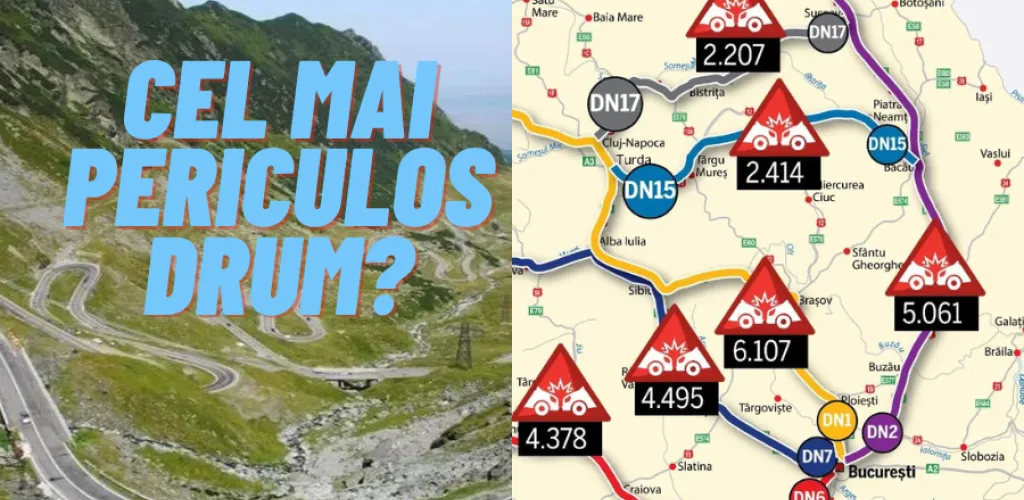
- Transfăgărășan is Romania’s dramatic mountain road linking Muntenia and Transylvania.
- 152-km route features hairpins, switchbacks, a long tunnel, and 2,000m summit.
- Experts warn only experienced drivers should attempt due to high risk.
- Seasonal/weather conditions, congestion, and steep grades amplify dangers.
Transfăgărășan stands as one of Romania’s most impressive engineering feats, yet also among its most challenging roads. This spectacular mountain route linking Muntenia and Transylvania demands full attention from drivers, as the risk of accidents is significantly higher than on many national roads.
Driving the 152-km route offers a complex experience for any driver. While the beauty of the landscape and the pleasure of driving are undeniable, experts recommend that only experienced drivers attempt this stretch without feeling overwhelmed.
Location and route of the Transfăgărășan
Transfăgărășanul begins in the commune of Băscov in Argeș County and ends near the commune of Cârțișoara in Sibiu County. The road is part of DN7C and crosses the Făgăraș Mountains, providing access to Romania’s highest peaks.
The route includes:
- The flat and hilly section in Argeș County
- The mountainous segment with numerous switchbacks and tight bends
- The road tunnel, the longest in Romania
- The summit area with maximum altitude above 2,000 meters
- The descent into Transylvania via Sibiu County
Why is the Transfăgărășan dangerous?
The Transfăgărășan is a spectacular mountain route that impresses with its scenery and includes the longest road tunnel in the country. Nevertheless, the road presents numerous challenges and risks for drivers.
Technical and driving challenges
Drivers traveling the Transfăgărășan must focus on several factors simultaneously:
- Curve difficulty: The tight hairpins and rapid sequence of bends require driving technique adapted to mountain conditions
- Congestion and traffic: During peak periods, the high number of vehicles creates blockages and dangerous situations
- Variable weather conditions: Weather can change quickly at altitude, affecting visibility and grip
- Steep grades: Large elevation changes place high demand on braking and the engine
Vehicle-specific risks
Vehicles traveling the Transfăgărășan are subjected to special demands:
- Engine overheating: Prolonged climbs can stress the cooling system
- Brake wear: Long descents put heavy load on the braking system
- High fuel consumption: Mountain driving significantly increases consumption
- Risk of puncture: Rocks and road roughness can affect tires
Historical context and human costs
The Transfăgărășan carries a tragic history tied to its construction. The road was built during the Ceaușescu era, and among projects with particularly high human costs. More than half of those who participated in its construction lost their lives in the dangerous areas of the Făgăraș Mountains, forced to work under extremely difficult conditions.
These human sacrifices transformed the Transfăgărășan not only into a technical achievement but also into a symbol of the enormous costs paid for the ambitious projects of the communist regime.
Seasonal risks
The risk of traversing the Transfăgărășan in winter is confirmed by numerous incidents. An emblematic case is that of monk Nectarie, who drove a Trabant up to Capra and was caught in an avalanche, yet miraculously survived.
For this reason, the Transfăgărășan is closed to traffic in winter, typically from November to June, depending on weather conditions.
Inauguration and international recognition
The Transfăgărășan was inaugurated on December 20, 1974 and is today perhaps the most famous road in Romania. International recognition came from its inclusion in lists of the world’s most spectacular roads, and it has been promoted by famous automotive shows such as Top Gear.
Recommendations for driving safely
To traverse the Transfăgărășan safely, experts recommend:
- Vehicle technical check: inspect braking, cooling, and steering systems
- Planning the timing: avoid rushing and peak hours
- Respect speed limits: adjust speed to road and visibility conditions
- Maintain a safe following distance: increase space to the vehicle ahead
- Correct use of gears: use low gears for descents and ascents
The Transfăgărășan thus remains a challenge and an unforgettable experience for any driving enthusiast, but one that requires preparation, attention, and respect for the power of the mountain environment.