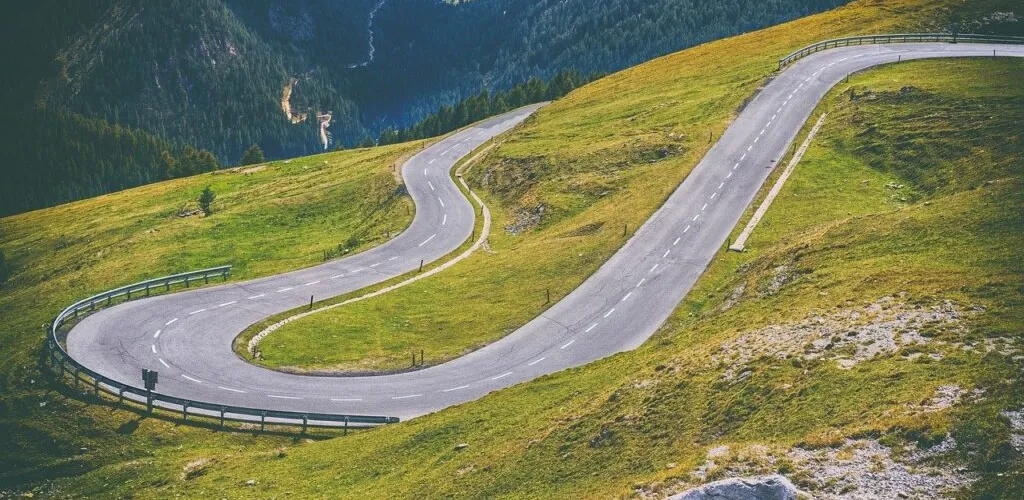
- Apuseni Road is 80% complete and could open by November 2023.
- It may surpass Transfăgărășan in beauty, linking Stâna de Vale, Valea Iadului, Valea Drăganului.
- First stretch accessible by car; two lanes, winding Capra hill, project finished early.
- Transfăgărășan is a 151 km benchmark with sights like Vidraru Dam and Bâlea Lake.
Romania is preparing to welcome a new road jewel: The Apuseni Road, a route promising to rival the famous Transfăgărășan and Transalpina in scenery. The county road between Beiuș and Stâna de Vale is already 80% complete and could be opened to visitors as early as November 2023.
According to information from the press, this route could be more spectacular in beauty than Transfăgărășanul. The Apusenilor Road is set to be a true revelation, as the project nears reception with only 20% remaining to complete.
A new spectacular road destination in Romania
According to press reports, this road will be accessible to tourists starting in November 2023, the route itself having the potential to be more spectacular than the Transfăgărășan or Transalpina. The Apuseni Road is set to be a genuine revelation, as the project completion approaches reception, with only 20% left to execute.
The first stretch of road can already be accessed by car, the highway featuring two lanes and winding along the Capra hill. According to specialists who evaluated the project, the discussed road could surpass even the famous Transfăgărășan in beauty.
Connecting the tourist areas of Bihor County
According to Bianca Firezar, spokesperson for the Bihor County Council, the road connects three important tourist zones in the county: Stâna de Vale, Valea Iadului, and the border with Cluj County – Valea Drăganului, a place very well known and loved by visitors.
Works began in November 2019, with a completion term of November 2023, but the project finished three months ahead of schedule, demonstrating efficiency in executing this ambitious project.
Transfăgărășan - the ultimate reference for mountain roads
To understand the magnitude of the comparison, we must turn to the famous Transfăgărășan, recognized as the most beautiful route in Romania. Known as the “Road among the Clouds” or the “Metro of the Mountains,” this road spans 151 kilometers and is part of DN 7C, starting in Argeș County, in the town of Bascov, and intersecting with DN1, between Sibiu and Brașov.
The main attractions of Transfăgărășan
Transfăgărășan offers a unique experience, passing by the Vidraru Hydroelectric Plant, continuing to the Curtea de Argeș Monastery, crossing the Vidraru dam, and ending at the Capra Waterfall. The crossing from Capra to Bâlea Lake is through the Bâlea Tunnel, the longest tunnel in Romania, about 887 meters long, located at the highest point (2,042 meters).
For the construction of this tunnel, extraordinary efforts were required: three million tons of rock were displaced using 6,000 tons of dynamite. The tunnel is electrically lit and naturally ventilated, with a height of about 4.4 meters, a width of 6 meters, and a 1-meter-wide sidewalk.
Must-see spots on Transfăgărășan:
- Curtea de Argeș Monastery
- Poenari Fortress
- Valea lui Stan
- Vidraru Dam
- Capra Waterfall
- Bâlea Lake
- Bâlea Cascadă
- Bâlea Lake Ice Hotel
- Badea Cârțan Ethnographic Museum
- Prometheus Statue
Transfăgărășan has been described as the most spectacular road in the world by Jeremy Clarkson, one of the hosts of the show Top Gear, reinforcing its international reputation.
Transalpina - “Devil’s Path” and the highest road
Transalpina, known as the “Devil’s Path,” is the road at the highest altitude in Romania, linking the town of Novaci in Gorj County with Sebeș in Alba County. Initially, the route was used by shepherds from the Marginimea Sibiului to move sheep toward Wallachia.
Technical characteristics of Transalpina
Transalpina is a national road in the Parâng Mountains, part of the Southern Carpathians, with its highest point at Urdele Pass, at 2,145 meters above sea level. The road traverses four counties – Gorj, Vâlcea, Sibiu, Alba – crossing the Parâng Mountains from south to north.
Being a mountain road, Transalpina is closed during winter for safety reasons. Its highest altitude is on a roughly 20-kilometer stretch in Gorj and Vâlcea counties, where it appears as a spectacular “crest road.”
The future of road tourism in Romania
With the completion of the Apuseni Road, Romania is set to enrich its portfolio of destinations for road tourism enthusiasts. If promises materialize, this new road could become a viable alternative to the famous mountain routes, offering a unique experience in the heart of the Apuseni Mountains.
The project demonstrates local authorities’ commitment to developing tourist infrastructure and leveraging Romania’s exceptional natural potential, reinforcing the country’s position as a top destination for automotive and adventure tourism.