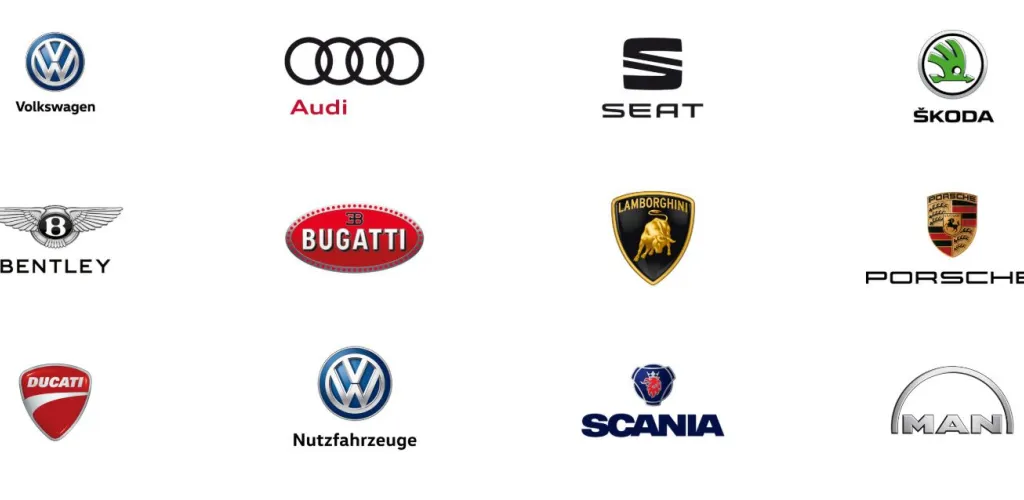
- Ten brands from five countries form VAG Group, spanning affordable to supercars.
- By 2025, at least 30 fully electric models on dedicated platforms; batteries prioritized.
- By 2030, mass electrification, Level 4 and 5 autonomous driving, connected transport, software services.
VAG Group currently stands as the world’s largest automotive group and continues to strengthen its leadership in the global car market. The group brings together ten prestigious brands from five countries, each preserving its distinctive identity and unique technical DNA.
This structure enables VAG to cover nearly all segments of the automotive market, from affordable mainstream models to exclusive supercars.
Which car brands are part of the VAG Group
The Volkswagen Group owns the following automotive brands:
- Volkswagen – the flagship brand, known for reliability and accessible technology
- Volkswagen Commercial Vehicles – the van and commercial vehicle segment
- Audi – premium brands with cutting-edge technology
- SEAT – the Spanish brand with sporty design
- Škoda – the value-for-money benchmark
- Cupra – the performance brand spun off from SEAT
- Lamborghini – Italian luxury supercars
- Bentley – British luxury at its most refined
- Porsche – high-performance sports cars
- Ducati – premium motorcycles
Each brand has been strategically acquired by the Volkswagen Group but has retained its name and the characteristics that make it unique in the market. This strategy allows VAG to cover almost all segments of the automotive market, from affordable cars to exclusive supercars.
Integrated financial services
In addition to manufacturing and selling cars, VAG Group offers a full range of financial services:
- Financing for auto dealers and end customers
- Operational and financial leasing services
- Dedicated car insurance
- Specialized banking services for the automotive industry
These services complete the group’s auto ecosystem and ensure an integrated customer experience, from purchase to maintenance.
NEW AUTO Strategy: Mobility for Future Generations
VAG Group is at the heart of the most ambitious transformation in its history through the NEW AUTO program. The objective is to become a global provider of sustainable mobility, not just a car manufacturer.

Concrete objectives by 2025
The group aims to launch at least 30 fully electric models by 2025. These models will use dedicated electric vehicle platforms, such as the MEB (Modular Electric Drive Kit) platform, which enables optimization of interior space and performance.
Battery technology becomes a strategic priority. VAG is investing heavily in the development of batteries with higher energy density, shorter charging times, and lower production costs. The group is building dedicated battery production facilities in Europe to secure supply chain independence.
Vision for 2030
By 2030, VAG Group aims to:
- Mass electrification: electric propulsion for the majority of vehicles in the portfolio
- Autonomous driving: development and deployment of Level 4 and Level 5 autonomous driving systems
- Connected transport: vehicles integrated into smart urban mobility networks
- Software-based services: new revenue streams from apps, updates, and digital services
This transformational process marks the shift from a traditional business model based on selling internal-combustion engine cars to a complex ecosystem of electric mobility and digital services.
Changing the business model
Although the brands and current models will continue to exist, the financial foundations of the group are undergoing a radical shift. VAG Group aims to replace combustion engine revenues with:
- Zero-emission electric vehicle sales
- Mobility services integrated into apps and digital platforms
- Software and over‑the‑air updates for vehicles
- Autonomous driving services and shared mobility
This transition requires massive investments in research and development, but also a complete restructuring of production lines and the technical skills of employees.
From lagging behind to leadership
It must be acknowledged that the VAG Group was initially more conservative in adopting electric technology compared with players like Tesla or even other European competitors. Yet the NEW AUTO strategy demonstrates a radical shift and a determination to reclaim lost ground.
Investments announced by the group exceed €70 billion over the next five years, focused on:
- Developing electric platforms
- Battery technology
- Software and autonomous driving
- Charging infrastructure
Competitive advantages
VAG Group benefits from several advantages in this transition:
- Scale of production: high volumes enable amortization of development costs
- Diversified portfolio: 10 brands covering all market segments
- Technical expertise: decades of automotive manufacturing experience
- Financial resources: capital required for massive investments
- Global network: dealers and service centers worldwide
Prospects for the electric vehicle market
The electric vehicle market is in full expansion. Analysts estimate that EVs will account for more than 50% of global new car sales by 2035. This growth is driven by:
- Stricter emissions regulations
- Government incentives for EV purchases
- Falling battery costs
- Improved charging infrastructure
- Increasing range of electric vehicles
The strategic shift of the VAG Group is thus not only a response to current trends but a smart financial move that positions the company for long-term profitability.
Conclusion
VAG Group demonstrates that even the largest traditional car manufacturers must reinvent themselves to stay relevant. The NEW AUTO strategy represents a fundamental transformation that will redefine the group in the coming decade. With an impressive roster of brands, massive financial resources, and a clear future vision, VAG Group has every chance to become a leader in the era of electric and autonomous mobility.