- Renault Group Romania employs over 17,000 across production, R&D, and IT.
- Salaries range from 3,000 to 9,100 RON net monthly.
- Entry-level Assistant Manager earns 3,000 net monthly.
- Local Technical Lead earns 6,000 net monthly.
Renault Group is one of the largest employers in Romania’s automotive industry, with over 17,000 employees across diverse specializations. Through the Dacia brand, the French group operates the country’s largest car manufacturer, with a significant impact on both the local labor market and the automotive scene. Salaries vary substantially depending on role and experience, from 3,000 RON net for entry-level positions to 9,100 RON net for IT specialists.
Renault Group presence in the Romanian market
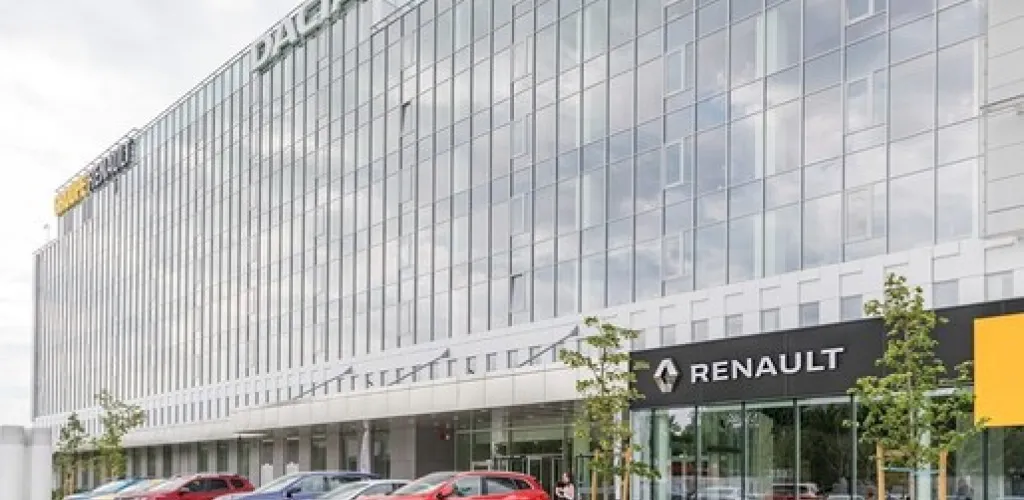
Automobile Dacia has functioned as the main vehicle manufacturer in Romania since 1999, when it was acquired by Renault. The company manufactures and sells vehicles, spare parts, tools, machines and facilities dedicated to the automotive manufacturing industry.
In 2009, the group expanded operations by acquiring Auto Chassis International Romania, a transaction finalized at a value of €50.8 million. This strategic move strengthened Renault’s position in the Romanian auto components market.
Renault Group is recognized as one of the largest employers in the private sector, offering jobs for over 17,000 Romanians across several specialty divisions, from production and research & development to management and IT.
Salary structure at Renault Romania
According to publicly available information on the undelucram.ro platform and cited by promotor.ro, the salary structure reflects both the level of experience and the complexity of the roles held.
Entry-level and junior positions
Assistant Manager earns 3,000 net per month. This role is typically held by recent graduates or individuals with limited experience in management.
Concept Designer with five years of experience earns 4,200 net per month, plus an annual bonus of 2,000 and meal vouchers worth 350 per month. The role involves responsibilities in designing components or systems.

Technical Consultant with six years of experience, employed full-time, has a salary of 4,600 net per month. This position involves technical consulting for various company projects.
Technical and IT specializations
Data Analyst with three years of experience earns 4,800 net per month, plus a substantial annual bonus of 5,000 and meal vouchers worth 440 per month. Data analysis is increasingly important in the modern automotive industry, especially with the shift toward connected vehicles.
Engineer with five years of experience earns 4,600 net per month. Engineers are the backbone of production and development operations, involved in several technical aspects of automotive manufacturing.
Local Technical Lead with four years of experience, employed full-time, earns 6,000 net per month. This role combines technical expertise with team leadership responsibilities.
Management positions
Team Manager with a permanent contract and five years of experience earns 5,500 net per month. The role involves coordinating production or specialized teams.
Project Manager shows an interesting variation depending on experience:
- With two years of experience: 6,000 net per month
- With ten years of experience: 5,600 net per month, plus an annual bonus of 4,000 and meal vouchers of 400 per month
This difference may seem counterintuitive, but it reflects that salary packages include various variable components.
IT Project Manager with five years of experience occupies the highest-paid position in the company, with a salary of 9,100 net per month. This role reflects the growing importance of digitization and IT in the modern automotive industry.
Additional benefits
In addition to base salaries, Renault Group employees benefit from:
- Annual bonuses ranging between 2,000 and 5,000 RON, depending on position and performance
- Monthly meal vouchers between 350 and 440 RON
- Other standard industry-specific benefits (health insurance, training programs, etc.)
Renault Group global presence
Renault Group has been building cars since 1898 and has headquarters in over 130 countries worldwide. The group is part of the Renault-Nissan-Mitsubishi Alliance, one of the largest automotive alliances in the world.
Brand portfolio includes:
- Renault - main brand with a full range
- Dacia - successful low-cost brand developed in Romania
- Lada - Russian brand (until the recent withdrawal)
- Alpine - sports car brand
- Mobilize - brand dedicated to mobility solutions
In Romania, the group is a market leader with the Dacia and Renault brands, achieving strong economic performance and offering a diverse range of opportunities in the job market.
Renault withdrawal from Russia
In the context of the armed conflict in Ukraine, Renault Group made a strategic decision to withdraw from Russia in the first quarter of 2022. This move had major implications for the French group, which had significant operations in the Russian market.
Transaction details
The Renault Group Board of Directors unanimously approved signing the agreements to:
- Transfer all shares held by Renault Russia to the City of Moscow
- Transfer 67.69% of AVTOVAZ’s capital to NAMI (the Russian Central Institute of Automotive and Engines Research)
The transactions were completed unconditionally, with all necessary approvals obtained. A notable clause allows the Renault group to repurchase its stake in AVTOVAZ within six years, preserving a strategic option for the future.
Impact on employees
The decision was made with responsibility toward the 45,000 employees Renault had in Russia. Luca de Meo, CEO of Renault Group, stated that this is “a difficult but necessary decision, taken with full responsibility toward our employees, in order to maintain the group’s performance and the possibility of returning to this country in the future under a different context.”
Strategic implications
The withdrawal marks a significant shift in Renault’s global strategy, which will need to compensate for revenue and production capacity losses in this region. Nevertheless, the management expresses confidence in accelerating the transformation and achieving mid-term objectives.
This situation highlights the volatility of the global automotive market and the impact of geopolitical factors on the industry. For Renault’s operations in Romania, which remain a key pillar of the group in Eastern Europe, this represents an opportunity to consolidate the strategic position.