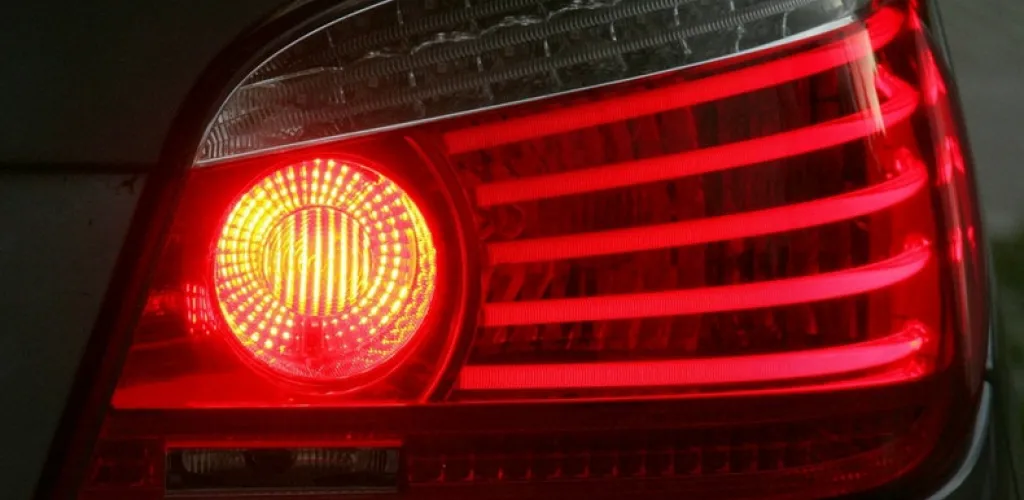
- Bulbs last up to five years; replace when burnt out or underperform.
- Replace both bulbs in a pair to ensure uniform light and safety.
- Watch for dim/flickering light, color shift, warnings, or inspection failure.
- Life depends on electrical, mechanical, and quality factors.
Car bulbs are essential components for road safety, ensuring proper visibility and signaling of driving intentions. While there isn’t a precise lifespan for all bulb types, knowing the optimal replacement moment and all the bulb types present in the vehicle can help you avoid unpleasant situations on the road.
Nowadays, most modern bulbs can last up to five years, but many factors can cause bulbs to burn out prematurely, such as voltage fluctuations, excessive vibration, or poor component quality (why bulbs burn out).
Types of automotive bulbs – the complete inventory
When we talk about automotive bulbs, we refer to much more than the main headlights and taillights. A modern vehicle contains a wide variety of light sources, each with a specific role in safety and driving comfort:
Exterior bulbs mandatory
- Headlight bulbs: parking (position), high beam, low beam
- Turn signal bulbs: front and rear
- Brake light bulbs: rear position lights
- Brake lights: high-intensity warning lights
- Reverse light bulbs: for illuminating the area behind the vehicle
- Fog light bulbs: for difficult weather conditions
- License plate light bulbs: for legibility of the plate in the dark
Interior and comfort bulbs
- Dashboard bulbs: for illuminating the instrument panel
- Door bulbs: for interior lighting when the door is opened
- Door handle illumination bulbs: for easy access at night
- Glove box bulbs: for storing items
- Reading lights: for rear passengers
- Dome light bulbs: general interior lighting
When to replace car bulbs
General rule: bulbs should be replaced only when they burn out completely or no longer operate within optimal parameters. However, there are a few important principles to follow:
Simultaneous replacement principle
When you need to replace a burnt-out bulb that has a pair (such as brake light bulbs, headlights, or turn signals), it is recommended to replace both at the same time, even if one is still functioning.
Reasons for this approach:
- Light uniformity: bulbs of the same age have similar intensities
- Time and cost savings: avoid another intervention soon
- Safety: eliminates the risk that the second bulb burns out shortly after
Signs that bulbs need replacement
- Dim or flickering light
- Change in light color (more yellow for halogen)
- Dashboard warnings about burnt-out bulbs
- Failure at periodic technical inspection
- Intermittent operation
Factors influencing bulb life
Bulb life can be affected by:
Electrical factors
- Voltage fluctuations: a faulty alternator can shorten bulb life
- Corroded contacts: increase resistance and heating
- Poor electrical installation: short circuits or overloading
Mechanical factors
- Excessive vibrations: can affect halogen filaments
- Thermal shocks: rapid changes from cold to hot
- Humidity: leaks in the lighting system
Quality factors
- Bulb brand: OEM bulbs typically last longer
- Technology used: LEDs last longer than halogens
- Usage frequency: bulbs used more often wear out faster
Types of technologies for automotive bulbs
Halogen bulbs
- Life expectancy: 500–1000 hours
- Advantages: low cost, easy replacement
- Disadvantages: high consumption, heat emission
Xenon bulbs (HID)
- Life expectancy: 2000–3000 hours
- Advantages: strong light, energy efficiency
- Disadvantages: high cost, requires ballast
LED bulbs
- Life expectancy: 15000–25000 hours
- Advantages: low consumption, durability
- Disadvantages: high initial investment
Maintenance recommendations
To maximize the life of car bulbs:
- Regularly check the operation of all bulbs
- Clean reflectors and diffusers regularly
- Avoid touching halogen bulbs with bare hands
- Replace bulbs in pairs for uniformity
- Choose high-quality bulbs, preferably OEM or equivalent
- Check system voltage at signs of premature wear