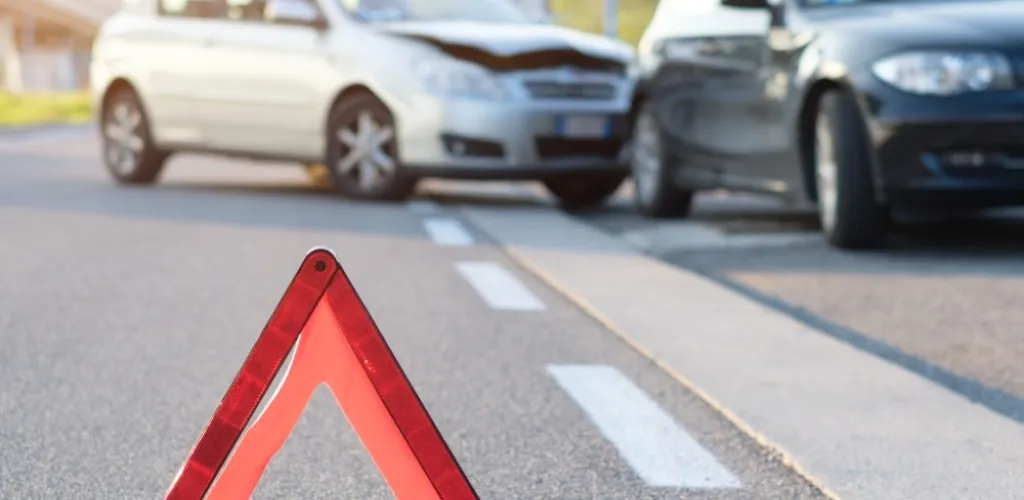
- Reflective triangles are mandatory when a vehicle is immobilized by a defect or accident.
- Place triangles at least 30 meters ahead; 50–100m on highways, 10–15m in towns.
- In curves, place first triangle before the curve and second after.
- Stop safely, hazard lights on, wear vest, check traffic; penalties for noncompliance.
Reflective triangles are mandatory safety equipment in any passenger car, essential to prevent accidents in the event of a breakdown on the road. Although most drivers keep these devices in the trunk, few know the exact rules for proper use and placement.
This guide explains when they are required, the correct placement distances, and how to avoid fines by following the law.
When you are required to use reflective triangles
Under current traffic law, reflective triangles must be used mandatorily when your vehicle has a technical defect that immobilizes it on the roadway. This includes any mechanical or technical issue that:
- Prevents normal movement of the vehicle
- Does not allow removing the car from the roadway to a safe area
- Creates an obstacle for other road users
Concrete examples of situations requiring the use of triangles:
- Flat tire on a public road
- Engine or transmission failure
- Brake system problems
- Major electrical faults
- Road accident
- Any other fault that immobilizes the vehicle
The main purpose of these devices is to warn other drivers in advance about the presence of an obstacle on the roadway, allowing them to slow down and execute safe avoidance maneuvers.
How to place reflective triangles correctly
Placement distance
The basic rule requires that the triangles be placed at least 30 meters ahead of the immobilized vehicle. However, this distance is not fixed and should be adjusted based on several factors:
On highways and national roads:

- Higher traffic speeds require a much larger distance
- Placement at 50-100 meters from the vehicle is recommended
- Reduced visibility at night or in fog demands even larger distances
In towns and urban areas:
- Slower traffic allows shorter distances
- You can place the triangles as close as 10-15 meters
- Adapt the distance according to congestion and visibility
In curves:
- The first triangle is placed before the curve, in a straight line
- The second triangle is placed after the vehicle
- This ensures maximum visibility for both directions of traffic
Correct placement procedure
- Stop the vehicle as safely as possible - if feasible, away from the main flow of traffic
- Turn on hazard lights immediately after stopping
- Put on a reflective vest before getting out of the car
- Check traffic in both directions before exiting the vehicle
- Place the first triangle behind the car, facing the direction of traffic
- Place the second triangle in front of the vehicle if the situation requires
What the legislation requires
Under the Road Code, reflective triangles are mandatory equipment in any motor vehicle. Their absence at a routine check can lead to:
- Administrative fine
- Penalty points
- Possible issues in the event of an accident if you do not have the required equipment
Moreover, failing to follow correct placement rules can be considered a contravention, especially if this negligence contributes to the occurrence of another accident.

Practical recommendations
Where to store the triangles:
- In the trunk, together with the first aid kit
- In a easily accessible location
- In a box or protective sleeve to prevent damage
Periodic checks:
- Check the condition of the triangles at each periodic vehicle inspection
- Ensure the reflective elements are not damaged
- Check the reliability of the opening mechanism
In case of emergency:
- Stay calm and do not rush
- Prioritize personal safety
- If the situation is dangerous (heavy traffic, poor visibility), contact emergency services
- Do not attempt repairs on the motorway shoulder
Conclusions
Reflective triangles may seem like a mundane accessory, but their role in preventing secondary accidents is fundamental. Knowing how to use them correctly and adhering to placement distances can make the difference between a simple breakdown and a serious accident.
Make sure to periodically verify the presence and condition of these devices in your car. When you need them, they must work perfectly and be easily accessible. Your safety and that of other road users depends on these seemingly minor details.