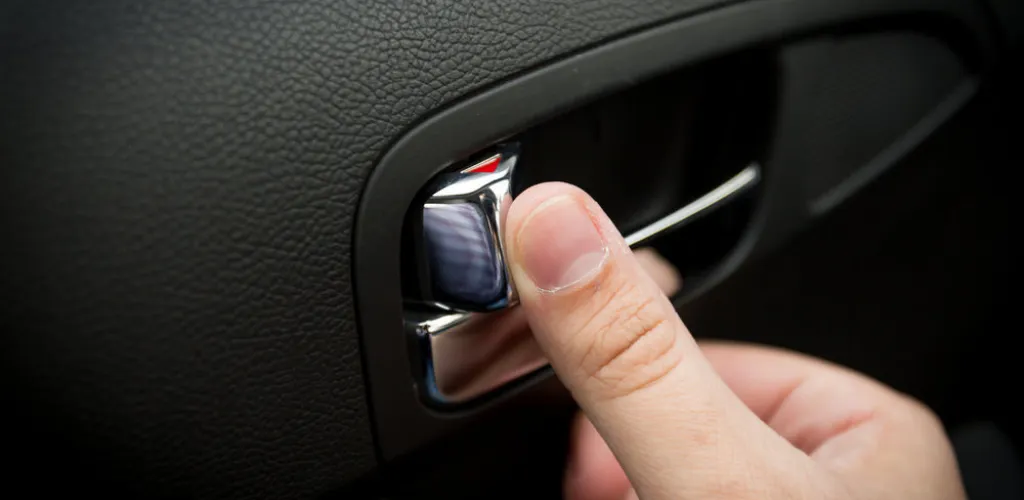
- Locking doors deters theft and stops quick entry during distractions.
- Rear door child locks and alarms protect kids from accidental openings.
- Locked doors strengthen structure and prevent passenger ejection in wrecks.
- In rollovers, locked doors keep occupants inside, boosting survival chances.
Locking your car doors may seem like a small part of your daily driving routine, but this simple habit can make the difference between safety and danger. Whether you’re an experienced driver or you’ve just earned your license, adopting this safety practice should become automatic.
Most drivers don’t realize the importance of this gesture until they face dangerous situations that could have been avoided. Unfortunately, statistics show that many unpleasant incidents could be prevented by simply pressing the central locking button.
Protection against Robbery and Theft Attempts
How Thieves Operate
In criminals’ well-planned tactics, one may attract the driver’s attention by various means:
- Tap on the side window
- Simulate a technical problem
- Distract with gestures or noises
While the victim is distracted, the accomplice quickly opens the door and takes valuables: laptop, phone, wallet, handbag or other items left within reach.
Prevention through Locking
With the doors locked, this tactic becomes impossible to execute. Even if criminals try to open the door, it will stay closed, giving you the time to leave the area or alert authorities.
Child Safety — The Number One Priority
Child safety is inherently a priority because children can be unpredictable and may put themselves and other passengers at risk through seemingly innocent actions. Car door locking systems are the first line of defense against these situations.
Specific Risks
Young children may try to open the door for various reasons:

- Natural curiosity
- Desire to get out quickly
- Play and experimentation
- Imitation of adults’ actions

Specialized Safety Systems
In addition to standard central locking, most modern cars are equipped with dedicated child safety features:
Rear Door Child Locks:
- Allow opening only from the exterior
- Activated manually with a special lever
- Operates independently of the central system
- Essential for children under 12 years old
Advanced Electronic Systems:
- Child presence detectors
- Audible alarms when doors are opened
- Automatic locking based on speed
Vital Protection in Case of an Accident
This is perhaps the most important reason to keep doors locked at all times. In emergencies, the locking system activates crucial safety mechanisms for survival.

How Safety Systems Work
When you lock the doors, you engage multiple protective systems:
Strengthening the structure:
- The body becomes stiffer
- Impact resistance increases significantly
- Deformations are more controlled
Preventing ejection:
- Passengers stay inside the cabin
- Airbags function optimally
- The seatbelt remains effective
Critical Scenarios
In a rollover: In a rollover, locked doors prevent accidental opening and passenger ejection. Statistics show that survival chances are five times higher when occupants stay inside the vehicle.
In a side impact: Locked doors maintain the structural integrity of the cabin, providing maximum protection against intrusions.
Implementing the Habit into Daily Routine
To be effective, this measure must become automatic. Here are some practical tips:
Recommended Sequence
- Get into the car
- Close the door
- Lock the doors immediately
- Start the engine
- Check that all doors are locked
Modern Technologies
New cars offer advanced features:
- Automatic locking at engine start
- Locking at exceeding a certain speed
- Automatic unlocking in case of an accident
- Smartphone control
Exceptions and Precautions
There are situations where locking the doors should be considered strategically:
In case of a medical emergency:
- Rescuers may need quick access
- Weigh the risks vs benefits
In highly secure areas:
- Even in these cases, the habit should be maintained
- Danger can appear unexpectedly
Locking your car doors is a simple measure that can prevent tragic situations. Regardless of your driving experience or the type of car you drive, this habit should be part of your daily routine. Your safety, your family’s safety, and your belongings’ protection can depend on this small gesture that costs nothing but can save everything.