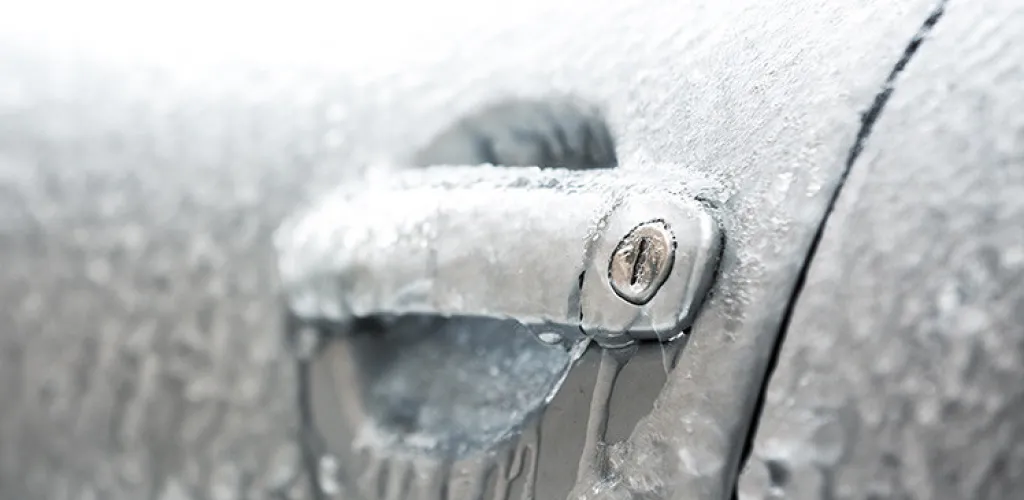
- Moisture, condensation, precipitation, and wind freeze car locks.
- Don’t use hot water, open flames, or forcing the key; risk damage.
- Check all doors first; only some locks may be frozen.
- De-icer spray thaws quickly; a hair dryer can warm locks at home.
Frozen locks are one of the most common problems drivers face in the cold season. Subzero temperatures, combined with humidity and precipitation, can turn a simple start into a real challenge. Although the first instinct might be to use hot water to quickly solve the problem, this method can cause costly damage to the locking system.
Understanding the mechanisms that lead to freezing in car locks and knowing the correct thawing methods will save you time, money, and nerves during the winter months.
Why car door locks freeze
Car door locks are vulnerable to freezing for several technical reasons. The metal part of the lock cylinder can accumulate moisture from the air, and when the temperature drops below zero, this moisture turns into ice.
The phenomenon is amplified by:
- Moisture infiltration through worn seals around the lock
- Condensation formed from the temperature difference between the interior and exterior of the vehicle
- Precipitation that penetrates into the lock cylinder
- Direct exposure to wind and the elements
The left-hand doors of the vehicle are more susceptible to freezing, being exposed directly to crosswinds and the snow kicked up by vehicles coming from the opposite direction.
What not to do with frozen locks
Before presenting the correct solutions, it is essential to know methods that can cause permanent damage to the locking system:
Avoid hot water
Pouring hot water over a frozen lock may seem logical, but it can have disastrous consequences:

- Water can quickly freeze inside the cylinder, worsening the problem
- The sudden temperature change can crack metal components
- Rubber seals can deteriorate irreversibly
- The paint around the lock can crack
Do not use an open flame
Heating with a lighter, torch, or other flame sources:
- Can melt plastic components
- Risk of fire from fuel vapors
- Can damage the vehicle’s paint
- Permanent deformation of metal parts
Avoid forcing
Attempting to force the key or use objects to pick the lock can result in:
- Key breaking in the cylinder
- Damage to the door handle
- Deterioration of the internal locking mechanism
- High repair costs
Efficient and safe thawing methods
Check all doors
Before attempting any thawing method, test all doors of the vehicle. Often, only one or two locks are affected, while the others work normally. This gives you quick access to the interior.
De-icer spray – professional solution

The specialized spray for thawing is the most effective solution:
- Application: Spray directly into the lock cylinder
- Action time: 30-60 seconds for complete thawing
- Advantages: Does not damage components, fast action
- Cost: Affordable, available at most fuel stations
Hair dryer – home method
If you’re at home and have access to an outdoor outlet:
- Use an extension cord to reach the car
- Direct warm air toward the lock from a distance of 15-20 cm
- Heat the area evenly for 2-3 minutes
- Periodically test the key operation
WD-40 or penetrant lubricant
These products can be effective due to their moisture-displacing properties:
- Spray into the lock cylinder
- Let sit for 1-2 minutes
- Try gently turning the key
- Bonus: helps lubricate the mechanism
Alcohol-based disinfectant
Isopropyl alcohol (minimum 70%) can be useful:
- Apply with a small syringe into the cylinder
- Alcohol has a very low freezing point
- Helps melt ice quickly
- Leaves no residues
Tips for car remotes
For vehicles with centralized locking:
- Try to keep the remote close to the car’s sensor
- Check the remote’s battery—the cold reduces its efficiency
- Use the spare mechanical key if the remote does not work
- Warm the remote in your pocket before use
Preventing freezing of locks
Proactive measures
- Car cover: Use a tarp or park under shelter
- Avoid washing the car when the temperature is near freezing
- Preventive lubrication: Apply graphite spray to locks monthly
- Check seals: Replace worn seals that allow moisture ingress
Protective products
- Graphite sprays for lubricating locks
- Hydrophobic products for seals
- Protective wax for the area around the locks
When to call a professional
Some situations require the intervention of a car mechanic or roadside assistance:
- All locks are jammed and the above methods do not work
- The key broke in the lock cylinder
- The mechanism appears damaged after attempts to unlock
- The problem recurs frequently, indicating a fault
Most CASCO insurance policies include roadside assistance, which can intervene in such situations at no extra cost.
Useful tools for emergency situations
Create a winter emergency kit that includes:
- Lock de-icer spray
- Dry shampoo or WD-40
- Alcohol-based disinfectant
- Flashlight for visibility
- Protective gloves
- Spare keys
Keep these products at home or in an accessible place, not in the car, where they could freeze or become inaccessible.
Avoid washing the car in risky conditions
An important factor in preventing frozen locks is avoiding car washing in unfavorable weather conditions. The water used in washing can enter components and freeze later, causing multiple problems.
Frozen locks don’t have to ruin your winter plans. With the right methods and a bit of preventive preparation, you can solve this issue quickly and safely, without damaging the vehicle’s locking system.
Sursa foto: uniroyal-tyres.com, blog.mercedesbenzraleigh.com