- Zero tolerance: any detectable alcohol leads to penalties.
- Up to 0.40 mg/L: contravention with fine, 90-day license suspension, penalty points.
- Over 0.40 mg/L: offense—imprisonment 1-5 years or criminal fine; license revoked, 2-year ban.
- Breathalyzer is most common; blood tests can confirm results.
Romanian traffic legislation takes a firm stance on driving under the influence of alcoholic beverages, punishing drivers even for very low blood alcohol levels. This strict approach is based on the safety of all road users, given that alcohol directly affects the driver’s reaction times and reflexes, regardless of the amount consumed.
In the following, we analyze in detail how a driver’s blood alcohol content is measured, the differences between contravention and offense, and the legal consequences of these acts.
Alcohol and its effects on driving ability
It is scientifically proven that alcohol significantly affects the central nervous system, even in small quantities. Effects include:
- Increased reaction time to emergencies
- Reduced ability to assess distances and speeds
- Decreased motor coordination
- Impairment of peripheral vision and focusing ability
- Decreased attention and concentration
These deficiencies make driving under the influence a major danger to road safety, which is why Romanian law provides severe penalties.
How blood alcohol content is measured at the wheel
Blood alcohol concentration is measured in milligrams of pure alcohol per liter of blood (mg/L). The check can be performed by two methods:
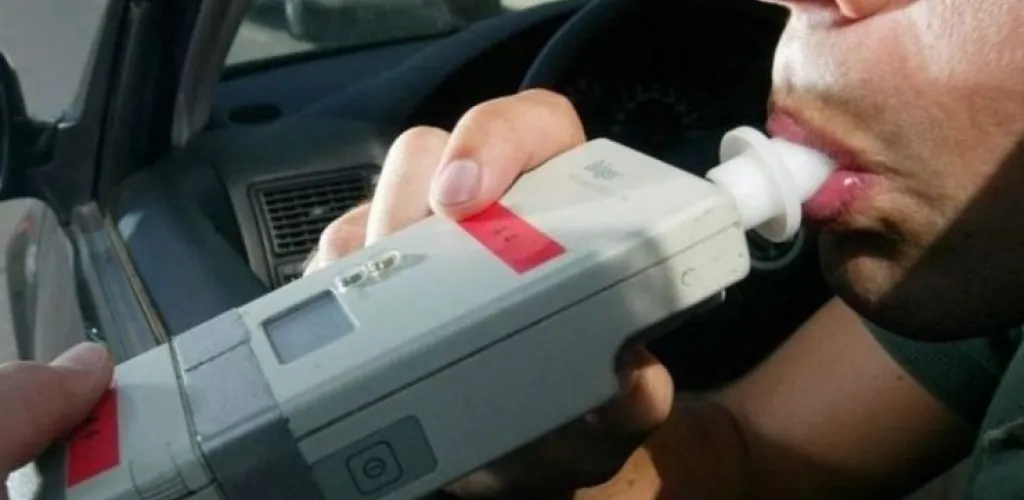
Breathalyzer testing
This is the method most frequently used by police. The device measures the concentration of alcohol vapors in the exhaled air. To understand it better, if a driver has a BAC of 0.50 mg/L, it means that there is 1 part of pure alcohol per 2,000 parts of blood in the body, or 5 parts of pure alcohol per 10,000 parts of blood.

Blood analysis
In special cases or at the driver’s request who challenges the breathalyzer result, blood samples can be drawn to determine the exact level of intoxication. This method is considered the most precise and has full probative value in court.
Legal limit: Contravention vs offense
In Romania, the zero-tolerance threshold means that any detectable amount of alcohol can be sanctioned. However, there is a crucial difference depending on the level of intoxication:
Contravention (alcohol level up to 0.40 mg/L)
If a test shows an alcohol level up to 0.40 mg/L of pure alcohol in the exhaled air, the act is a contravention and is punishable as:

- Contravention fine
- Suspension of driving license for 90 days
- Application of penalty points
Offense (alcohol level above 0.40 mg/L)
When the alcohol level exceeds the 0.40 mg/L threshold, driving in a state of intoxication constitutes an offense under the Penal Code. The consequences are much more severe:
- Imprisonment for 1 to 5 years OR a criminal fine
- Revocation of the driving license
- Prohibition from obtaining a new license for at least 2 years
- Criminal record
- Obligation to repeat the entire licensing process after the end of the prohibition period
How long does alcohol stay in the body
One of the most frequent questions is related to how long alcohol remains in the body after consumption. Unfortunately, there is no universal rule, as the rate at which alcohol is metabolized varies significantly from person to person.
Factors influencing alcohol elimination
Various factors affect how the body processes alcohol:
- Body weight — heavier people have a higher blood volume, which can dilute the alcohol concentration
- Sex — generally, women metabolize alcohol more slowly than men due to hormonal differences and the percentage of water in the body
- Height and body build
- Individual metabolism — some people have more active liver enzymes that break down alcohol faster
- Type and concentration of the beverage consumed
- Amount of food consumed — a full stomach slows alcohol absorption
- Liver health — a healthy liver processes alcohol more efficiently
- Hydration — the level of hydration influences alcohol concentration
Limitations of online calculators
Although there are various online platforms that estimate the time needed to eliminate alcohol based on weight, height, sex, type of drink and amount consumed, these provide only approximate estimates and are not definitive.
None of these tools can guarantee that your blood alcohol content has actually returned to zero. The only reliable method to confirm the absence of alcohol in the body is a test with a professional breathalyzer.
Practical recommendations for drivers
To avoid uncomfortable and potentially dangerous situations related to alcohol at the wheel:
- Do not drive at all after drinking, regardless of the amount
- Plan ahead — if you know you will drink, arrange alternative transport (taxi, ridesharing, public transport, designated driver)
- Wait long enough — if you drank the night before, allow sufficient time before driving the next day
- When in doubt, do not drive — if you’re not sure alcohol has been fully eliminated, don’t take the risk
- Consider a personal breathalyzer — to have precise control before you get behind the wheel
Conclusion
Romanian law on alcohol at the wheel is strict and rightly severe, given the major risks associated with driving under the influence. The difference between a contravention and an offense is at the 0.40 mg/L threshold, but the wisest course is to avoid driving after drinking altogether.
Remember that every driver’s responsibility extends to all other road users. Road safety starts with responsible decisions, and choosing not to drive after consuming alcohol is one of the most important decisions.
Photo source: GorjExpress