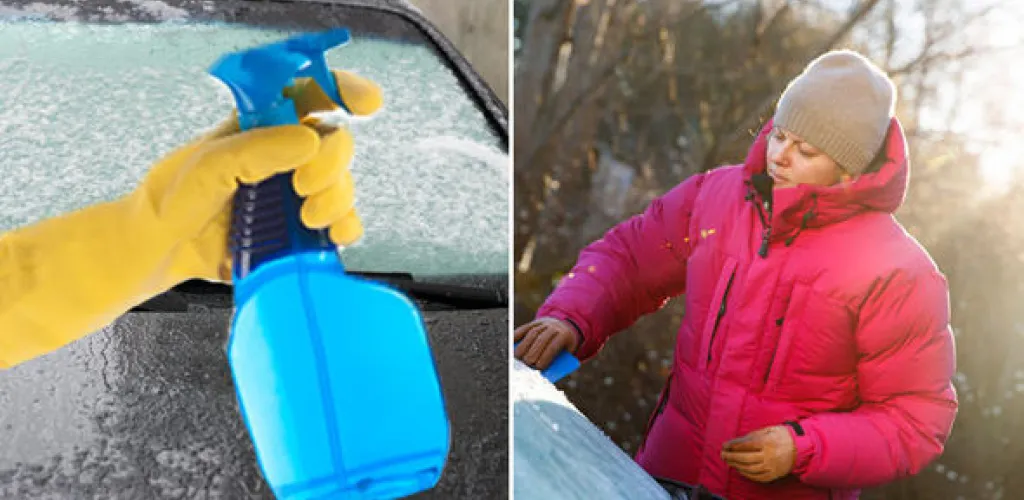
- Isopropyl alcohol melts ice instantly and avoids engine idling or scraping.
- Mix 2 parts 66% isopropyl alcohol to 1 part water in a spray bottle.
- Costs about 5–10 lei per 500 ml, cheaper than commercial solutions.
- Apply evenly, wait 5–10 seconds, then use wipers; don’t run blades early.
Winter mornings when the car windshield is covered by a thick layer of ice pose a challenge for every driver. Waiting 10-15 minutes with the engine running to defog consumes a significant amount of fuel, while traditional scraping can freeze your hands and risk scratching the glass. There is, however, a simple, fast, and economical solution that resolves this problem in seconds without forcing the engine or damaging the windshield.
Disadvantages of traditional defogging methods
Before moving to the optimal solution, let’s analyze why classic methods are not ideal. Idling the engine for 15 minutes consumes approximately 0.2–0.3 liters of fuel, which means significant monthly costs. Moreover, modern engines are not designed for prolonged idling at low temperatures - oil remains more viscous, fuel does not burn completely, and pollutant emissions rise significantly.
The mechanical scraper also has major drawbacks. If the ice is thick or the windshield already has micro-cracks, the pressure can create permanent scratches that impair visibility, especially at night when oncoming headlights create reflections. Moreover, at very low temperatures, you risk cracking the windshield due to uneven pressure.
Isopropyl alcohol solution: chemistry in the driver’s service
The method described by an American meteorologist journalist quickly gained popularity due to its remarkable efficiency. The scientific principle is simple: isopropyl alcohol has a freezing point around -90°C, far below the temperatures we encounter in winter, even in Romania’s harshest conditions.
When you spray this mixture on ice, the alcohol penetrates rapidly between the ice crystals and the glass surface, breaking the molecular bonds that hold the ice to the windshield. The process is instant and visible - you will observe the ice turning translucent and starting to melt on the spot.
How to prepare the defogging solution
Preparation is extremely simple and requires only two ingredients:
Ingredients needed:

- 2 parts isopropyl alcohol (66%)
- 1 part water (33%)
- A clean spray bottle
Preparation method:
- Use a new or thoroughly cleaned bottle to avoid contamination with other chemicals
- Pour isopropyl alcohol up to the two-thirds mark
- Fill with water until fully complete
- Shake well for homogenization
- Label the bottle clearly to avoid confusion
This mixture will cost approximately 5–10 lei for a 500 ml bottle, compared to 40–50 lei for commercial solutions with the same isopropyl alcohol base.
Correct application method
For best results, follow these steps:
- Spray evenly over the entire frozen surface of the windshield
- Wait 5–10 seconds - you will see the ice becoming translucent
- Activate the wipers to remove the melted ice
- Repeat if necessary on thicker ice areas
Important: do not start the wipers before the ice begins to melt, otherwise you risk forcing the wiper motor or damaging the blades.

Safety precautions and recommendations
Although the method is safe and effective, there are a few aspects to consider:
For the paint: Small amounts of alcohol that may reach the body do not affect intact paint. However, if the car has areas with cracked paint or rust, avoid direct contact. The alcohol runs off quickly once the ice melts, minimizing exposure.
For the wiper rubbers: Occasional contact with alcohol does not damage modern rubbers. However, avoid spraying directly on the blades repeatedly.
Storage: Keep the bottle in the trunk - due to the low freezing point, the solution will remain liquid even at -20°C. Make sure the bottle is tightly closed to prevent evaporation.
Why the hot water method is not recommended
Many drivers are tempted to use hot water to defrost the windshield quickly. This is one of the most dangerous practices. The thermal shock between water at 80–100°C and glass at -10°C or lower can cause instant cracks or even complete windshield breakage.
Windshields are made of laminated glass, but their resistance to thermal shock has limits. The cost of replacing a windshield (800–2000 lei depending on the model) far exceeds the savings from using hot water instead of the alcohol solution.
Long-term economic advantages
If we run a simple calculation for a typical Romanian winter (November–March, about 100 days with subzero temperatures):
- Classic method: 15 minutes idle x 100 days = 25 hours of idle time = about 5–7 liters of fuel = 40–56 lei
- Isopropyl alcohol solution: 2–3 bottles per winter = 15–30 lei
- Savings: 25–26 lei per season, plus the time saved
Additionally, we do not factor in extra engine wear from prolonged cold idle.
Alternatives and complementary solutions
For additional protection, you can combine this method with:
- Protective windshield covers - reduce frost formation by up to 90%
- Hydrophobic treatments - facilitate ice removal and reduce adhesion
- Strategic parking - orienting the car toward the sunrise helps natural morning defrost
Conclusion
The isopropyl alcohol and water solution represents the most effective rapid defogging method in terms of cost-efficiency. It is safe for the car, fast in action, and saves both time and fuel. Prepare a few bottles at the start of the cold season and keep them in the trunk to be ready for frosty mornings.
photo source: express.co.uk