
- Simple tasks like bulb changes or oil/filter replacement can be done at home
- Professional diagnostics are essential; misreading codes can mislead and worsen issues
- Tire mounting requires specialized equipment, balancing, TPMS, torque, and geometry checks
- Engine work is high-risk; risk to warranty, tolerances, timing, integrated systems, and tools
Many car owners often think about saving money and time by tackling their own automotive issues. In reality, there is a clear difference between simple repairs you can do at home and complex interventions that necessarily require the expertise of a professional mechanic.
While changing a bulb, mounting a spare wheel, [changing the oil] and replacing filters are approachable operations, there are problems that threaten safety and the vehicle’s integrity. For these, intervention by a specialist is not just recommended — it’s mandatory.
Diagnostics and interpretation of error codes
Modern technology provides everyone with OBD interfaces and mobile apps that read error codes from the car’s ECU. Google offers a wealth of information about auto problems, but correct interpretation of these data requires in-depth technical knowledge.
Why professional diagnosis is essential:
- Error codes can be misleading — a single code may indicate multiple possible problems
- Incorrect interpretation can lead to replacing parts that are still functional
- Professional diagnostic equipment provides much more detailed information
- Experienced mechanics know the problem history for each car model
- Unprofessional intervention based on a misdiagnosis can worsen the original issue
Specialized diagnostic equipment, scanners, and interpretation software are found only in authorized service centers and cost tens of thousands of euros.
Tire mounting and replacement
Changing wheels is a simple operation, but mounting new tires requires equipment and specific expertise. The difference between the two procedures is fundamental for road safety.
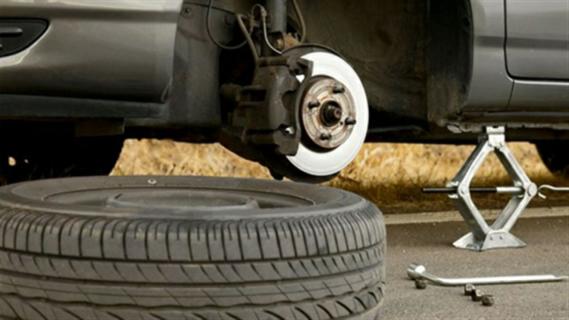
What professional tire mounting entails:
- Unmounting and mounting — requires specialized machines to avoid damaging the rim
- Balancing — without this, the steering wheel will vibrate and the tires will wear unevenly
- Pressure check — including TPMS (tire pressure monitoring system)
- Tightening torque — studs must be tightened to the exact torque specified (usually 80–120 Nm)
- Geometry check — after mounting, a wheel alignment check is recommended
Using improvised tools can damage alloy wheels, and incorrect balancing affects safety and ride comfort.
Engine repairs – the highest-risk area
The modern engine is an extremely complex system, with manufacturing tolerances measured in hundredths of a millimeter. Interventions on the engine are not only difficult — they are dangerous for the vehicle’s integrity.
Risks of unauthorized engine interventions:
- Warranty void — manufacturers void warranty for unauthorized repairs
- Precise tolerances — incorrect tightening torques can destroy the engine
- Complex synchronization — timing must be mounted with millimeter precision
- Integrated systems — modern engines feature ECU, sensors, and actuators that are interconnected
- Specialized tools — many procedures require tools specific to the manufacturer
An engine disassembled incorrectly is almost impossible to reassemble without advanced knowledge. The cost of a faulty repair can exceed the car’s value.
Examples of interventions that obligatorily require service:
- Replacing the cylinder head gasket
- Timing system repairs (belt/chain)
- Valve adjustments
- Turbocharger interventions
- Repairs to the fuel injection system
Suspension system – safety and precision
The suspension ensures stability, comfort, and handling of the vehicle. Its components are subjected to huge forces and require professional installation to function correctly.

Specific hazards of suspension repairs:
- ** Coil springs** — can explode with lethal force if handled incorrectly
- Disassembly order — there is a precise sequence for each component
- [Shock absorbers] uzated — must be replaced in pairs for stability
- Torque specifications — different for each joint
- Wheel geometry — after any intervention, professional alignment is required
Components requiring professional intervention:
- Suspension arms and ball joints
- Tie rods and bushings
- Stabilizer bars
- Wheel bearings
- Shock absorbers and springs
Air conditioning system recharge
The air conditioning system naturally loses about 15% of its refrigerant volume each year, even if used only during the hot season. Recharging with refrigerant requires specialized equipment and strict protocols.
Why AC recharge requires professional service:
- Specialized equipment — recovery and recharge stations
- Types of refrigerant — R134a, R1234yf, R12 — each with different specifications
- Precise quantities — overcharging can damage the compressor
- Leak detection — with UV equipment and electronic sniffer
- Air evacuation — the system must be perfectly sealed
- Special oils — for compressor lubrication
Incorrect handling of refrigerant can cause damage to the AC compressor, condenser, or evaporator.
Engine overheating – a mechanical emergency
While preventive cooling system maintenance can be done at home (replacing hoses and the thermostat), active overheating requires immediate and professional intervention.
Risks of working on an overheated engine:
- System pressure — hot coolant can cause serious burns
- Hidden damage — the head gasket may be compromised
- Complex diagnosis — the cause of overheating must be identified precisely
- Specific procedures — system flushing, pressure testing
- Additional checks — compression, sealing, and radiator/fan operation
A wrong intervention on an overheated engine can turn a minor problem into a major failure.
Other systems that require professional expertise
Braking system:
- Brake fluid replacement
- Repairs to the master cylinder or calipers
- Replacement of brake lines
Electrical system:
- Issues with alternator or starter
- ECU or electronic module faults
- Repairs to the complex wiring harness
Transmission:
- ATF fluid change
- Clutch repairs
- Problems with the automatic transmission
Conclusion: when to risk and when not
The line between safe repairs and risky ones is not only about complexity but also about your safety and that of others on the road. A wrong repair on suspension or brakes can cause serious accidents.
Decision criteria:
- Do you have the experience and tools?
- Does the risk of a mistake justify the saving?
- Is the car’s warranty affected?
- Is road safety compromised?
Investing in a professional service is not just an expense — it is insurance for your safety, the car’s longevity, and peace of mind. Short-term savings may become a major loss in the long run.
Photo source: porsche.com, saudi24.news, rac.co.uk