- Cleaning can restore performance unless the converter is severely clogged
- Common clog causes: poor fuel, excessive oil, bad driving, neglected maintenance
- Symptoms include hesitation, power loss, higher fuel use, and P0420 code
- Blockage test: backpressure above 70% usually requires replacement
The catalytic converter is one of the most important components of the exhaust system, playing a vital role in both engine performance and environmental protection. This expensive part transforms toxic substances from exhaust gases into less harmful compounds, and proper maintenance can save thousands of lei.
A clogged catalytic converter can cause significant power loss, increased fuel consumption, and even a failure of the ITP emissions test. Fortunately, in many cases, a correctly performed cleaning can restore optimal operation without the costly replacement.
Why the catalytic converter is important for your car
Convertor catalytic not only protects the environment by reducing toxic emissions, but also brings concrete benefits to your vehicle:
- Improves engine efficiency by optimizing combustion
- Contributes to lower fuel consumption through proper system operation
- Ensures compliance with emission standards for the ITP and environmental laws
- Prevents excessive deposits from forming in the exhaust system
- Protects the atmosphere from gases resulting from incomplete combustion
Main causes of catalytic converter clogging
Factors that contribute to rapid wear
Poor-quality fuel represents the most common cause – impurities in the fuel gradually deposit in the honeycomb, blocking gas flow.
Excessive oil consumption due to worn piston rings or valve guides introduces metallic particles that accumulate in the catalytic converter.
Inappropriate driving style – prolonged low-speed city driving prevents the catalyst from reaching its optimal operating temperature (400-800°C).
Frequent starts and stops hinder complete thermal regeneration cycles, promoting deposit buildup.
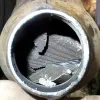
Neglected maintenance – dirty air filters and old oil modify the exhaust gas composition.
Ignition system issues cause incomplete combustion, producing unburnt particles that reach the catalyst.
How to identify a clogged catalytic converter
Characteristic symptoms
The main symptom is that after starting the engine, it attempts to stall or runs unevenly at idle.
Other clear signs include:
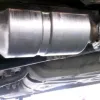
- The car hesitates to accelerate or runs intermittently
- Noticeable power loss – “it doesn’t pull as it should”
- Increased fuel consumption by 20-30%
- Excessive exhaust smoke with a bad odor
- Diagnostic trouble code P0420 during OBD2 diagnostics
- Failure at the ITP emissions test
Beware of incorrect diagnostics
Before performing cleaning, ensure the engine is in good working condition. Code P0420 can also indicate issues such as:
- Damaged oxygen sensors (lambda sensor)
- Other sensors that do not correctly record engine parameters
- Engine faults that generate abnormal emissions
Mandatory preliminary checks
Blockage test
Determine the degree of blockage by measuring backpressure in the exhaust system. A clogged catalyst above 70% usually requires replacement, not cleaning.
Structural integrity check
Gently tap the catalyst with a rubber hammer and listen carefully. Rattling noises indicate ceramic honeycomb damage – in this case, replacement is the only solution.
Identifying primary causes
- Check engine oil consumption – should not exceed 0.5 L/1000 km
- Test cylinder compression to detect ring wear
- Inspect the ignition system – spark plugs, coils, cables
Effective methods for cleaning the catalytic converter
Method 1: Running cleaning (thermal regeneration)
Operating principle: Intensely heat the catalytic converter to burn off organic deposits.
Advantages: Simple, requires no disassembly, zero cost Disadvantages: Risky, does not work for severe blockages
Detailed procedure:
-
Preparation: Use premium gasoline (high octane) for cleaner combustion
-
Regeneration run:
- Leave the city for a long road trip (minimum 30-40 km)
- Maintain a minimum speed of 80-90 km/h for proper cooling
- Periodically accelerate to high revs (near the redline)
- Continue the regime for 20-30 minutes
-
Self-cleaning process: The catalyst heats to 600-800°C, and the exhaust pressure pushes the burned deposits out
Critical precautions:
- Do not exceed the legal speed limit on public roads
- Stop immediately if the engine shows problems
- Do not apply to heavily clogged catalysts over 50%
- Ensure proper engine ventilation
Method 2: Cleaning with removal (professional method)
Principle: Intensive chemical cleaning with specialized substances.
Advantages: Very effective, guaranteed results, full control Disadvantages: More complex, requires technical knowledge
Operation preparation
- Park on a flat, stable surface
- Let the engine cool completely (minimum 2 hours)
- Prepare tools: wrenches 13-17 mm, pliers, clean rags
- Ensure proper lighting of the work area
Detailed execution steps
Safe disassembly:
- Lift the car on ramps or a lift
- Disconnect oxygen sensors (mark positions)
- Remove clamps and mounting bolts
- Remove the catalytic converter avoiding mechanical shocks
Preliminary inspection:
- Visually inspect the ceramic honeycomb with light
- Check for loose fragments (gentle shake)
- Assess whether the ceramic structure is intact
Intense chemical cleaning:
Recommended solutions:
- Professional products: Liqui Moly, Wynn’s
- Alternative verified: Concentrated detergent for stove cleaning
- Strong solution: 10% caustic soda (gloves required!)
Cleaning procedure:
- Hermetically seal one end with plastic or rubber plugs
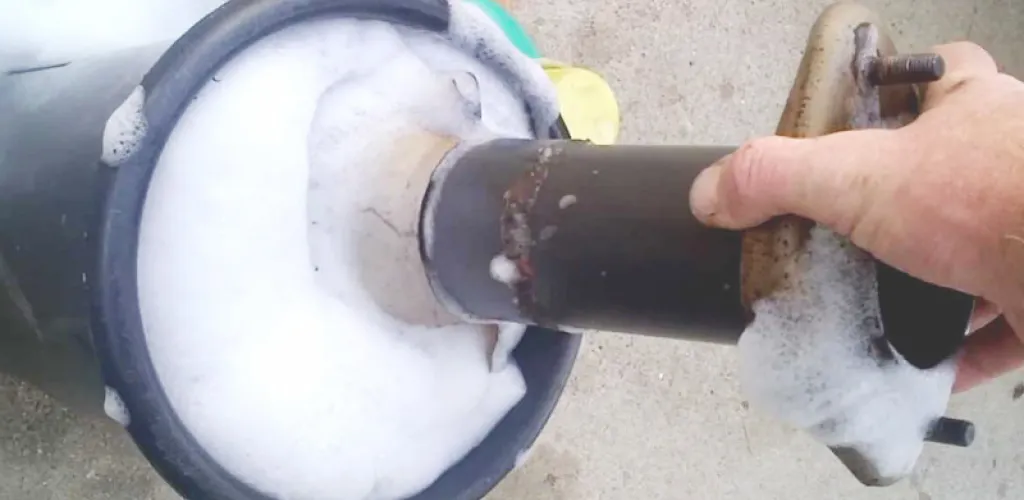
- Pour the cleaner until fully filled
- Seal the other end to maintain pressure
- Let act for minimum 60 minutes for normal deposits
- For severe cases, leave overnight (8-12 hours)
Washing and finishing:
- Remove plugs carefully (eye protection)
- Rinse with high-pressure washer at least 100 bar
- Alternative: professional equipment from auto washes
- Rinse in both directions until water runs clear
- Clean the connecting pipes
Drying and reassembly:
- Place in sun in a well-ventilated area
- Allow full drying (2-4 hours in summer, 6-8 hours in winter)
- Reassemble in reverse order with proper torque
- Check the seal integrity of all connections
Method 3: Preventive cleaning with additives
For regular maintenance:
- Use specialized additives from brands (Bardahl, Liqui Moly)
- Add to the fuel tank according to the instructions
- Drive 20-30 minutes at medium-high revs (3000-4000 rpm)
- Repeat treatment every 10,000-15,000 km
Preventive maintenance strategies
Essential daily measures
High-quality fuel:
- Avoid questionable fueling stations
- Periodically use premium fuel
- Add fuel-cleaning additives with every fill
Optimizing driving style:
- Avoid very short trips (under 5 km)
- Let the engine reach operating temperature
- Periodically accelerate safely to higher revs
Specialized maintenance schedule
Checks at 15,000 km:
- Air filters – replace as per schedule
- Engine oil – use only manufacturer specifications
- Ignition system – spark plugs, coils, high-tension cables
- Intake system – clean injectors
Optimal preventive driving:
- Long weekly runs – minimum 30 km on highways
- Proper warm-up – don’t push a cold engine
- Avoid overloading – respect maximum weight
- Monitor consumptions – oil, fuel, coolant
When to call a car specialist
Situations requiring professional intervention
- Lack of basic technical knowledge about automotive systems
- Catalytic converter shows visible damage – cracks or deformations
- Problem persists after cleaning – requires advanced diagnostics
- P0420 code repeats – possible complex issues
- Car is under warranty – avoid voiding it
- Lack of tools and proper space for intervention
- Not comfortable with technical procedures
Advantages of professional service
- Comprehensive computerized diagnostics
- Specialized cleaning equipment
- Warranty on the work performed
- Experience in complex cases
- Identification of associated problems
Economic analysis: cost vs benefit
Cost comparisons
DIY cleaning: 50-150 lei (materials + personal time)
Professional cleaning: 200-500 lei
Annual preventive additives: 100-200 lei
New catalytic converter: 1,500-5,000 lei (model dependent)
Labor for replacement: 200-400 lei
Long-term calculation
A professional cleaning annually (400 lei) over 5 years = 2,000 lei
Replacement cost = 3,000+ lei
Savings realized: over 1,000 lei + environmental benefits
Additional benefits
- Preserves resale value of the vehicle
- Meets environmental norms – helps avoid fines
- Optimal engine performance
- Increased reliability of the exhaust system
Common mistakes to avoid
Common costly mistakes
❌ Applying the sports method on heavily clogged catalytic converters ❌ Using aggressive substances that damage the ceramic ❌ Reassembling before complete drying – risk of cracking ❌ Ignoring primary causes – problem recurs ❌ Forcing cleaning on structurally damaged honeycomb
Proven good practices
✅ Correct diagnostics before any intervention ✅ Use of protective gear – goggles, gloves ✅ Respect chemical action timelines for cleaners ✅ Check for seals after reassembly ✅ Address fundamental causes of the issue
Conclusion and final recommendations
Catalytic converter cleaning is an essential maintenance procedure that can significantly extend the life of this costly component. A preventive approach is the key to success – don’t wait for a complete blockage, as in many cases it cannot be recovered.
The optimal strategy recommended
- For beginners: Start with additives and preventive running
- For amateur mechanics: Try removal-based cleaning
- For complex cases: Seek experienced specialists
- For all situations: Invest in regular preventive maintenance
Remember the fundamental principle: A well-maintained catalytic converter not only saves substantial money but also actively helps protect the environment and maintain optimal engine performance for many years of use!