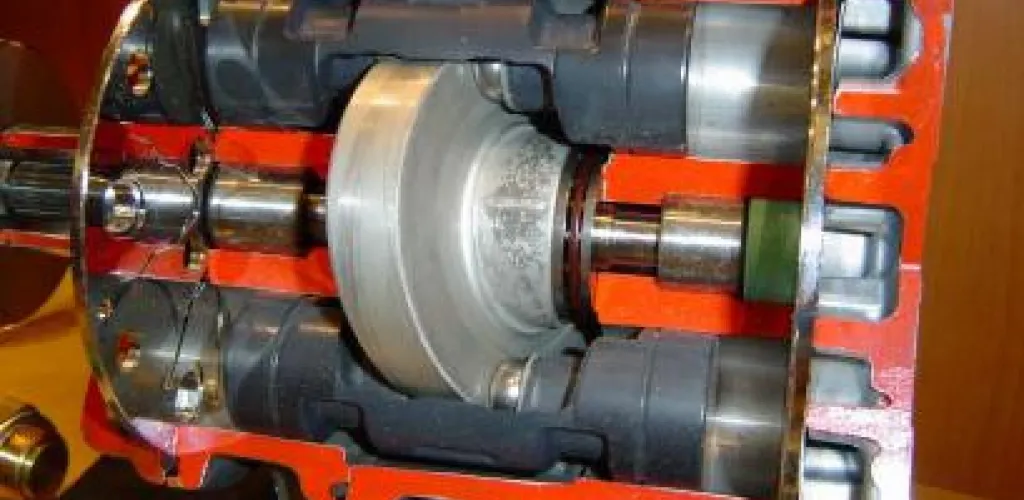
- Freon circulates in a closed loop, moving heat from the cabin to outside.
- The compressor powers the system, belt-driven with an optional electric control.
- The condenser dissipates heat and condenses Freon into liquid.
- The evaporator cools cabin air as Freon absorbs heat and turns to gas.
The car’s air conditioning system follows the same basic principles as a home system, but its components are sized for automotive use. Freon circulates in a closed loop, changing state between liquid and gas to transfer heat from the cabin to the outside. Understanding these components helps you diagnose problems and estimate maintenance costs.
The car’s air conditioning system is very similar to a home system; the components are largely the same, with differences mainly in size rather than function.
How does air conditioning work?
Air conditioning works with the help of an inert gas, Freon. It is housed in a sealed environment and pressurized with the help of the compressor.
Freon is a substance with special properties that changes from liquid to gas under certain conditions, enabling heat transfer from hot to cold.
Initially, Freon is cool and in a liquid state. Subsequently, Freon passes through a series of tubes and is exposed to warm air from inside the car; Freon absorbs this heat and changes state, from liquid to a low-pressure gas.
It effectively cools the warm air inside and sends back cooled air through its phase change.
1. The compressor - the heart of the AC system
The compressor is the key component. It takes Freon and pressurizes it, allowing it to absorb heat and send cooled air back.
The compressor is driven by the vehicle’s accessory belt. In addition to mechanical drive, it has an electric switch that controls turning it on or off.
Types of compressors:
- Reciprocating piston compressors
- Scroll compressors
- Rotary vane compressors
2. The AC radiator (condenser)
It is a smaller copy of the engine cooling radiator. It is usually mounted near the main radiator.
Many cars have a dedicated fan for the AC condenser. It performs the same function as the main radiator, cooling the gas and turning it from a gas into a liquid.
Main functions:
- Dissipating heat from the pressurized Freon
- Transforming hot gas into a liquid
- Releasing heat to the atmosphere
3. The evaporator - where cooling occurs
It is another radiator, doing exactly the opposite of the condenser. When Freon is very cold, it passes through this radiator, cooling the air before it reaches the car.
Once Freon warms up again, it changes back into a gas and continues through the cooling system.
Key characteristics:
- Location: behind the dashboard
- Material: aluminum or copper
- Frost risk if temperature drops too much
4. Expansion valve - temperature control
Expansion valve controls the amount of Freon reaching the evaporator, helping you select the exact cabin temperature.
Types of expansion valves:
- Thermal expansion valve (TXV)
- Fixed-orifice
- Electronic expansion valve
5. Dirt filter - system protection
The dirt filter is there as a safety measure and should stop Freon from entering the compressor and destroying it. It also absorbs any water that may enter the system.
Essential functions:
- Filtering solid particles
- Moisture absorption
- Protecting the compressor
- Keeping the system clean
Sensors and auxiliary components
The components listed above are found in any classic air conditioning system, but many other sensors can appear as well:
Common sensors in modern AC systems:
- High-pressure sensor – protects the system from overpressure
- Low-pressure sensor – detects Freon drops
- Temperature sensor – monitors evaporator temperature
- Humidity sensor – optimizes cabin comfort
Safety components:
- Compressor relay – controls start/stop
- Protective fuses – protect electrical circuits
- Presostat (pressure switch) – stops the system at abnormal pressures
AC system maintenance
For optimal operation, the AC system requires:
- Annual checks of Freon level
- Replacing the dirt filter every 2-3 years
- Cleaning the condenser for optimal heat dissipation
- Checking the accessory belt
If you want to know which sensors your car has installed in the air conditioning system, check the owner’s manual.
Photo sources: hyperli.com, yourcarinfo.net, arvadasquareauto.com, natrad.com.au, cartreatments.com