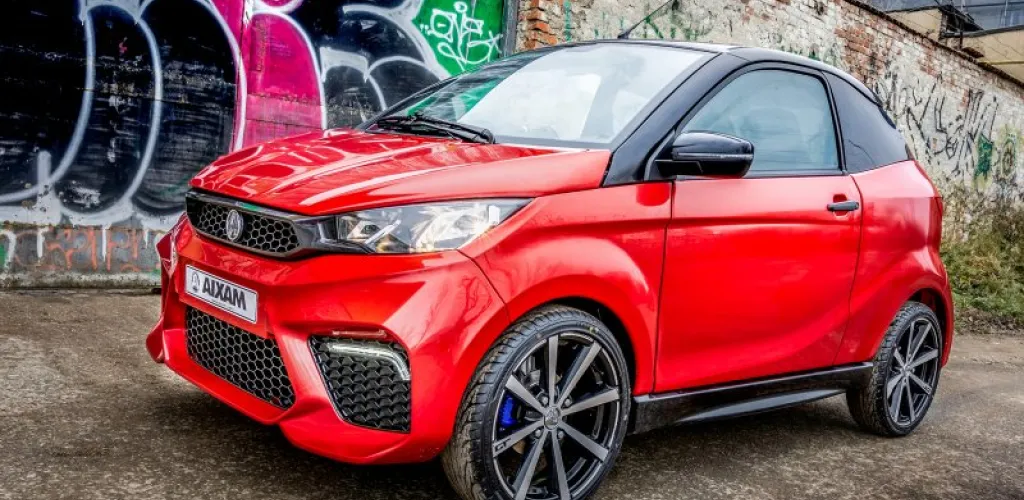
- B1 lets 16-year-olds drive quadricycles up to 400 kg and 15 kW.
- Training requires medical/psych dossier, integrity certificate, ID; theory 22/26.
- Costs: around €2,000 for driving school; used B1 cars from €7–8k.
- Speed limits and specs; practical drawbacks include low power and limited safety gear.
Many young people dream of driving their first car before turning 18. This wish is not unattainable; there is a special driving category that allows operating certain vehicles from age 16. However, before making this decision, it is important to understand all aspects: costs, procedures, and the practical limitations of these vehicles.
What is Category B1 and how to obtain it
Category B1 allows you to drive four-wheeled vehicles that have a maximum mass of 400 kg (unladen) and a power not exceeding 15 kW (about 20 hp). These vehicles are known as “microcars” or quadricycles.
Procedure to obtain Category B1
Minimum age and enrollment:
- You can start the courses up to 3 months before turning 16
- Similar to Category B, you can prepare in advance and take the exam exactly when you turn 16
Required documents:
- Full psychological and medical dossier
- Behavioral integrity certificate (you must not have been convicted of offenses related to traffic regulation, homicide, assault or causing death, serious bodily harm, robbery or vehicle theft)
- Valid identity card
The exam:
- Theory test: 26 questions, you must answer at least 22 correctly
- Practical test: route similar to the Category B exam, adapted to the vehicle’s characteristics
Costs involved
Driving school
The cost of obtaining Category B1 is around €2,000, which includes:
- Road traffic law lessons
- Practical training with an instructor
- Fees for taking the exam
- Required documentation
Vehicle cost
The Romanian market offers B1 vehicles starting from €7,000-€8,000 for reasonably good used models. New vehicles can easily exceed €15,000, making it a substantial investment.

Technical specifications and limitations
Mandatory technical specifications
- Maximum mass: 400 kg (unladen)
- Maximum power: 15 kW (about 20 hp)
- Theoretical maximum speed: Limited by the low power, usually under 90-100 km/h
- Engine configuration: Typically small engines of 400-500 cm³
Traffic speed limits
Even if the vehicle could theoretically reach higher speeds, the law imposes strict limits:
- 90 km/h on motorways
- 80 km/h on expressways and European roads
- 70 km/h on other road categories
- 50 km/h in urban areas
Practical limitations
These vehicles show several drawbacks compared to conventional cars:
- Low power: Acceleration is very limited, which can create dangerous situations when overtaking or entering busy roads
- Minimal equipment: Most lack ESP, multiple airbags, ABS, or other modern safety systems
- Limited comfort: Interior space is restricted, and sound and thermal insulation leave something to be desired
- Low range: Small fuel tanks (15-20 liters) limit autonomy
Top 3 vehicles available with Category B1
1. Aixam Coupe - pioneer of the segment
Aixam is the brand that defined the microcar segment in Europe and remains one of the most popular options.
Technical specifications:

- Engine: 2-cylinder, 400 cm³
- Power: 5.4 hp
- Declared consumption: 2.9 l/100 km
- Transmission: CVT automatic
Advantages:
- Well-developed service network in Romania
- Relatively affordable spare parts
- Recognizable design

2. Chatenet CH25 - the French alternative
Chatenet offers a different approach, focusing on improved equipment and comfort.
Technical specifications:
- Engine: 1-cylinder, 440 cm³
- Power: 5 hp
- Tank: 19 liters
- Consumption: Similar to Aixam, around 3 l/100 km
Additional features:
- Bluetooth system
- Air conditioning
- On-board computer
- Improved interior finishes

3. Ligier JS50 - the diesel option
For those who prioritize low consumption, Ligier offers a diesel variant.
Technical specifications:
- Engine: Diesel, 1-cylinder, 480 cm³
- Power: 5 hp
- Consumption: 2.5 l/100 km (the most economical in the segment)
- Diesel advantages: Higher torque at low revs, extended range

Cost-benefit analysis: is the investment worth it?
Advantages
- Early independence: The ability to move without relying on parents or public transport
- Driving experience: You get used to traffic rules and vehicle handling
- Social status: Can be important in certain social circles
Disadvantages
- High cost for limited performance: €7,000+ for a vehicle with major limitations
- Lower safety: Lack of modern protection systems
- Limited usability: Difficulties on high-speed roads or in heavy traffic
- Rapid depreciation: Resale value drops significantly
- Maintenance costs: Specialized parts can be expensive
Conclusion
From a technical and economic perspective, investing in a B1 vehicle is hard to justify. For the required amount (€9,000-€10,000 including the license), you could buy a used car with adequate performance by the time you turn 18.
More practical alternatives could be:
- Moped or 50cc scooter (AM category, from 14)
- 125cc motorcycle (A1 category, from 16) – offers more mobility at similar costs
- Waiting until 18 and investing the amount in a truly functional car
Make your decision based on personal priorities, but keep the practical and economic aspects described here in mind.