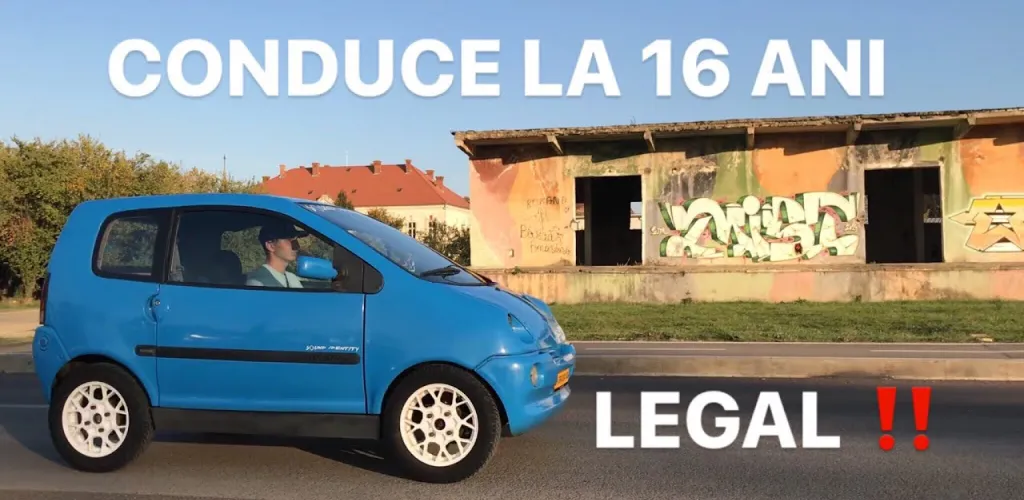
- You can begin Category B1 training at 16, two years before B
- Vehicles must have 3-4 wheels, 400-550 kg, min 45 cm³
- B1 speed limits: highways 90, expressways 80, rural 70, towns 50
- Enroll at an authorized driving school with ID, medical, parental consent, fees
If you have not yet turned 18 but you want to drive on public roads in Romania, the Category B1 driving license offers this possibility. Unlike the traditional Category B license, which can be obtained only after reaching 18, the B1 license allows you to learn to drive and obtain the license starting at age 16. However, there are important differences regarding the types of vehicles you can drive and the speed limits imposed.
This comprehensive guide explains everything you need to know about the Category B1 license: from the minimum age and the application procedure to the technical characteristics of permitted vehicles and the models available on the Romanian market.
Age requirements for the B1 license
In Romania you can begin theoretical and practical preparation for the Category B1 license from the age of 16. This gives you a two year lead over the classic Category B license, allowing you to accumulate traffic experience from an earlier age.
The enrollment and examination procedure is similar to that for Category B, with the difference that the vehicles you will drive are specifically adapted for this license category.
What vehicles you can drive with the B1 license
The Category B1 license allows you to drive vehicles with technical characteristics that are strictly regulated by traffic law.
Technical features required
Vehicles that can be driven with a B1 license must meet the following requirements:
- Number of wheels: 3 or 4 wheels
- Total mass: between 400 and 550 kg
- Engine displacement: minimum 45 cm³
- Maximum speed: at least 50 km/h
These vehicles are designed to provide safety for young drivers, with compact dimensions and moderate power compared with standard cars. Essentially they are small, lightweight cars with low consumption and limited performance, ideal for learning to drive safely.
Speed limits for the B1 license
Even if the vehicle you drive could technically reach higher speeds, the legislation imposes strict speed limits for holders of the B1 license:
- Highways: maximum 90 km/h
- Expressways and European roads: maximum 80 km/h
- National and county roads (outside towns): maximum 70 km/h
- In towns: maximum 50 km/h (as for any vehicle)
These limits are implemented for the safety of young drivers and other traffic participants. Rest of the traffic rules are identical to those for Category B: obey road signs, yield, wear seat belts and comply with all driving conduct norms.
How to obtain the Category B1 license
The process to obtain the B1 license follows the standard steps of any driving exam in Romania.
Enrollment at a driving school
The first step is to enroll at an authorized driving school that offers training for the B1 category. You will need:

- Identity card or provisional identity card
- Medical fitness certificate for driving
- Parental or legal guardian consent (as a minor)
- Fees for the course and the exam
Theoretical and practical preparation
You will go through:
- Theoretical courses: learning traffic rules, signaling, safety norms, and traffic legislation
- Driving hours: minimum 30 hours of practical training with an authorized instructor, behind the wheel of a B1 category vehicle
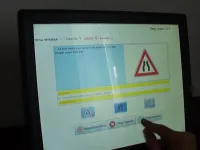
Theoretical exam
The theoretical exam consists of:
- 26 questions
- Duration: 30 minutes
- Passing: at least 22 correct answers (84.6%)
The questions cover all aspects of road legislation, including practical traffic situations, signaling and safety norms.
Practical exam
After passing the theoretical exam, you take the practical test:
- Demonstration of driving abilities on an urban route
- Respect for traffic rules
- Correct execution of maneuvers requested by the examiner
- Proper handling of traffic situations
The examiner will evaluate your ability to drive safely, to respect traffic rules and to react correctly in diverse traffic scenarios.
Vehicles available for the B1 license in Romania
On the Romanian market there are several models of vehicles specially designed for B1 license holders. Here are the most popular:
Chatenet CH26
This French origin microcar (not Italian as some think) stands out for:
- Engine displacement: approximately 525 cm³
- Engine power: 5.5 HP (standard version) or 7.5 HP (automatic version)
- Maximum speed: 45-50 km/h
- Average consumption: 3 L/100 km
- Special features: the automatic version is ideal for beginners
Chatenet CH26 offers decent comfort for a compact vehicle and is valued for its reliability.
Aixam Coupe
The most popular microcar in Romania for the B1 category:
- Engine displacement: 400 cm³
- Engine power: 5.4 HP
- Maximum speed: 50 km/h
- Fuel tank capacity: 15-16 liters
- Average consumption: 3.3 L/100 km
- Special features: most common in urban traffic due to a good price performance ratio
Aixam is produced in France and benefits from a good service and spare parts network in Romania.
Bellier
Another French brand with presence on the Romanian market:
- Engine displacement: 523 cm³
- Engine power: between 5.4 and 7 HP (depending on model)
- Average consumption: 3-3.5 L/100 km
- Special features: available in 3 different models, including one with 5 seats (the only B1 car with 5 seats)
The 5 seat model is a unique option on the market, allowing more passengers although interior space remains limited.
Microcar
Most appreciated by young drivers due to seemingly higher specifications:
- Engine displacement: 500 cm³
- Engine power: 21 HP
- Maximum speed: electronically limited to 50 km/h
- Special features: although the engine develops more power, the speed remains limited by regulations
Important to know: even if Microcar has a more powerful engine (21 HP compared to 5-7 HP in other models), the maximum speed is electronically limited to 50 km/h to comply with legal requirements for the B1 category. The extra power provides better acceleration and a more dynamic driving experience within the legal limits.
Maintenance of the B1 category vehicles
Vehicles for the B1 license, although equipped with small engines, require regular maintenance:
- Oil changes: every 5,000-7,500 km or annually
- Filters: air and fuel filters replaced according to the manufacturer schedule
- Tires: check tire pressure monthly and monitor wear regularly
- Battery: check and possibly replace every 2-3 years
- ITP: mandatory for any registered vehicle
Maintenance costs are generally lower than for standard cars due to simpler components and reduced consumption.
Advantages of the B1 license
Obtaining the B1 license offers several benefits:
- Early experience: start accumulating traffic experience from age 16
- Independence: no longer dependent on parents for transport
- Lower costs: low fuel consumption and affordable maintenance
- Preparation: when you move to Category B, you already have a solid driving foundation
- Safety: B1 vehicles are specially designed for young drivers
Note that the B1 license does not replace the B license, but provides an excellent transition to obtaining the full license at 18. The experience gained in these two years will be extremely valuable for your development as a responsible and skilled driver.