- Driving without a B license is allowed only on private properties; public roads require license.
- B1 allows 16+ microcars: 400 kg, up to 15 kW, 45–50 km/h, registration and RCA.
- To obtain B1: 16+, medical/psychological exam, theory, 10 practical hours, urban-route exam.
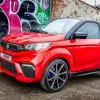
- Popular B1 models include Ligier J650 and Aixam Coupe.
In recent years, the number of drivers in Romania has risen rapidly, and traffic in major cities is becoming increasingly congested. While twenty years ago you could only drive after turning 18 and obtaining a category B license, today the law offers legal alternatives for those who want to start earlier.
There are situations in which you can drive legally without holding a Category B license, but with important restrictions. Whether you are a minor seeking to gain experience, or you have your license suspended, it is essential to know the legal provisions to avoid trouble with the authorities.
Driving without a license on private property
It is legal to drive a vehicle without a license, but only on private properties or in areas that are not considered public roads under the law. This possibility applies in the following situations:
- Learning on private enclosed properties
- Vehicle testing in private parking lots
- Activities on private circuits or agricultural grounds
- Maneuvers on private industrial properties
It is important to understand that as soon as you exit onto a public road, without a valid license, you commit an offense that can lead to serious consequences.
Category B1 – The legal solution for young drivers
Romanian legislation introduced the Category B1, which allows the operation of certain special vehicles starting from age 16. This category was created to provide young people the opportunity to gain experience under safe conditions.
Technical characteristics of B1 vehicles
Vehicles in the B1 category must meet the following technical specifications:
- Maximum mass: 400 kg (excluding driver and passenger)
- Engine power: up to 20 hp (15 kW)
- Maximum speed: electronically limited to 45-50 km/h
- Registration: mandatory, like any vehicle
- Insurance: mandatory RCA (third‑party liability)
Steps to obtain the B1 license
To obtain the B1 license, the candidate must complete the following steps:
- Minimum age: 16 years old
- Medical and psychological exam: similar to Category B
- Theoretical courses: adapted road legislation
- Theoretical exam: knowledge of road legislation
- Practical hours: minimum 10 hours with an authorized instructor
- Practical exam: on an urban route with speed restrictions
Popular Category B1 vehicle models
Ligier J650
This French model stands out for its modern design and superior technical features:
- Transmission: CVT automatic transmission
- Maximum speed: 45 km/h
- Fuel tank capacity: 17 liters
- Consumption: approximately 3-4 L/100 km
- Advantages: ideal for urban traffic, highly economical
Aixam Coupe
A pioneer in the microvehicle segment, very popular in Europe:
- Engine: 400 cm³, 2 cylinders, liquid‑cooled
- Power: 20 hp
- Fuel tank capacity: 16 liters
- Design: compact and practical for the city
- Reliability: mature and proven technology
Chatenet CH26
The French model that blends practicality with modern technology:
- Displacement: 440 cm³
- Fuel tank capacity: 19 liters
- Features: modern safety systems
- Technology: advanced electronic equipment
- Use: optimized for urban travel
Risks of driving with the wrong license category
Many experienced drivers believe they can drive any vehicle, but the law is very clear on this point. Driving a vehicle for which you do not hold the appropriate license category is equivalent to driving without a license.

Legal consequences
Violating these provisions can lead to:
- Criminal offense: criminal case for driving without a license
- License suspension: loss of the right to drive
- Fines: substantial financial penalties
- Issues with insurance: denial of coverage for damages
- Civil liability: compensation paid out of pocket
Impact on road safety
Driving without the appropriate license endangers:
- The safety of the driver and passengers
- The safety of other road users
- Traffic flow
- Trust in the road system
Advantages and disadvantages of Category B1
Advantages
- Early start: driving experience from age 16
- Lower costs: low fuel consumption
- Easy parking: compact dimensions
- Simple maintenance: accessible technology
- Lower environmental impact: low emissions
Disadvantages
- Limited speed: up to 45 km/h
- Limited power: uphill performance may be challenging
- Limited space: only 2 seats
- Safety: somewhat less robust structure
- Versatility: mainly urban use
Tips for Category B1 drivers
Traffic safety
- Always respect speed limits
- Use protective equipment (seat belt, helmet where required)
- Avoid roads with heavy traffic
- Plan routes to avoid dangerous areas
- Maintain a larger safety margin from other vehicles
Vehicle maintenance
- Regular checks of the braking system
- Periodic tire inspection
- Engine maintenance according to the manufacturer’s recommendations
- Check lighting systems
- Regular cleaning for optimal visibility
In conclusion, while there is a legal possibility to drive without a Category B license under certain conditions, it is essential to comply with all legal provisions. Category B1 represents a viable option for young people who want to start driving safely, but it requires responsibility and strict adherence to the imposed limits.