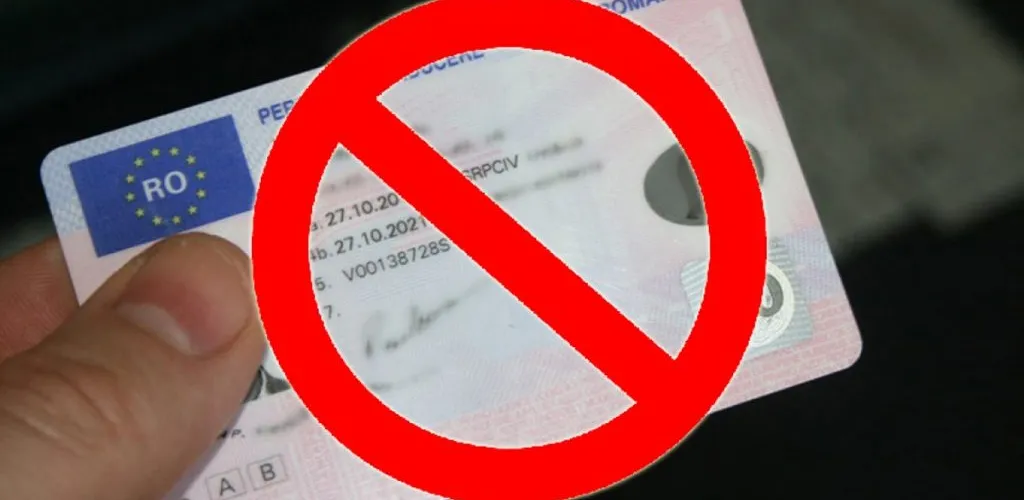
- Permanent revocation after final conviction, enforced by judicial courts with immediate effect.
- Caused death or serious injuries due to traffic violations or negligence.
- Includes manslaughter by negligence and serious bodily injury by negligence.
- Registration/plates offenses include unregistered cars, false plates, or withdrawn plates.
Driving license revocation is the most severe penalty a driver can face in Romania, resulting in permanent loss of the right to operate motor vehicles. This drastic measure applies only in the gravest cases, when a driver’s road conduct endangers the lives and safety of other road users.
Unlike suspension, which is temporary and can be lifted after a set period, revocation is permanent and can be ordered only after a final criminal conviction for specific offenses defined by law. The revocation procedure takes place in judicial courts and has immediate effects on the right to drive.
Offenses with life and bodily harm consequences
Fatal accidents
Fatal accidents caused by non-compliance with traffic rules represent the gravest situation on the road. These include unlawful overtaking, failure to yield, excessive speed, or failure to adapt speed to road conditions. Even without the intent to kill, gross negligence at the wheel leading to loss of life triggers criminal responsibility and license revocation.
Serious bodily injuries
Serious bodily injuries resulting from violations of traffic regulations include injuries requiring prolonged medical care, temporary or permanent disability. These situations are common in high-impact accidents where excessive speed or dangerous maneuvers cause severe trauma.
Negligent offenses
- Manslaughter by negligence in the context of operating motor vehicles
- Serious bodily injury by negligence through violation of legal traffic provisions
These offenses demonstrate extreme gravity, where negligence, recklessness, or lack of driving experience led to irreversible consequences.
Crimes related to document forgery and vehicle identity
Another important set of offenses that trigger license revocation concerns serious violations of the vehicle registration and identification system, acts that threaten national security and the tax system:
Vehicle registration issues
Driving an unregistered vehicle means using a vehicle on public roads that has not been legally registered in Romania. This situation evades fiscal and technical controls, jeopardizing road safety by skipping mandatory verifications.
Driving with false registration plates represents a serious offense that may conceal other illegal activities. Counterfeit or forged plates are often used in criminal activity or to evade traffic fines.
Driving with registration plates withdrawn refers to situations where authorities have legally withdrawn the plates for various reasons (e.g., vehicle without IT inspection, unpaid fines, administrative issues), yet the owner continues to drive.
Vehicles without the right to circulate
Driving a vehicle without the right to circulate in Romania includes situations such as:
- Illegally imported vehicles
- Cars with dubious provenance documents
- Vehicles with non-homologated modifications affecting safety
- Vehicles with deactivated emission systems
Crimes related to the driving license
This category targets situations where the driver does not have the legal right to be behind the wheel, showing a clear disregard for the law:
Driving with a license inappropriate for the vehicle category
Using a license for a vehicle category different from the one driven is a serious offense. For example, driving a truck with a passenger car license or riding a motorcycle with a car license. This situation endangers safety because the driver has not been tested for the vehicle’s specific category.
Driving with a suspended or revoked license
Continuing to drive after license revocation or ignoring an active suspension demonstrates defiance of the law. These situations are common among repeat offenders who do not respect previously imposed sanctions.
Offenses under the influence of prohibited substances
Driving under the influence of alcohol or prohibited substances is one of the most frequent and dangerous violations of the law, with a devastating potential for road safety:
Consumption of prohibited substances
Driving with alcohol above the legal limit (above 0.80 g/L blood alcohol concentration or 0.40 mg/L in the breath) severely impairs reaction times, decision-making, and coordination. Studies show that the crash risk increases exponentially with higher blood alcohol content.
Driving under the influence of narcotics or psychoactive substances includes marijuana, cocaine, ecstasy, and other drugs. These substances affect perception, reaction time, and the ability to assess distances and speeds.
Driving under the influence of medications with effects similar to alcohol or drugs refers to medicines that cause drowsiness, dizziness, or impaired concentration.
Post‑accident behavior
Consumption of alcohol or drugs after an accident with victims is an attempt to mask the condition at the time of the incident. This act is punished as severely as driving while intoxicated.
Avoiding collection of biological samples by refusing testing or leaving the scene of control is treated as driving under the influence of prohibited substances.
Inappropriate conduct at the accident scene
Legislation punishes severely irresponsible behavior after an accident, as such acts worsen the consequences and hinder establishing the truth:
Leaving the scene
Leaving the scene of an accident with victims is considered a serious offense, regardless of the driver’s degree of fault. This act demonstrates a lack of empathy and responsibility toward the victims.
Destruction of evidence
Destruction of accident traces includes:
- Moving vehicles from their initial positions
- Cleaning skid marks
- Quickly repairing damages to mask the impact
- Removing evidence that could demonstrate speed or trajectory
Failure to render assistance
Omitting to assist injured persons when possible without endangering one’s own life constitutes a separate offense that aggravates the driver’s legal situation.
Participation in illegal racing
Organizing or participating in unauthorized road events on public streets endangers not only participants but all road users:
Illegal street races on public roads
Organizing illegal races involves planning, coordinating, and supervising unapproved speed events. Organizers face criminal liability for all consequences of these events.
Participation in unauthorized races includes not only the races themselves but also speed demonstrations, drifting, and other dangerous demonstrations on public roads.
Provocation to speed races through gestures, signals, or aggressive behavior in traffic is also punished, even if the race does not take place.
The procedure for license revocation
License revocation is carried out by a final court decision within the criminal process for the offenses mentioned. The court evaluates:
- The severity of the offense
- The accused’s criminal and administrative records
- The social danger represented by keeping the right to drive
- The possibility of social reintegration
Period of disqualification
Along with revocation, the court also sets a period of disqualification, which varies by the gravity of the offense:
- A minimum of 1 year for less serious offenses
- Between 2 and 5 years for offenses affecting bodily integrity
- 5 to 10 years or even life for offenses with fatal consequences
Consequences of license revocation
License revocation means the permanent loss of the right to drive motor vehicles in Romania and, by extension, in all European Union countries. This sanction has significant implications:
Impact on personal and professional life
- Restricted mobility and reliance on public transport or others
- Loss of employment for professional drivers (carriers, couriers, sales representatives)
- Difficulty in finding a job that requires a driving license
- Additional costs for alternative transportation
The process to regain the license
To obtain a new license after the end of the disqualification period, the sanctioned person must:
- Demonstrate rehabilitation through exemplary civic conduct
- Retake the theoretical exam in all subjects (traffic regulations, first aid, auto mechanics)
- Complete road safety reeducation courses at an authorized school
- Undergo a psychological evaluation to assess driving aptitudes
- Pass the practical driving test, regardless of prior experience
- Pay all fees related to obtaining a new license
Financial implications
Regaining the license involves considerable costs:
- Examination fees (300-500 lei)
- Reeducation courses (800-1500 lei)
- Psychological evaluation (200-400 lei)
- Practical driving lessons (30-50 lei/hour)
- Administrative costs (100-200 lei)
Preventing license revocation
The most effective way to avoid revocation is strict adherence to traffic laws and a responsible attitude behind the wheel:
Preventive behavior
- Respect speed limits and adapt to road conditions
- Avoid alcohol before driving
- Maintain a safe following distance from the vehicle ahead
- Use protective equipment (seat belt, helmet for motorcyclists)
- Respect traffic signals and road signs
Document maintenance
- Check the validity of the license and other documents
- Proper vehicle registration and keeping documents up to date
- Timely periodic technical inspection
- Pay fines and road taxes on time
License revocation is an extreme consequence that can be avoided by obeying the law and adopting a responsible traffic attitude. The impact of this sanction on personal and professional life is devastating, and the process of regaining the right to drive is lengthy, costly, and does not guarantee success.