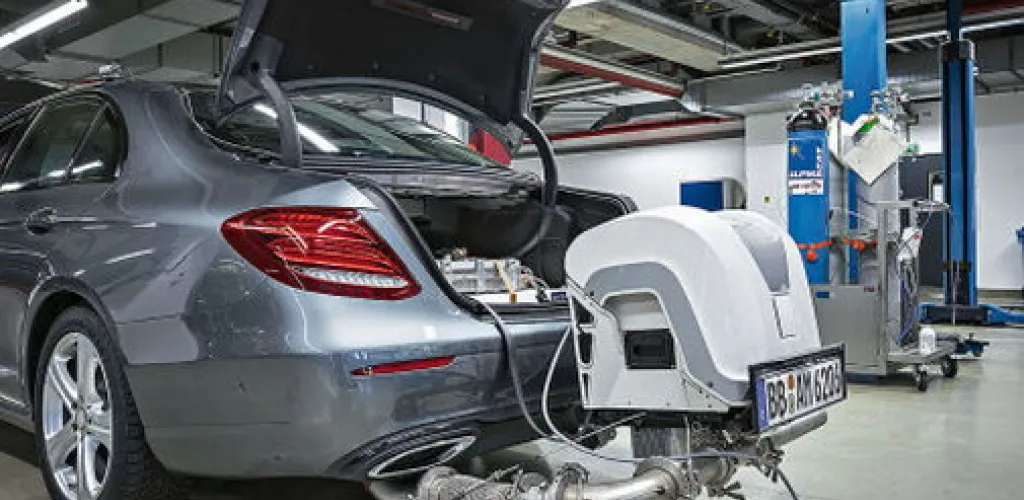
- Euro 7 from 2025 may be the final ICE pollution regulations before electrification.
- NOx limits drop to 10-30 mg/km, eight times tighter than Euro 6.
- Wear emissions from brakes, tires, and road-contact parts will be monitored.
- Vehicles must transmit real-time fuel use and NOx data via mobile networks.
The European Union has announced the introduction of Euro 7 standards from 2025, likely marking the final anti-pollution regulations for internal combustion engines before the full transition to electric vehicles. Experts say the stringent requirements of these new standards will dramatically accelerate the disappearance of diesel and gasoline engines from mass production.
What are Euro emission standards?
Euro emission standards are European standards that classify engines according to their level of pollutant emissions. Each new generation brings stricter limits on the harmful substances released into the atmosphere, forcing manufacturers to develop increasingly cleaner technologies. These regulations have evolved steadily since the introduction of the first Euro 1 standard in 1992.
Objectives of the Euro 7 standards
In the context of climate change and the European Green Deal, the new regulations aim to bring diesel and petrol engines to an unprecedented level of cleanliness. Unlike previous standards, Euro 7 requires vehicles to remain clean throughout their life, regardless of usage conditions or age.
Euro 7 standards will also include advanced digital monitoring elements. Cars will need to be equipped with systems that use mobile networks to transmit real-time data to authorities about the fuel used and the amount of NOx emitted.
Much stricter emission limits
Emissions from the exhaust system
For exhaust gases, Euro 7 proposes dramatic thresholds. Currently the Euro 6 standard, in force since 2014, allows up to 80 mg/km of NOx for diesel engines. The new regulations will lower this limit to just 10-30 mg/km, a reduction of up to eight times.
It is important to note that the most capable diesel engines today have already fallen below 20 mg/km, some even below 10 mg/km, proving that the technology exists. The challenge lies in maintaining these values in all operating conditions.
Emissions from wear of components
A major novelty of Euro 7 is the monitoring of emissions generated by mechanical wear. For the first time, the regulations will also track particles resulting from:
- Wear of brake pads
- Tire wear
- Other components in contact with the road
These particles contribute significantly to local pollution, especially in crowded urban areas.
Testing conditions - the major challenge
The main issue is not necessarily the proposed thresholds, but the extreme conditions in which they must be met. Unlike earlier tests, performed under optimal laboratory conditions, Euro 7 requires limits to be met in any situation:
- Cold-start of the engine
- Under maximum acceleration
- At maximum speed
- With the vehicle loaded to the limit
- Over the lifetime of the car
These requirements reflect real world vehicle use, but pose major technical challenges for manufacturers.
Technical implications for manufacturers
Increased energy demand
To meet these standards, the post-treatment systems will require much more electrical energy than today. This implies:

- Much stronger batteries
- More capable alternators
- More complex electrical systems
The consumption paradox
Thus a technical paradox arises: the systems needed to clean emissions consume more energy, leading to higher fuel consumption and, consequently, higher CO2 emissions. The engine must work harder to charge the batteries that power the anti-pollution systems, reducing overall efficiency.
Transition to electrification
It is clear that the European Union uses these standards as a tool to accelerate the transition to electric mobility. Euro 7 standards represent an intermediate step before the complete ban on sales of new vehicles with internal combustion engines, scheduled for 2035.
Manufacturers face a dilemma: invest massive sums in developing ICE engines that will be banned in a few years, or redirect these funds toward electrification? Most manufacturers have already chosen the second option, announcing a gradual end to ICE development.
Time for adaptation for current owners
Owners of existing vehicles have until 2025 to adapt to the new realities. Important to note:
- Current cars will not be retroactively affected
- Euro 7 standards apply only to new vehicles
- Euro 5 and Euro 6 vehicles will continue to operate under local regulations
- Traffic restrictions may vary from city to city
Long-term perspective
Euro 7 standards likely mark the final chapter in the evolution of internal combustion engines in Europe. They aim to make the transition to electrification as gradual as possible, ensuring that by 2035, when the ban takes full effect, electric technology will be mature and affordable for the majority of the population.